

Protected Birds
All birds are protected in some form, but some species have additional protection during the breeding season as do their nests, eggs and dependent young. To disturb these you must obtain a special licence in advance. In England and Scotland, permits for ringing and/or nest recording are issued by the British Trust for Ornithology (BTO) on behalf of the relevant Country Agency; licences for other activities are issued directly from Natural England or NatureScot. In Wales, all licences are issued directly by Natural Resources Wales but ones for ringing and/or nest recording are applied for via the BTO.
All birds which have special protection during the breeding season anywhere in Britain and Ireland are listed below together with flags to indicate the country in which they are specially protected. You will need a specific licence or permit to approach an active nest or adult with dependent young in the country specified.
Specially protected birds in Britain and Ireland
A
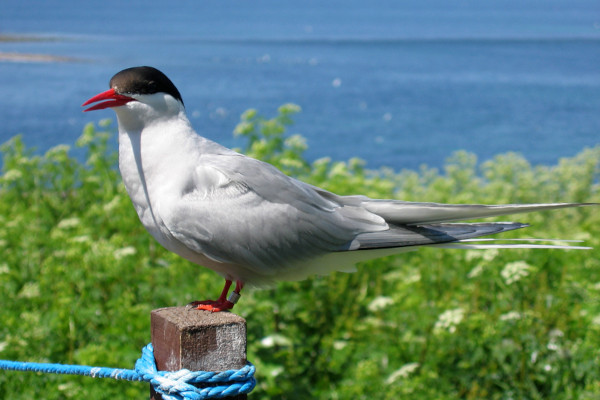
Arctic Tern
With its long tail streamers and general shape the Arctic tern deserves the local name of 'sea swallow'. Appearing white with a black cap, it is largely coastal although it can be seen inland on migration. It depends on a healthy marine environment and some colonies have been affected by fish shortages. Arctic terns are the ultimate long distance migrants - summer visitors to the UK and winter visitors to the Antarctic.
Latin: Sterna paradisaea
Conservation status:  Listen:
Specially protected in:


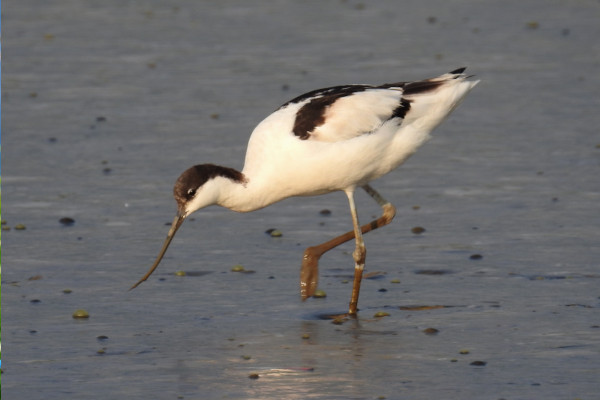
Avocet
The avocet is a distinctively-patterned black and white wader with a long up-curved beak. This Schedule 1 species is the emblem of the RSPB and symbolises the bird protection movement in the UK more than any other species. Its return in the 1940s and subsequent increase in numbers represents one of the most successful conservation and protection projects.
Latin: Recurvirostra avosetta
Conservation status:
Listen:
Specially protected in:
B
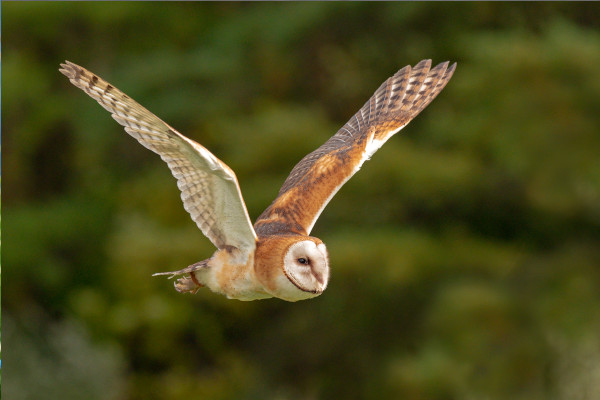
Barn Owl
With heart-shaped face, buff back and wings and pure white underparts, the barn owl is a distinctive and much-loved countryside bird. Widely distributed across the UK, and indeed the world, this bird has suffered declines through the 20th century and is thought to have been adversely affected by organochlorine pesticides such as DDT in the 1950s and '60s.
Latin: Tyto alba
Conservation status:  Listen:
Specially protected in:

Barnacle Goose
The barnacle goose is a medium-sized, sociable goose, with black head, neck and breast with creamy-white face. This contrasts with the white belly, blue-grey barred back and black tail. It flies in packs and long lines, with a noisy chorus of barking or yapping sounds.
Latin: Branta leucopsis
Conservation status:
Listen:
Specially protected in:
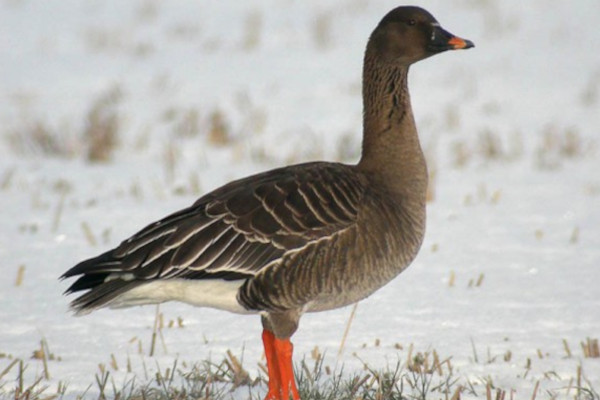
Bean Goose
The taiga bean goose is the species of bean goose most likely to be seen in the UK. It tends to be darker and browner than the other 'grey geese' species with orange legs and a darker head and neck. It is typically larger than the related tundra bean goose with similar plumage, a sleeker body and longer neck. The yellow-orange patch on the bill usually covers more than half the bill.
Latin: Anser fabalis
Conservation status:
Listen:
Specially protected in:
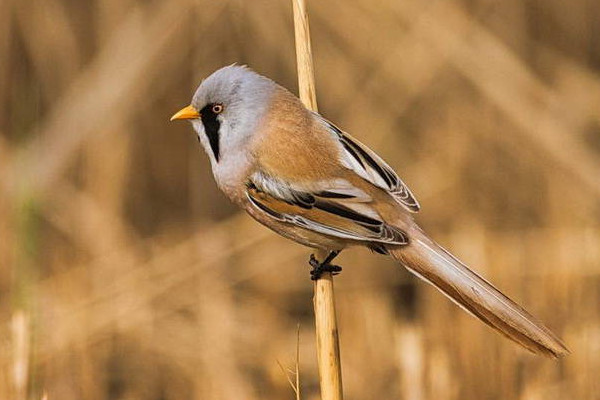
Bearded Tit
The bearded tit is a Schedule 1 species. They are brown, long-tailed birds, usually seen flying rapidly across the top of a reedbed. Males have black 'moustaches' rather than 'beards'.
They are sociable and noisy, their 'ping' calls often being the first clue to their presence.
Latin: Panurus biarmicus
Conservation status:
Listen:
Specially protected in:
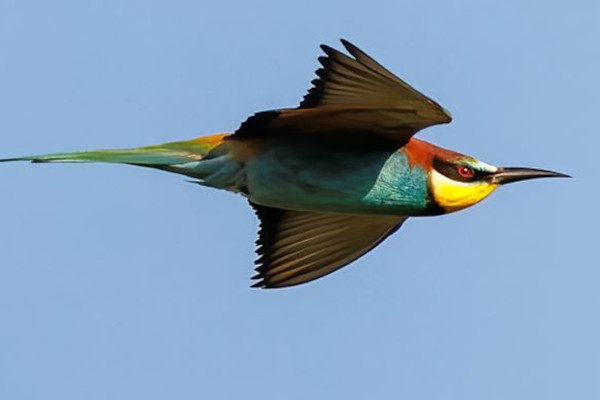
Bee-eater
About the size of a starling, bee-eaters are unmistakable with their claret-red backs, yellow throats and turquoise bellies. Bee-eaters raise their chicks communally, and single birds from a previous brood are likely to help out the two breeding pairs with duties like incubating and feeding. As well as various species of bee, they feed on dragonflies and other flying insects, which they catch in mid-air.
Latin: Merops apiaster
Conservation status:
Listen:
Specially protected in:
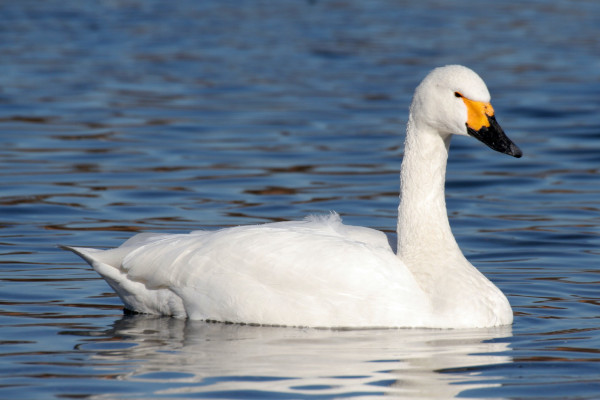
Bewick’s Swan
Bewick's swan adults are white all over and young birds greyish with a pinkish bill. Compared to the similar whooper swan, these swans have proportionally more black and less yellow on their bill. They're also smaller than both mute and whooper swans and have faster wingbeats. Bewick's swans are a Schedule 1 species.
Latin: Cygnus columbianus
Conservation status:  Listen:
Specially protected in:
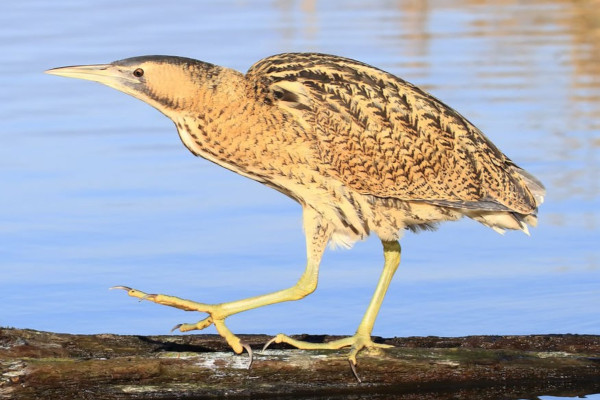
Bittern
The bittern is a thickset heron with all-over bright, pale, buffy-brown plumage covered with dark streaks and bars. It flies on broad, rounded, bowed wings. A secretive bird, very difficult to see, as it moves silently through reeds at water's edge, looking for fish. The males make a remarkable far-carrying, booming sound in spring. It's very small, reedbed-dependent population make it an Amber List and Schedule 1species.
Latin: Botaurus stellaris
Conservation status:
Listen:
Specially protected in:
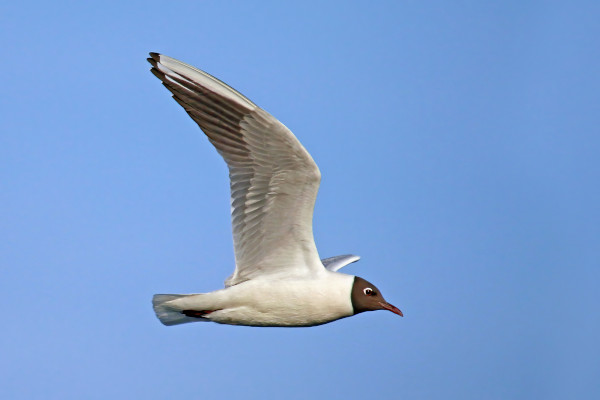
Black-headed Gull
Not really a black-headed bird, more chocolate-brown - in fact, for much of the year, it has a white head. It is most definitely not a 'seagull' and is found commonly almost anywhere inland. Black-headed gulls are sociable, quarrelsome, noisy birds, usually seen in small groups or flocks, often gathering into larger parties where there is plenty of food, or when they are roosting.
Latin: Chroicocephalus ridibundus
Conservation status:
Listen:
Specially protected in:

Black Kite
A regular visitor to Britain from mainland Europe, typically during April and May, Black Kite is more uniformly dark.
Black kites are opportunistic hunters and are more likely to scavenge. They spend much time soaring and gliding in thermals in search of food. Their angled wing and distinctive forked tail make them easy to identify. They are also vociferous with a shrill whinnying call.
Latin: Milvus migrans
Conservation status:
Listen:
Specially protected in:

Black-necked Grebe
This small grebe has beautiful golden tufts of feathers on its face, contrasting with its black head and neck. Its steep forehead makes its head look 'peaked'. A rare breeding bird, it is also uncommon in winter.
It is listed as a Schedule 1 species on The Wildlife and Countryside Act.
Latin: Podiceps nigricollis
Conservation status:
Listen:
Specially protected in:
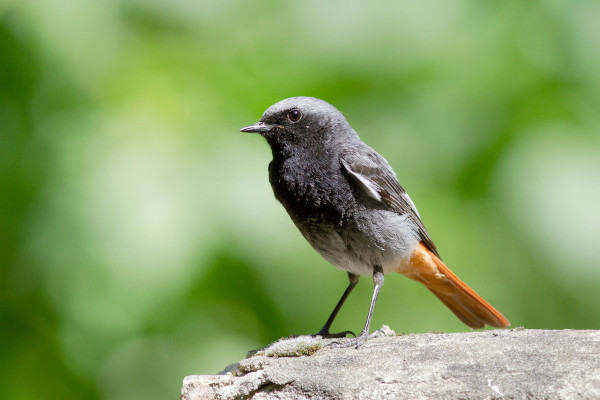
Black Redstart
The black redstart is a small robin-sized bird that has adapted to live at the heart of industrial and urban centres. Its name comes from the plumage of the male, which is grey-black in colour with a red tail.
With fewer than 100 breeding pairs in the UK, the black redstart is on the Red List of Birds of Conservation Concern and is a Schedule 1 species.
Latin: Phoenicurus ochruros
Conservation status:
Listen:
Specially protected in:
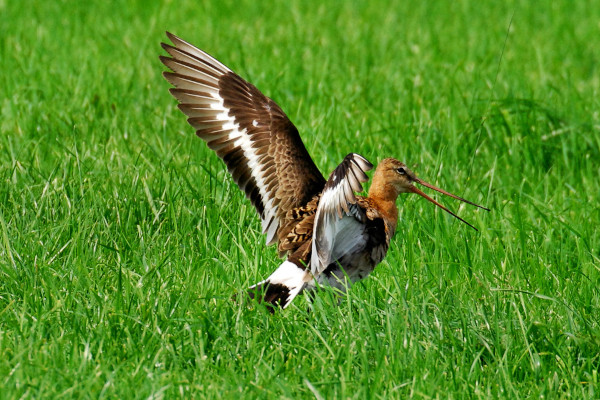
Black-tailed Godwit
These large wading birds are a Schedule 1 species. In summer, they have bright orangey-brown chests and bellies, but in winter they're more greyish-brown.
Their most distinctive features are their long beaks and legs, and the black and white stripes on their wings. Female black-tailed godwits are bigger and heavier than the males, with a noticeably longer beak.
Latin: Limosa limosa
Conservation status:
Listen:
Specially protected in:
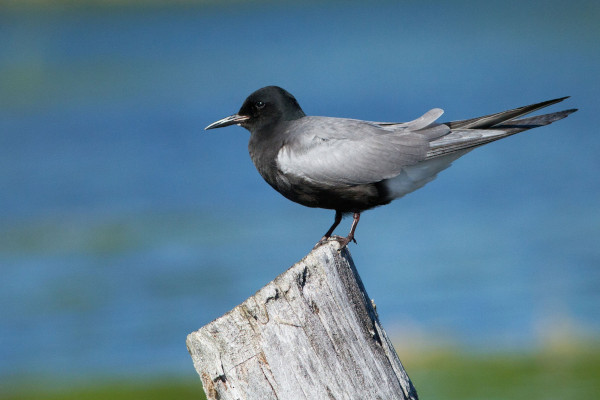
Black Tern
The black tern is a small tern with an all-black head and body, contrasting with grey wings, back and tail in spring. Autumn birds have grey upperparts, white underparts and distinctive black head markings. It feeds by dipping down and picking food from the surface of water.
This Schedule 1 species has occasionally bred in the UK.
Latin: Chlidonias niger
Conservation status:
Listen:
Specially protected in:
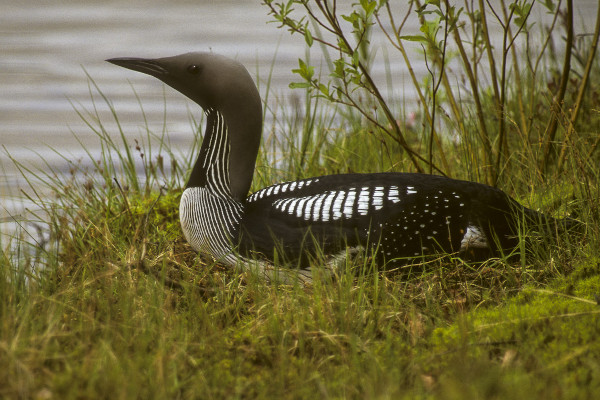
Black-throated Diver
These streamlined diving birds sit low in the water and dive with consummate ease. On land they are clumsy, barely able to walk with their legs so far back on their bodies.
They are easily disturbed when breeding and their vulnerability to marine pollution make them a vulnerable as well as rare breeding and a Schedule 1 species on The Wildlife and Countryside Act.
Latin: Gavia arctica
Conservation status:
Listen:
Specially protected in:
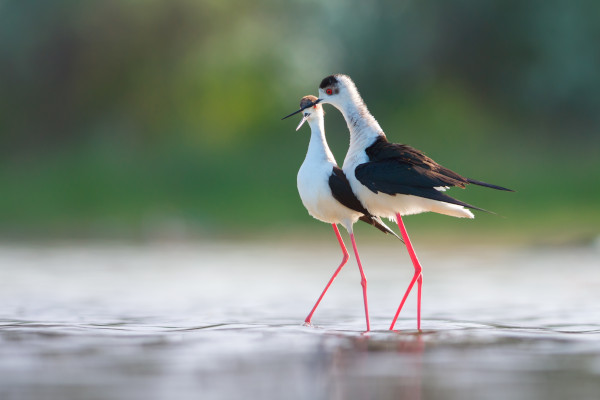
Black-winged Stilt
This graceful long-legged wader used to be a rare passage visitor to Britain, but is now considered a colonising breeder.
With its striking black and white plumage, long bill, and red legs this species evokes the feeling of its Mediterranean home when it is found delicately wading through a lagoon, picking small insects off the water’s surface.
Latin: Himantopus himantopus
Conservation status:
Listen:
Specially protected in:
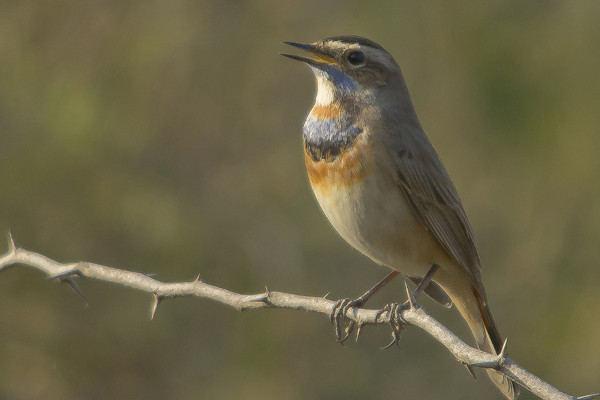
Bluethroat
A small robin-like bird, the male is unmistakable in spring with his bright blue throat, bordered below with bands of black, white and chestnut. Its central throat spot can be white or chestnut, depending on which subspecies you are looking at -'white-spotted' or the more numerous 'red-spotted'. They can be quite secretive, flicking into the cover of a bush with a flash of their chestnut tail patches.
Latin: Luscinia svecica
Conservation status:
Listen:
Specially protected in:
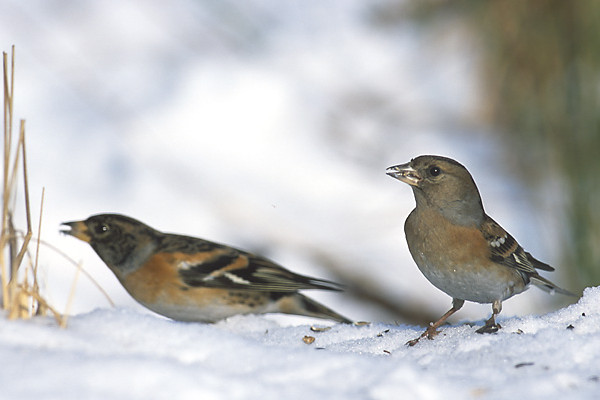
Brambling
Similar in size and shape to the chaffinch, the male brambling has a black head in summer, and an orange breast with white belly. In flight it shows a long white rump. Gregarious in winter, it may form flocks of many thousands and often joins with chaffinches.
Numbers can vary between winters depending on food supplies. It is a Schedule 1 species.
Latin: Fringilla montifringilla
Conservation status:
Listen:
Specially protected in:
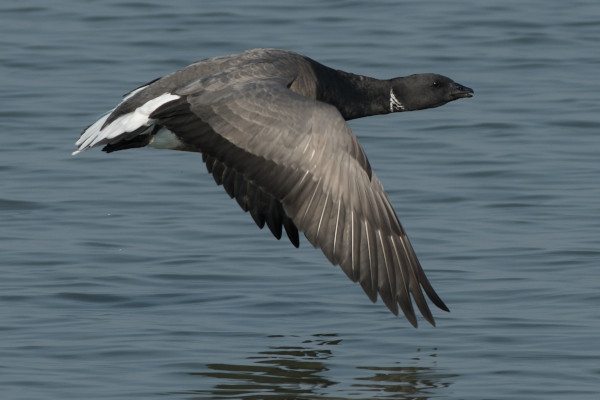
Brent Goose
The brent goose is a small, dark goose - of similar size to a mallard. It has a black head and neck and grey-brown back, with either a pale or dark belly, depending on the race. Adults have a small white neck patch. It flies in loose flocks along the coast, rather than in tight skeins like grey geese. It is an Amber List species because of the important numbers found at just a few sites.
Latin: Branta bernicla
Conservation status:
Listen:
Specially protected in:
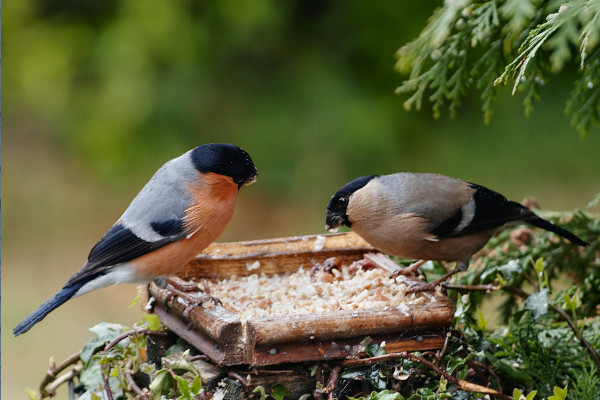
Bullfinch
The male bullfinch is unmistakable with his bright pinkish-red breast and cheeks, grey back, black cap and tail, and bright white rump. The flash of the rump in flight and piping whistled call are usually the first signs of bullfinches being present.
They feed voraciously on the buds of various trees in spring and were once a 'pest' of fruit crops.
Latin: Pyrrhula pyrrhula
Conservation status:
Listen:
Specially protected in:
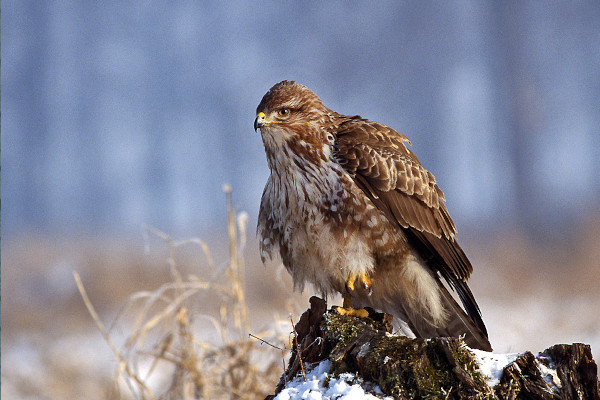
Buzzard
Now the commonest and most widespread UK bird of prey. The buzzard is quite large with broad, rounded wings, and a short neck and tail. When gliding and soaring it will often hold its wings in a shallow 'V' and the tail is fanned. Buzzards are variable in colour from all dark brown to much paler variations, all have dark wingtips and a finely barred tail. Their plaintive mewing call could be mistaken for a cat.
Latin: Buteo buteo
Conservation status:
Listen:
Specially protected in:
C
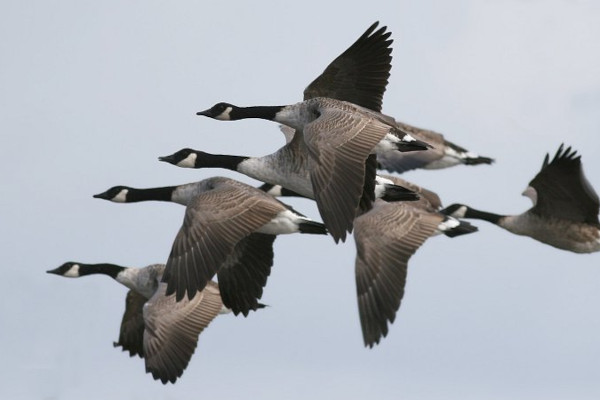
Canada Goose
The canada goose is a large goose, with a distinctive black head and neck and large white throat patch. An introduced species from North America, it has successfully spread to cover most of the UK.
It forms noisy flocks and is often regarded as a nuisance in areas where large numbers occur on amenity grassland and parks.
Latin: Branta canadensis
Conservation status:
Listen:
Specially protected in:
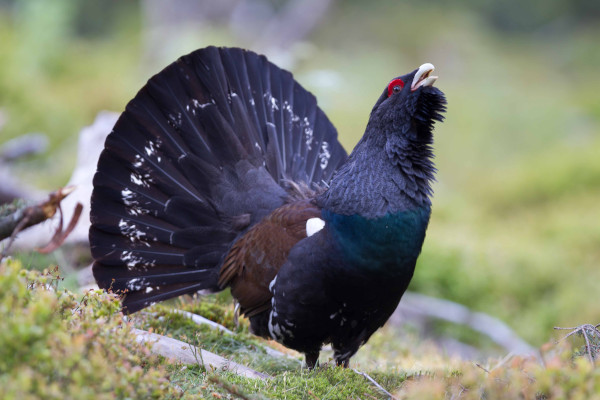
Capercaillie
The capercaillie is a huge woodland grouse, the large black males are unmistakable. They spend a lot of time feeding on the ground, but may also be found in trees, feeding on shoots and buds. They are a localised breeding species found in Scottish native pinewood and conifer plantations. The UK population has declined so rapidly that it is at very real risk of extinction and is a Red List species.
Latin: Tetrao urogallus
Conservation status:
Listen:
Specially protected in:
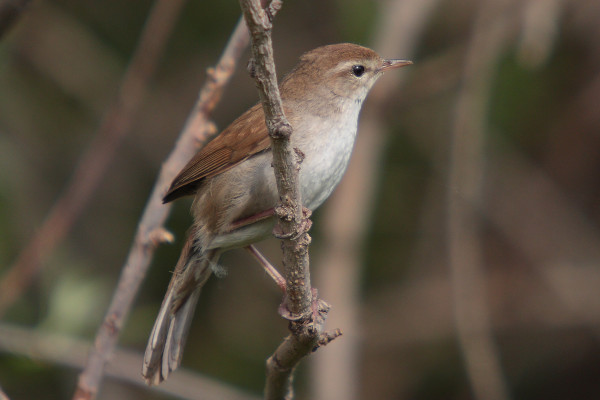
Cetti’s Warbler
A small, rather nondescript bird, Cetti's warbler (pronounced chetty) is a skulking bird and can prove very difficult to see. It usually makes its presence known with loud bursts of song and the first glimpse will probably be of a dark, rather stocky warbler with short wings and a full, rounded tail, diving for cover.
This Schedule 1 species is one of the UK's most recent colonists.
Latin: Cettia cetti
Conservation status:
Listen:
Specially protected in:
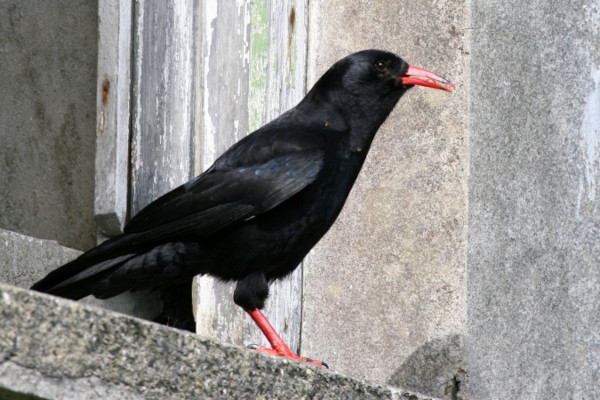
Chough
While its black plumage identifies it as a crow, the chough (pronounced 'chuff') has a red bill and legs unlike any other member of the crow family. It is restricted to the west of the British Isles.
It readily displays its mastery of flight with wonderful aerial displays of diving and swooping. This Schedule 1 species can be found in flocks in autumn and winter.
Latin: Pyrrhocorax pyrrhocorax
Conservation status:
Listen:
Specially protected in:
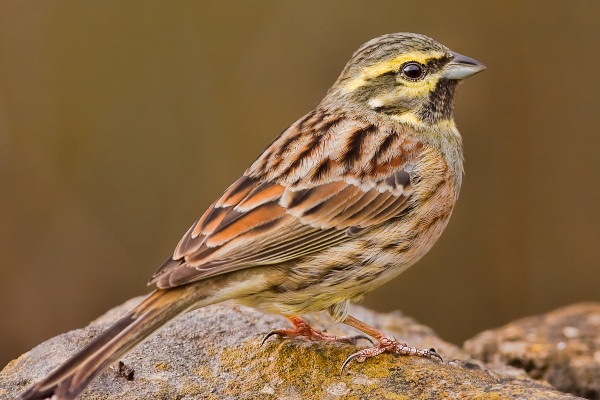
Cirl Bunting
The cirl bunting is a charming relative of the yellowhammer that is at the limit of its European range in the UK. In spring, males have a striking black chin, eye stripe and crown and yellow stripes on head and yellow underparts.
Female and juveniles look similar to yellowhammers, but have bolder head markings and streaked grey/brown rumps. It is a Schedule 1 species.
Latin: Plecotus auritus
Conservation status:
Listen:
Specially protected in:
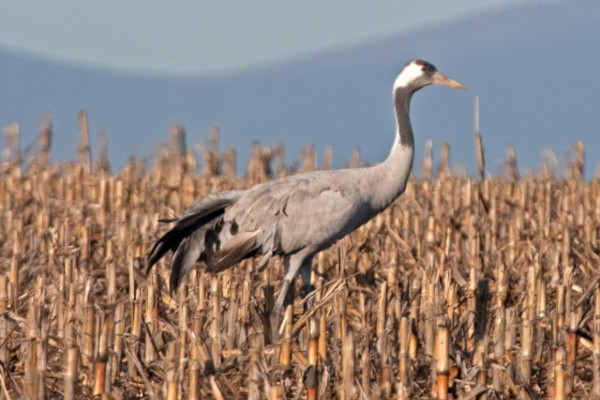
Common Crane
The crane is a huge, graceful, mainly grey bird with long legs, a long neck and drooping, curved tail feathers. There is a small breeding population in Norfolk, a re-introduced population in Somerset and small numbers pass through Britain in spring and autumn.
Numbers in Europe have declined over the last 300 years because of disturbance, shooting and drainage.
Latin: Grus grus
Conservation status:
Listen:
Specially protected in:
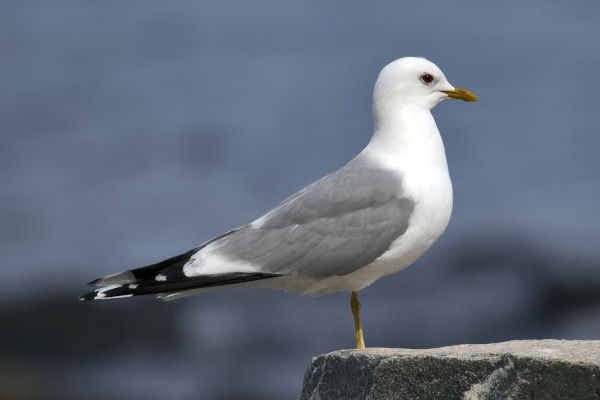
Common Gull
The common gull looks like a small, gentler version of the herring gull, with greenish legs and a yellow bill. Despite its name, it is not at all common in most inland areas, though it can be abundant on the coast and in some eastern counties. They are now seen more often in towns and on housing estates in winter.
Latin: Larus canus
Conservation status:
Listen:
Specially protected in:
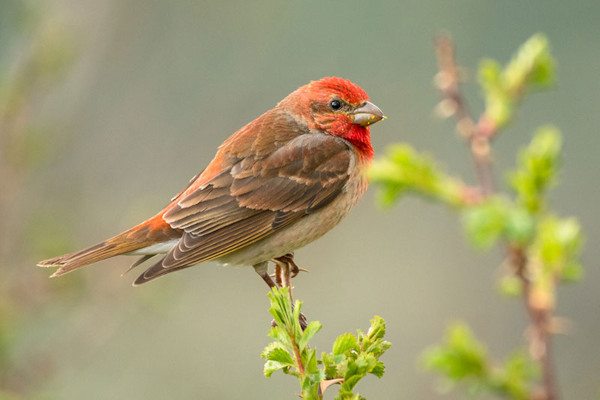
Common (Scarlet) Rosefinch
Common rosefinches are sparrow-sized birds, mottled brown above with a streaked breast, pale belly and forked tail. Males, older than one year, have scarlet head, breast and rump. Females, juveniles and first year males have streaked brown heads and resemble small corn buntings.
In the UK they have bred sporadically.
Latin: Carpodacus erythrinus
Conservation status: Not assessed
Listen:
Specially protected in:
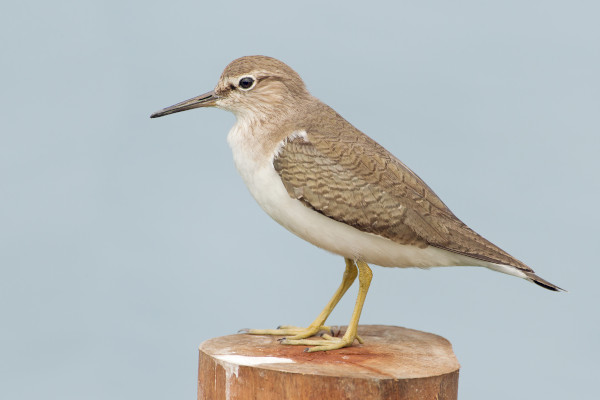
Common Sandpiper
The common sandpiper is a smallish wader with contrasting brown upperparts and white underparts. It habitually bobs up and down, known as 'teetering', and has a distinctive flight with stiff, bowed wings. Its presence is often betrayed by its three-note call which it gives as it flies off.
Latin: Actitis hypoleucos
Conservation status:
Listen:
Specially protected in:
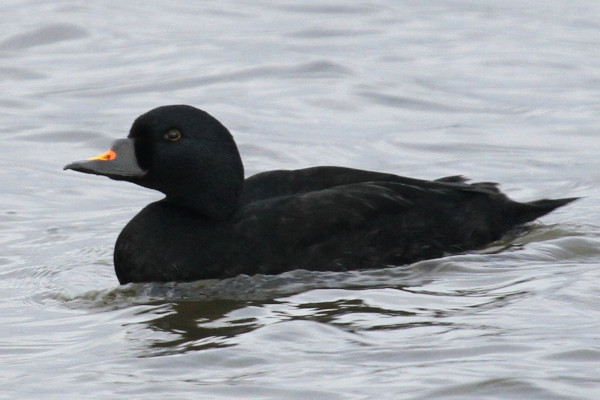
Common Scoter
The common scoter is an all dark seaduck, the male is totally black and the female lighter, with a pale face. They are often seen as large bobbing rafts offshore, or long straggling lines flying along the coast.
The UK breeding population of this small diving seaduck has substantially declined and it is now a Red List and a Schedule 1 species. Its winter populations are vulnerable to oil spills.
Latin: Melanitta nigra
Conservation status:
Listen:
Specially protected in:
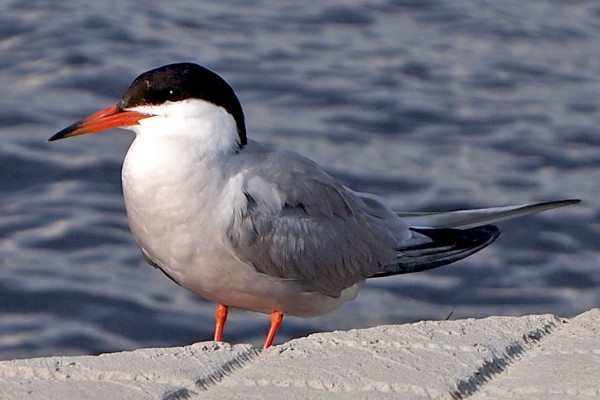
Common Tern
These delightful silvery-grey and white birds have long tails which have earned them the nickname 'sea-swallow'. They have a buoyant, graceful flight and frequently hover over water before plunging down for a fish. They are often noisy in company and breed in colonies. The common tern is the tern species most likely to be found inland.
Latin: Sterna hirundo
Conservation status:
Listen:
Specially protected in:
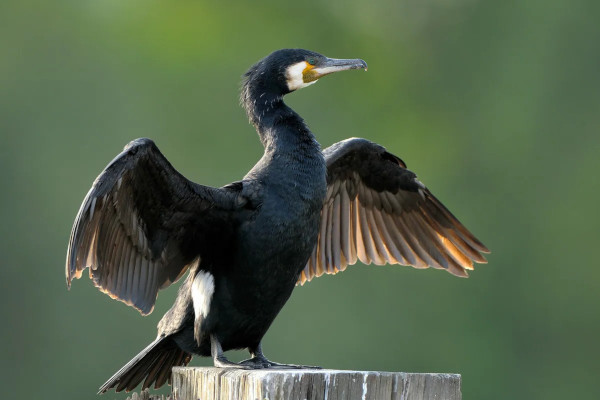
Cormorant
A large, black, and conspicuous waterbird, the cormorant has an almost primitive appearance with its long neck making it appear reptilian. It is often seen standing with its wings held out to dry. Regarded by some as sinister and greedy, cormorants are supreme fishers which can bring them into conflict with anglers, thus causing them to be persecuted in the past. The UK holds internationally significant wintering numbers.
Latin: Phalacrocorax carbo
Conservation status:
Listen:
Specially protected in:
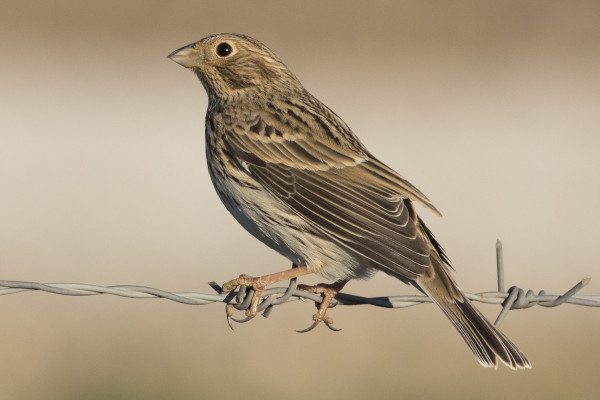
Corn Bunting
This nondescript lowland farmland bird is the largest of the buntings and is most usually seen perched on a wire or post. It is a stout, dumpy bird brown which flies off with a fluttering flight and with its legs characteristically 'dangling'. Its dramatic population decline in the UK makes it a Red List species.
Latin: Emberiza calandra
Conservation status:
Listen:
Specially protected in:
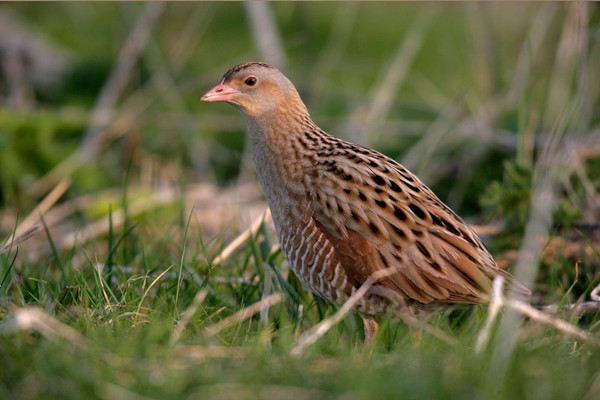
Corncrake
Corncrakes are related to moorhens, but differ from most members of the family in that they live on dry land. Corncrakes are only a little bigger than a blackbird. This Schedule 1 species is very secretive, spending most of its time hidden in tall vegetation, its presence only betrayed by its rasping call.
They are summer visitors and migrate to Africa for the winter.
Latin: Crex crex
Conservation status:
Listen:
Specially protected in:
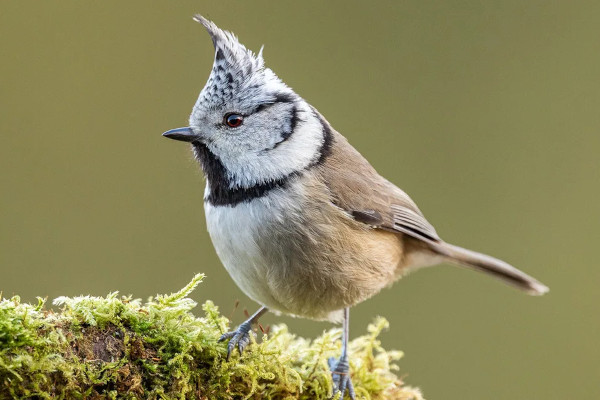
Crested Tit
Although not as colourful as some other tits, the crested tit's 'bridled' face pattern and the upstanding black and white crest make this a most distinctive species.
Crested tits feed actively, searching for a wide range of invertebrates and pine seeds. They store food extensively during early winter, using it in late winter. It is listed as a Schedule 1 species.
Latin: Lophophanes cristatus
Conservation status:
Listen:
Specially protected in:
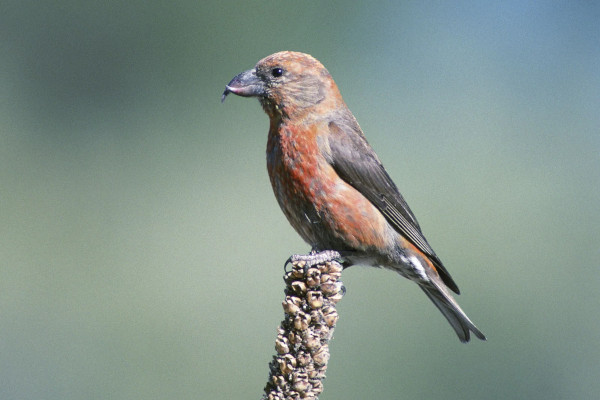
Crossbill
The crossbill is a chunky finch with a large head and bill which is crossed over at the tips. This crossed bill is used to extract seeds from conifer cones. They are most often encountered in noisy family groups or larger flocks.
Adult males are a distinctive brick-red and females greenish-brown. It is a Schedule 1 species.
Latin: Loxia curvirostra
Conservation status:
Listen:
Specially protected in:
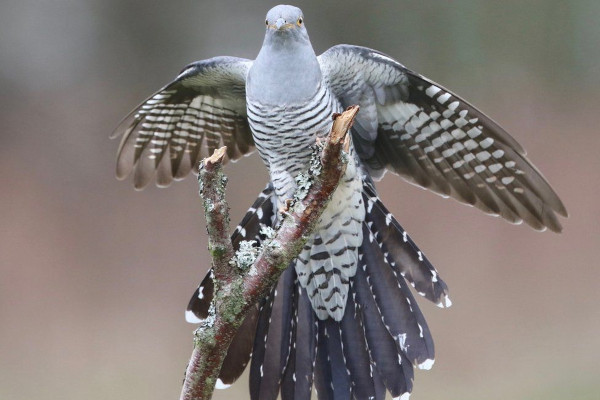
Cuckoo
The cuckoo is a dove-sized bird with a blue-grey back, head and chest, and dark barred and white under parts. With their sleek body, long tail and pointed wings, they are not unlike kestrels or sparrowhawks.
Cuckoos are summer visitors and are well-known brood parasites. Instead of building their own nest, the females lay their eggs in other birds’ nests.
Latin: Cuculus canorus
Conservation status:
Listen:
Specially protected in:

Curlew
The curlew is the largest European wading bird, instantly recognisable on winter estuaries and summer moors. Spot the curlew by its long, down-curved bill, brown upperparts, long legs and evocative, bubbling, call.
In the winter, you’ll see curlews feeding in groups on tidal mudflats, saltmarshes and nearby farmland. Whilst some of our birds spend the winter in Ireland.
Latin: Numenius arquata
Conservation status:
Listen:
Specially protected in:
D
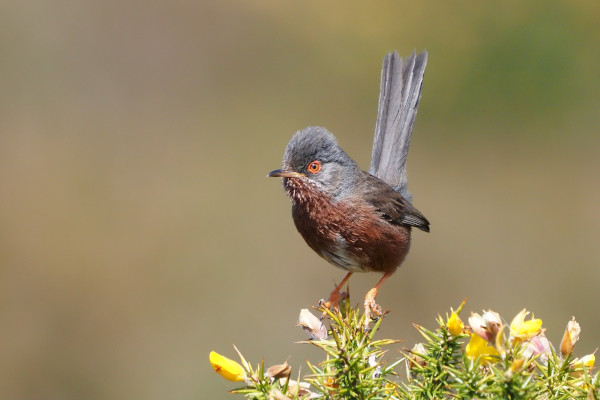
Dartford Warbler
This small, dark, long-tailed warbler is resident in the UK and has suffered in the past from severe winters. The Dartford warbler's population crashed to a few pairs in the 1960s, since when it has gradually recovered, increasing in both numbers and range. It is still regarded as an Amber List species. It will perch on top of a gorse stem to sing, but is often seen as a small flying shape bobbing between bushes.
Latin: Curruca undata
Conservation status:
Listen:
Specially protected in:
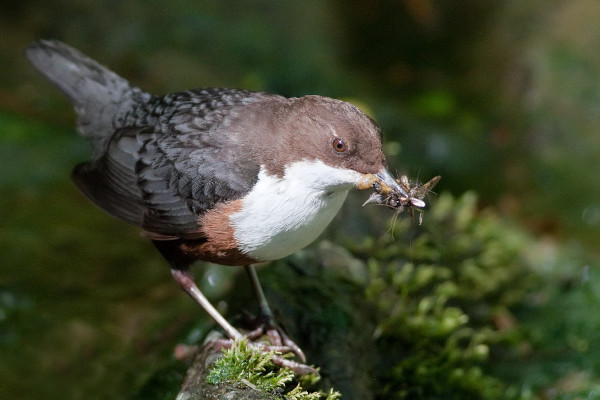
Dipper
The dipper is a short-tailed, plump bird with a low, whirring flight. When perched on a rock it habitually bobs up and down and frequently cocks its tail. Its white throat and breast contrasts with its dark body plumage. It is remarkable in its method of walking into and under water in search of food.
Latin: Cinclus cinclus
Conservation status:
Listen:
Specially protected in:
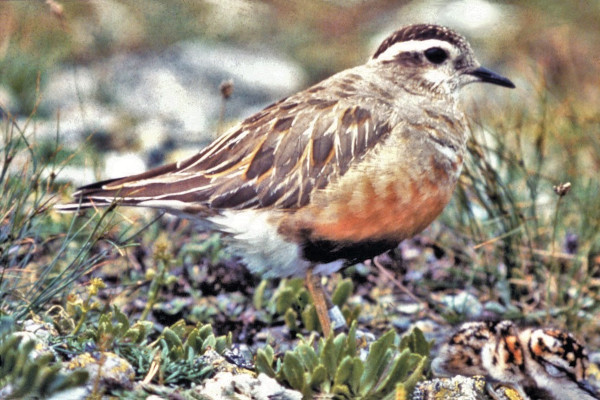
Dotterel
This medium-sized member of the plover family is unusual in that the adult female is brighter than the male - an indication of their role-reversal in raising the young. Adults have largely grey-brown upperparts and bright chestnut belly, with a white chest band, throat and eyestripe, the latter contrasting with a dark cap. On spring migration they are often seen in groups, or 'trips', at traditional stopping places.
Latin: Charadrius morinellus
Conservation status:
Listen:
Specially protected in:
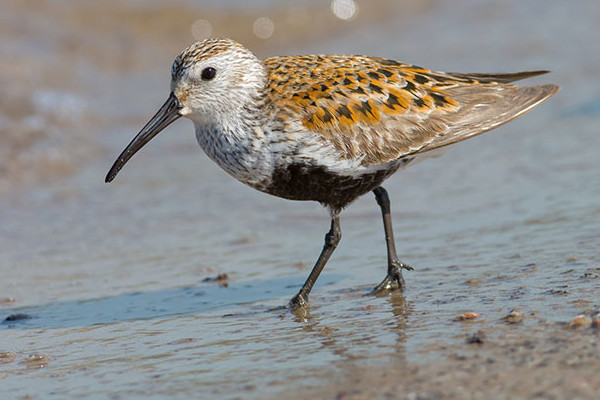
Dunlin
The commonest small wader found along the coast. It has a slightly down-curved bill and a distinctive black belly patch in breeding plumage. It feeds in flocks in winter, sometimes numbering thousands, roosting on nearby fields, saltmarshes and shore when the tide is high.
Latin: Calidris alpina
Conservation status:
Listen:
Specially protected in:
E
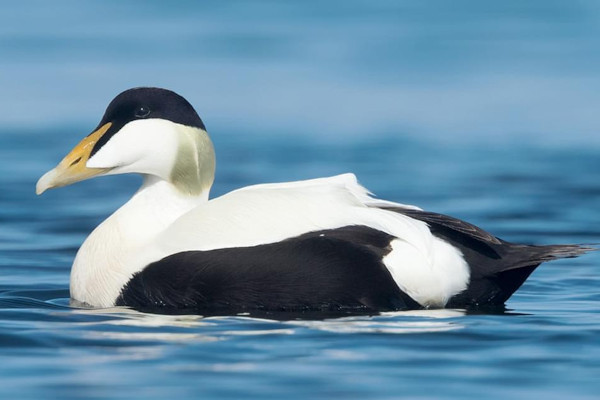
Eider
The eider is the UK's heaviest duck and its fastest flying. It is a true seaduck, rarely found away from coasts where its dependence on coastal molluscs for food has brought it into conflict with mussel farmers. Eiders are highly gregarious and usually stay close inshore, riding the swell in a sandy bay or strung out in long lines out beyond the breaking waves. It is an Amber List species because of its winter concentrations.
Latin: Somateria mollissima
Conservation status:
Listen:
Specially protected in:
F
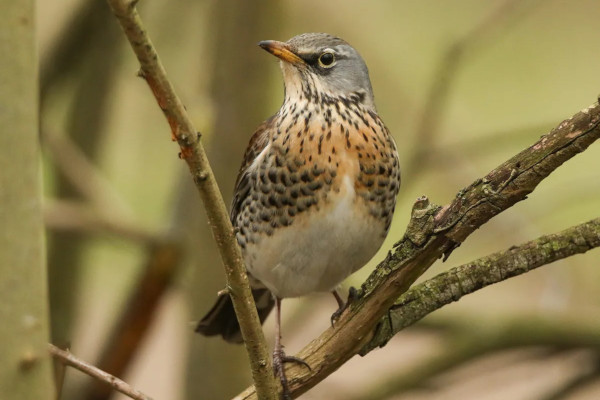
Fieldfare
Fieldfares are large, colourful thrushes, much like a mistle thrush in general size, shape and behaviour. They stand very upright and move forward with purposeful hops. They are very social birds, spending the winter in flocks of anything from a dozen or two to several hundred strong. These straggling, chuckling flocks which roam the UK's countryside are a delightful and attractive part of the winter scene.
Latin: Turdus pilaris
Conservation status:
Listen:
Specially protected in:
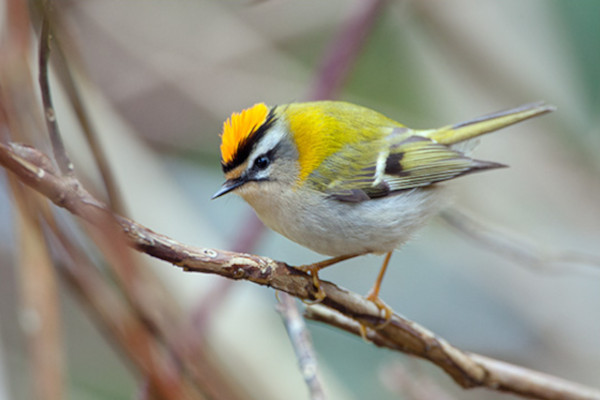
Firecrest
This tiny, restless jewel of a bird vies with the goldcrest for the title of the UK's smallest bird. Compared to the goldcrest, the firecrest is brighter and 'cleaner' looking, with a green back, white belly, bronze 'collar' and a black and white eye-stripe. They have a yellow and black stripe on their heads, which has a bright orange centre in males. Like goldcrests, they move through trees and bushes in search of small insects.
Latin: Regulus ignicapillus
Conservation status:
Listen:
Specially protected in:
G
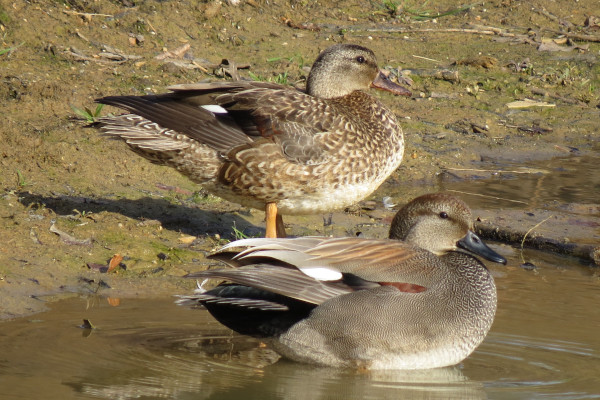
Gadwall
The gadwall is a very grey-coloured dabbling duck, a little smaller than the mallard, and with an obvious black rear end. It shows a white wing patch in flight. When seen close up the grey colour is made up of exquisitely fine barring and speckling. It nests in low numbers in the UK and is an Amber List species.
Latin: Anas strepera
Conservation status:
Listen:
Specially protected in:
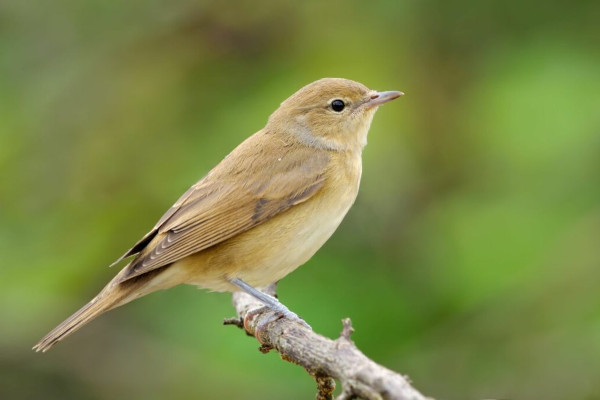
Garden Warbler
A very plain warbler with no distinguishing features (a feature in itself!). It spends a lot of its time in the cover of trees and bushes and can be more difficult to see than its relative, the blackcap. Despite its name it is not really a garden bird, except in mature gardens next to woods. Its song is similar to that of a blackcap, but has longer mellow phrases.
Latin: Pipistrellus pipistrellus
Conservation status:
Listen:
Specially protected in:
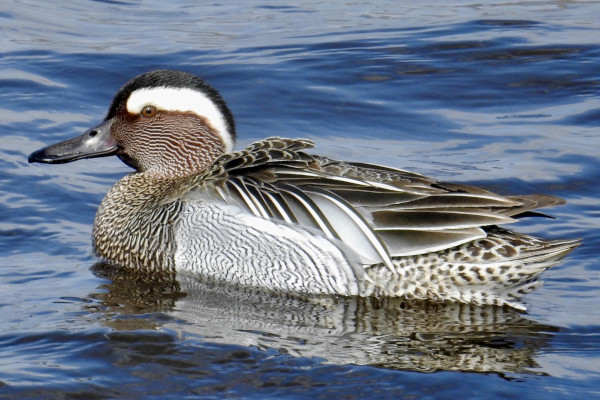
Garganey
The garganey is a scarce and very secretive breeding duck in the UK. It is smaller than a mallard and slightly bigger than a teal. The male is most easily recognised with a broad white stripe over the eye. In flight it shows a pale blue forewing. It feeds by 'dabbling'. Garganeys are listed as a Schedule 1 species.
Latin: Anas querquedula
Conservation status:
Listen:
Specially protected in:
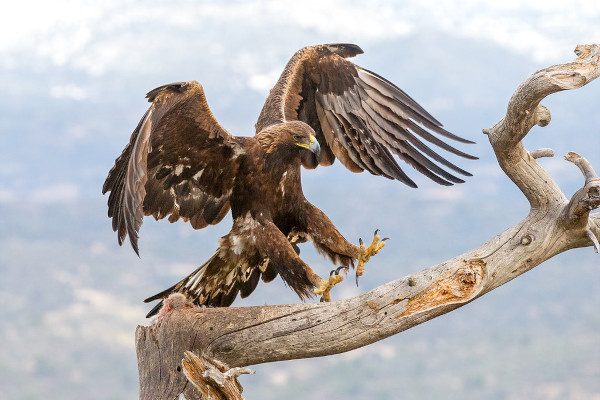
Golden Eagle
TA huge bird of prey, with only the white-tailed eagle larger in the UK. With its long broad wings and longish tail, it has a different outline to the smaller buzzard. It likes to soar and glide on air currents, holding its wings in a shallow 'V'. Eagles have traditional territories and nesting places which may be used by generations. They are listed as a Schedule 1 species.
Latin: Aquila chrysaetos
Conservation status:
Listen:
Specially protected in:
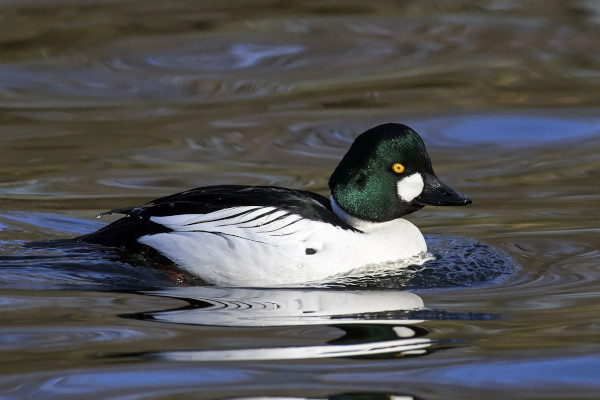
Goldeneye
The goldeneye is a medium sized diving duck. Males look black and white with a greenish black head and a circular white patch in front of the yellow eye. Females are smaller, and are mottled grey with a chocolate brown head. In flight, birds show a large area of white on the inner wing. First nested in Scotland in 1970, and since then birds have been attracted to nest in specially designed boxes put up on trees close to water.
Latin: Bucephala clangula
Conservation status:
Listen:
Specially protected in:
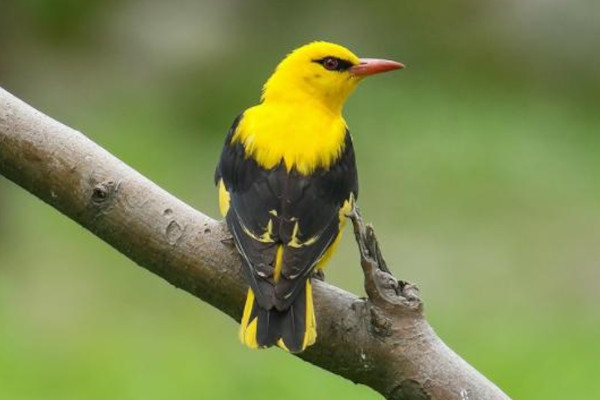
Golden Oriole
Blackbird-sized the male has an unmistakable bright yellow body with black wings. A secretive bird which keeps to the high tree canopy, it can be heard, most often at dawn, giving its distinctive fluting whistle. It flies rather like a thrush - slightly undulating. Golden orioles are listed as a Schedule 1 species.
Latin: Oriolus oriolus
Conservation status:
Listen:
Specially protected in:
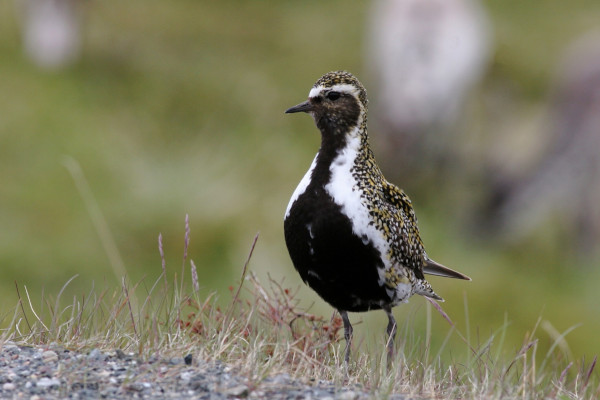
Golden Plover
The golden plover is a medium-sized plover with a distinctive gold and black summer plumage. In winter the black in replaced by buff and white. They typically stand upright and run in short bursts. Very wary on the breeding grounds. In winter they form large flocks which fly in fairly tight formation with rapid, twinkling wingbeats.
Latin: Pluvialis apricaria
Conservation status:
Listen:
Specially protected in:
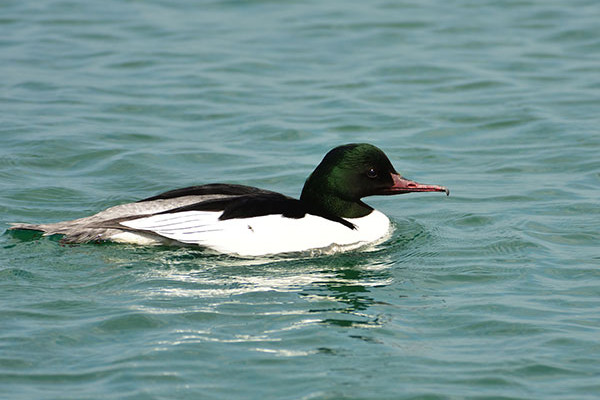
Goosander
TThese handsome diving ducks are a member of the sawbill family, so called because of their long, serrated bills, used for catching fish. It built up numbers in Scotland and then since 1970 it has spread across northern England into Wales, reaching south-west England. Its love of salmon and trout has brought it into conflict with fishermen. It is gregarious, forming into flocks of several thousand in some parts of Europe.
Latin: Mergus merganser
Conservation status:
Listen:
Specially protected in:
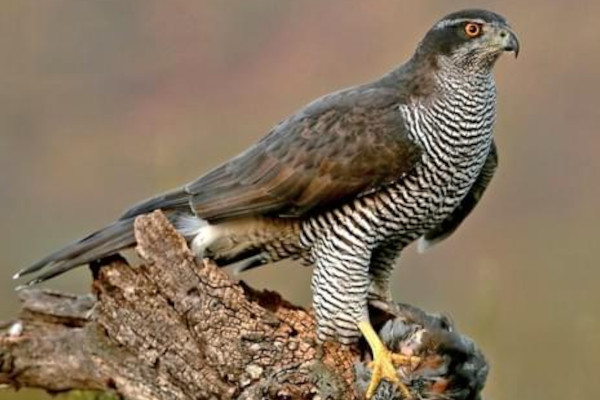
Goshawk
The goshawk is a large hawk, almost reaching buzzard size. When up close it has a fierce expression with bright red eyes and a distinctive white eyebrow. Its broad wings enable it to hunt at high speed, weaving in and out of trees, and its long legs and talons can catch its prey in flight. The female is substantially larger than the male. In late winter and spring it has a 'sky-dance' display. Goshawks are a Schedule 1 species.
Latin: Accipiter gentilis
Conservation status:
Listen:
Specially protected in:
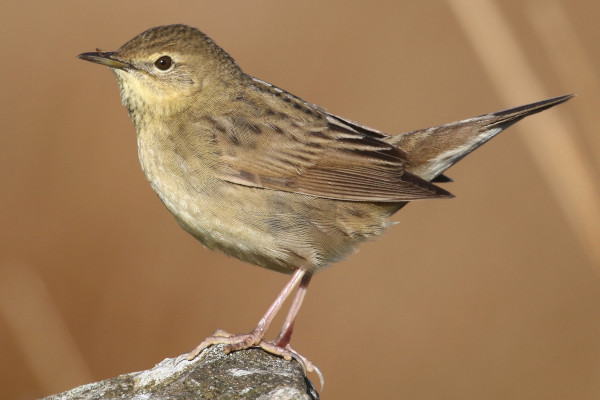
Grasshopper Warbler
The high, insect-like reeling song of the grasshopper warbler is the best clue to its presence. Even when you hear one it can be difficult to locate it due to the ventriloquial effect of its singing. If seen on migration it moves like a little mouse, creeping through the foliage. Dramatic population declines have made this a Red List species.
Latin: Locustella naevia
Conservation status:
Listen:
Specially protected in:
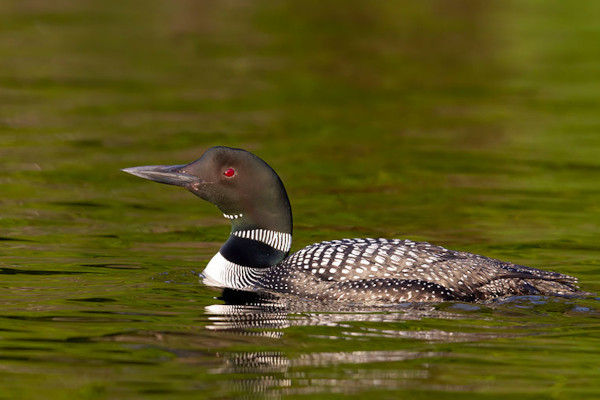
Great Northern Diver
The largest of the UK's divers, it has a bigger, heavier head and bill than its commoner relatives. It is largely a winter visitor to our shores although some non-breeding birds stay off northern coasts in the summer. Great northern divers are listed under Schedule 1 of The Wildlife and Countryside Act.
Latin: Gavia immer
Conservation status:
Listen:
Specially protected in:
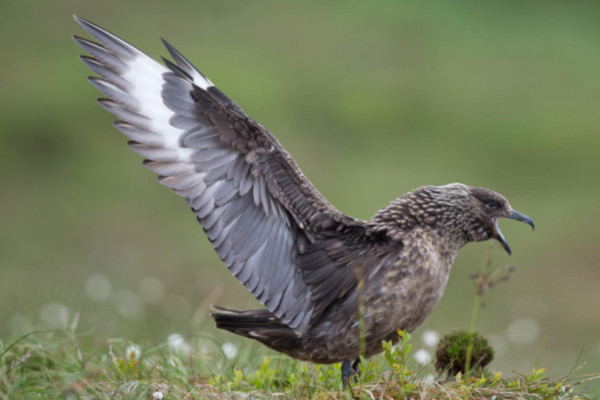
Great Skua
The great skua is an aggressive pirate of the seas, deliberately harassing birds as large as gannets to steal a free meal. It also readily kills and eats smaller birds such as puffins. Great skuas show little fear of humans - anybody getting close to the nest will be repeatedly dive-bombed by the angry adult. These birds migrate to the northernmost isles of the UK from their wintering grounds off the coasts of Spain and Africa.
Latin: Stercorarius skua
Conservation status:
Listen:
Specially protected in:
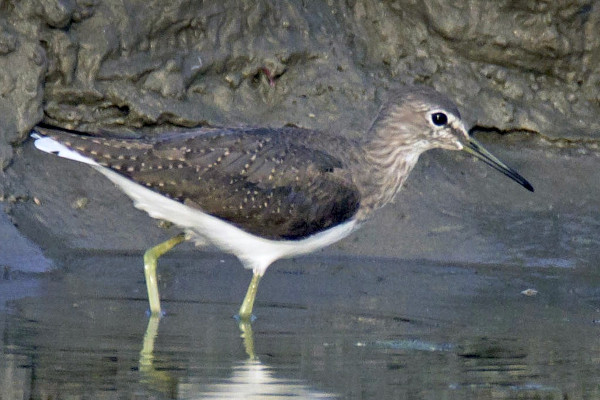
Green Sandpiper
The green sandpiper is a very contrasting wader which looks like a large house martin in flight. Its dark, almost black upperparts, pale underparts and white rump are distinctive. It frequently bobs up and down when standing. It often appears nervous and will fly off with a low zig-zagging flight when disturbed.
Latin: Tringa ochropus
Conservation status:
Listen:
Specially protected in:
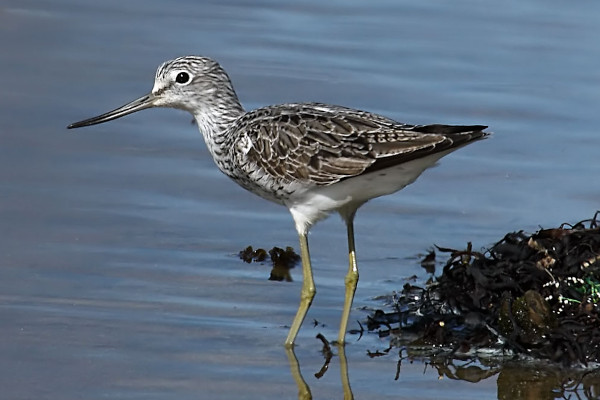
Greenshank
A medium-sized slim wader with a dark grey back and white underparts. Its long green legs and slightly up-turned bill help to distinguish it from other waders. It calls regularly and is seen singly and in small groups.
Latin: Tringa nebularia
Conservation status:
Listen:
Specially protected in:
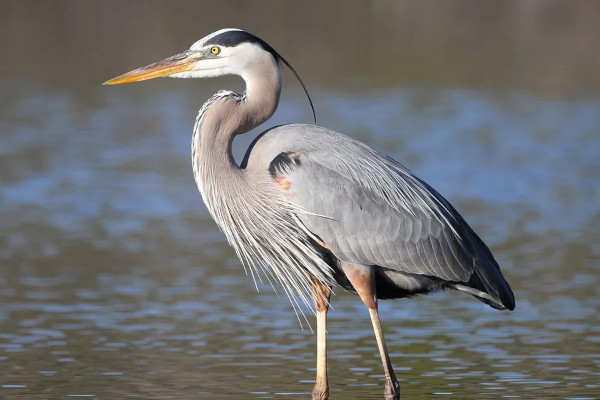
Grey Heron
Grey herons are unmistakeable: tall, with long legs, a long beak and grey, black and white feathering. They can stand with their neck stretched out, looking for food, or hunched down with their neck bent over their chest.
Latin: Ardea cinerea
Conservation status:
Listen:
Specially protected in:
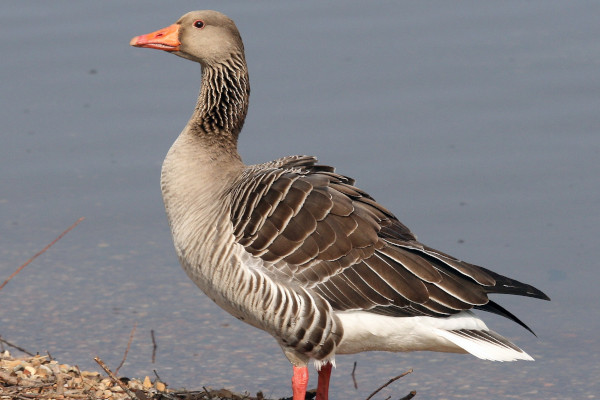
Greylag Goose
The ancestor of most domestic geese, the greylag is the largest and bulkiest of the wild geese native to the UK and Europe. In many parts of the UK it has been re-established by releasing birds in suitable areas, but the resulting flocks (often mixed with Canada geese) found around gravel pits, lakes and reservoirs all year round in southern Britain tend to be semi-tame and uninspiring.
Latin: Anser anser
Conservation status:
Listen:
Specially protected in:
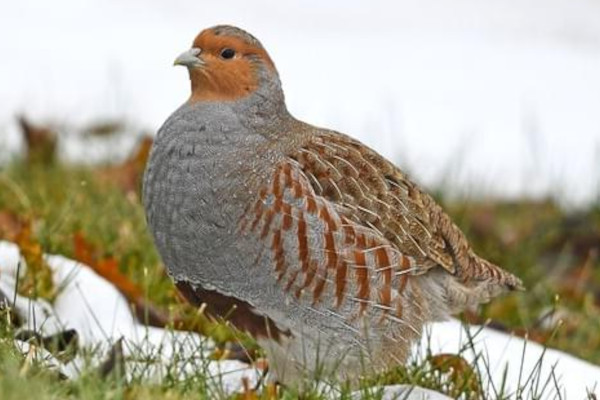
Grey Partridge
The grey partridge is a medium-sized bird with a distinctive orange face. Flies with whirring wings and occasional glides, showing a chestnut tail. It is strictly a ground bird, never likely to be found in pear trees! Groups of 6-15 (known as coveys) are most usually seen outside the breeding season. Once very common and widespread, it has undergone serious declines throughout most of its range and is a Red List species.
Latin: Perdix perdix
Conservation status:
Listen:
Specially protected in:
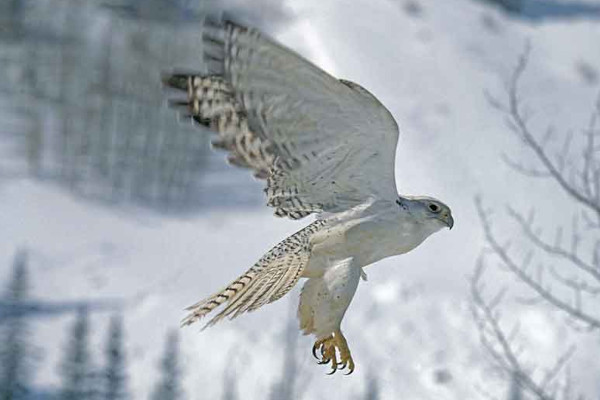
Gyr Falcon
Gryfalcons are large falcons with pointed wings and a long tail. Females are significantly larger than males.
They are polymorphic and range in colour from white to dark brown – the morphs are called ‘white’, ‘silver’, ‘brown’, and ‘black’ with the white morph being the only white falcon, and the black morph found mostly in females. Gryfalcons have heavy bars on the back, wings, and tail.
Latin: Falco rusticolus
Conservation status:
Listen:
Specially protected in:
H
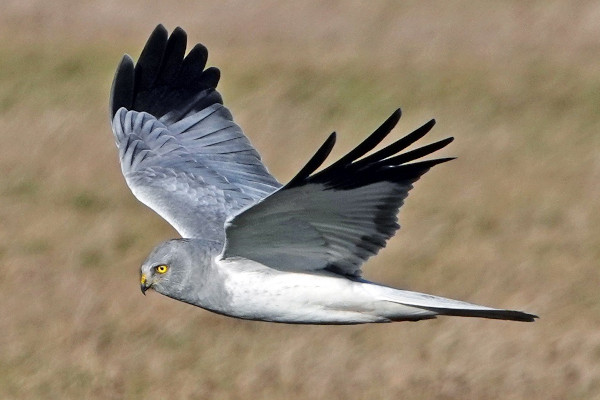
Hen Harrier
Of the UK's birds of prey, this is the most intensively persecuted. Once predating free-range fowl, earning its present name, its effect on the number of grouse available to shoot is the cause of modern conflict and threatens its survival in some parts of the UK, particularly on the driven grouse moors of England and Scotland.
They are listed as a Schedule 1 species under The Wildlife and Countryside Act.
Latin: Circus cyaneus
Conservation status:
Listen:
Specially protected in:
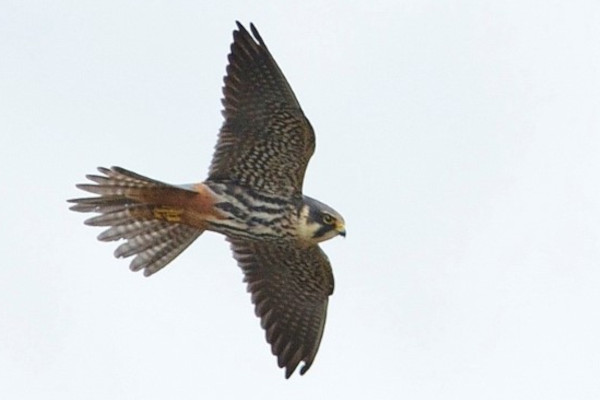
Hobby
About the size of a kestrel with long pointed wings, reminiscent of a giant swift. It has a dashing flight and will chase large insects and small birds like swallows and martins. Prey is often caught in its talons and transferred to its beak in flight. Can accelerate rapidly in flight and is capable of high-speed aerial manoeuvres.
Hobbies are listed as a Schedule 1 bird on The Wildlife and Countryside Act.
Latin: Falco subbuteo
Conservation status:
Listen:
Specially protected in:
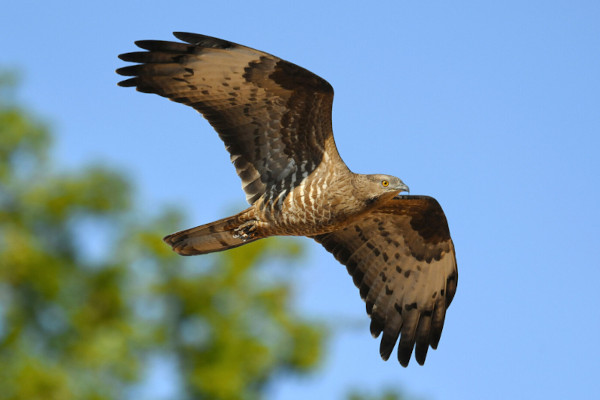
Honey Buzzard
The honey buzzard is a large bird of prey that is similar to the buzzard. The plumage is very variable across all ages - typical adults are greyish-brown on its upperparts and whitish underparts.
The nest sites of British breeding birds are usually kept secret to protect them from egg collectors. They are also listed as a Schedule 1 species on The Wildlife and Countryside Act offering them additional protection.
Latin: Pernis apivorus
Conservation status:
Listen:
Specially protected in:
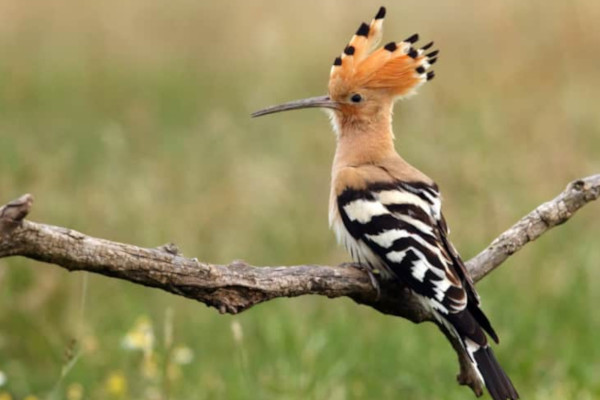
Hoopoe
The hoopoe is an exotic looking bird that is the size of a mistle thrush. It has a pinkish-brown body, striking black and white wings, a long black downcurved bill, and a long pinkish-brown crest which it raises when excited.
It does not breed in the UK, but as many as 100 birds can turn up in spring as birds migrating north to Europe from Africa overshoot and land on the south coast of England.
Latin: Upupa epops
Conservation status: N/A
Listen:
Specially protected in:
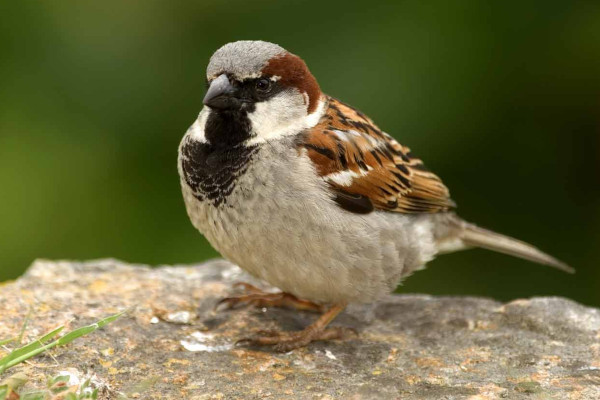
House Sparrow
Noisy and gregarious, these cheerful exploiters of man's rubbish and wastefulness have managed to colonise most of the world. Monitoring suggests a severe decline in the UK house sparrow population, recently estimated as dropping by 71 per cent between 1977 and 2008 with substantial declines in both rural and urban populations. While the decline in England continues,.
Latin: Passer domesticus
Conservation status:
Listen:
Specially protected in:
J
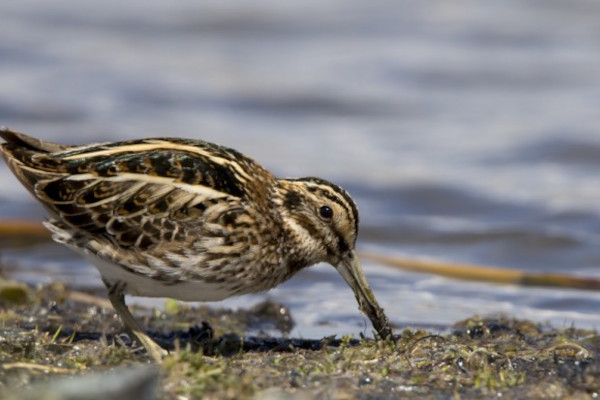
Jack Snipe
TJack snipes are smaller than snipe, with a shorter bill. It is a secretive bird and when approached it tends to crouch down, relying on its camouflaged plumage, only flying at the last minute. It will fly low and rapidly drop down again, unlike snipes which zig-zag and then flies off high. When feeding it has a characteristic 'bouncing' motion, as if on a spring.
Latin: Lymnocryptes minimus
Conservation status:
Listen:
Specially protected in:
K
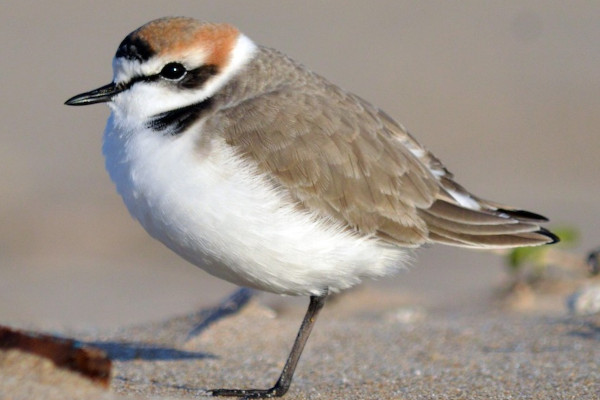
Kentish Plover
TSmall, pale plover with broken black collar, sandy upperparts, grayish legs, and rather fine black bill. Breeding plumage has black mask and black tabs at sides of breast (not a complete band). Nonbreeding plumages have black replaced by brown. Mainly coastal, on sandy beaches, dry mudflats, and at salt ponds, usually near water; also locally inland. Migrants will join with flocks of other shorebirds.
Latin: Charadrius alexandrinus
Conservation status:
Listen:
Specially protected in:
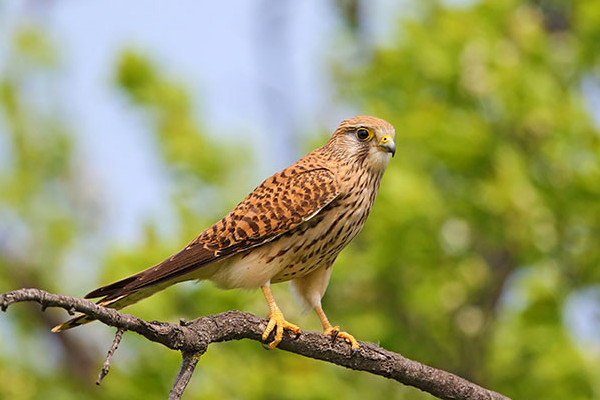
Kestrel
Kestrels are a familiar sight with their pointed wings and long tail, hovering beside a roadside verge. Numbers of kestrels have declined since the 1970s, probably as a result of changes in farming and so it is included on the Amber List.
They have adapted readily to man-made environments and can survive right in the centre of cities.
Latin: Falco tinnunculus
Conservation status:
Listen:
Specially protected in:
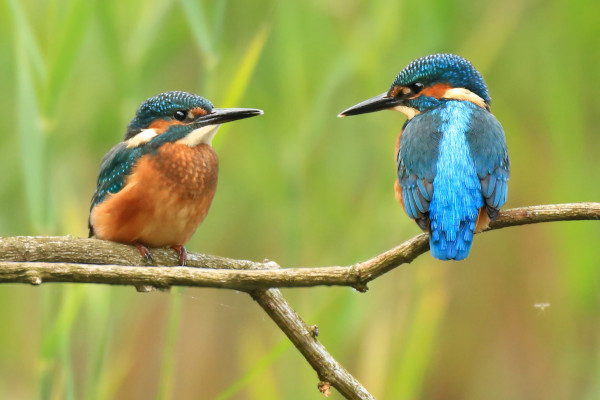
Kingfisher
Kingfishers are small unmistakable bright blue and orange birds of slow moving or still water. They fly rapidly, low over water, and hunt fish from riverside perches, occasionally hovering above the water's surface. Kingfishers are amber listed because of their unfavourable conservation status in Europe. They are also listed as a Schedule 1 species under the Wildlife and Countryside Act offering them additional protection.
Latin: Alcedo atthis
Conservation status:
Listen:
Specially protected in:
L
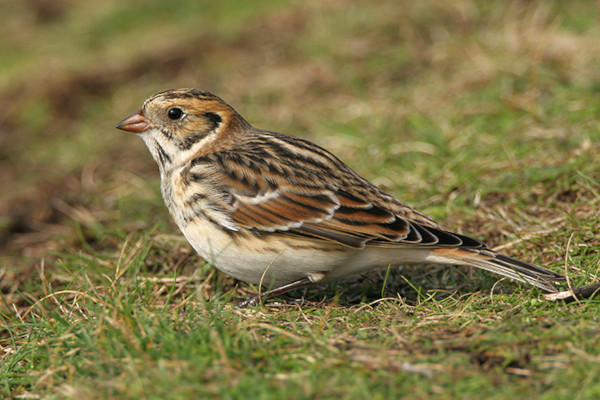
Lapland Bunting
Lapland buntings are lightly larger than a reed bunting with a well-marked head pattern, chestnut nape and chestnut wing panel. It spends most of its time on the ground and is often seen in small flocks. Occasional birds are seen in Scotland in the summer, when males have a striking black crown, face and throat. It is listed as a Schedule 1 species under The Wildlife and Countryside Act offering it additional protection.
Latin: Calcarius lapponicus
Conservation status:
Listen:
Specially protected in:
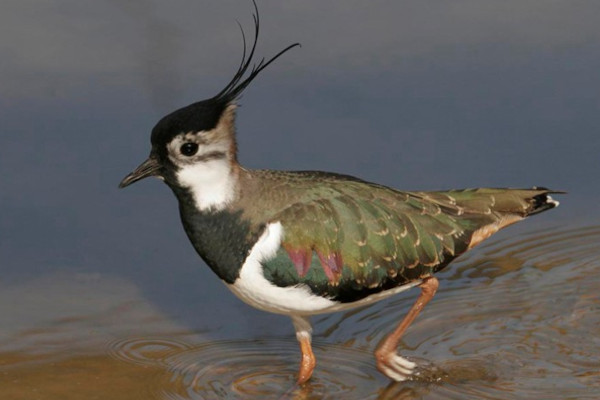
Lapwing
Also known as the peewit in imitation of its display calls, its proper name describes its wavering flight. Its black and white appearance and round-winged shape in flight make it distinctive, even without its splendid crest. This familiar farmland bird has suffered significant declines recently and is now a Red List species.
Latin: Vanellus vanellus
Conservation status:
Listen:
Specially protected in:
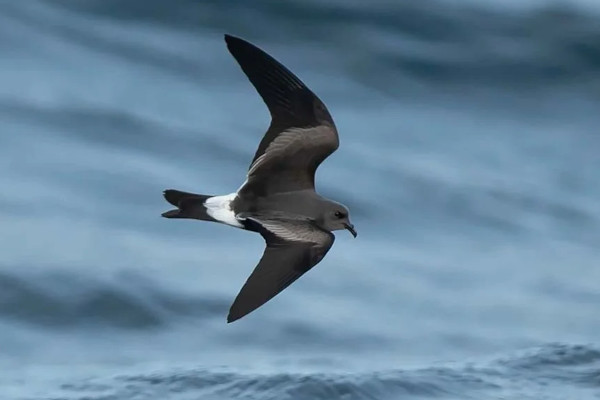
Leach’s Petrel
Leach's petrels breed on remote offshore islands to the UK and feed out beyond the continental shelf. It is specially protected by law and it's important that its breeding colonies are protected from introduced predators such as cats and rats. It is also listed as a Schedule 1 species under The Wildlife and Countryside Act offering it additional protection.
Latin: Hydrobates leucorhous
Conservation status:
Listen:
Specially protected in:
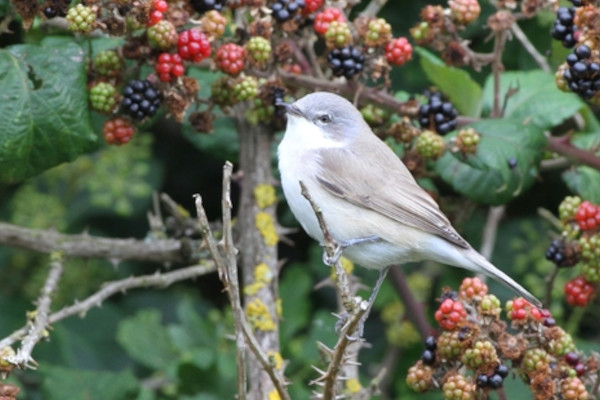
Lesser Whitethroat
As the name suggests, this warbler is smaller than its cousin the whitethroat. It sports dark cheek feathers which contrast with the pale throat and can give it a 'masked' look. When its flits from cover you might see the white outer feathers of its tail. Lesser whitethroats are hard to see and often only noticed when they give their harsh, rattling song, or 'tacking' call.
Latin: Curruca curruca
Conservation status:
Listen:
Specially protected in:
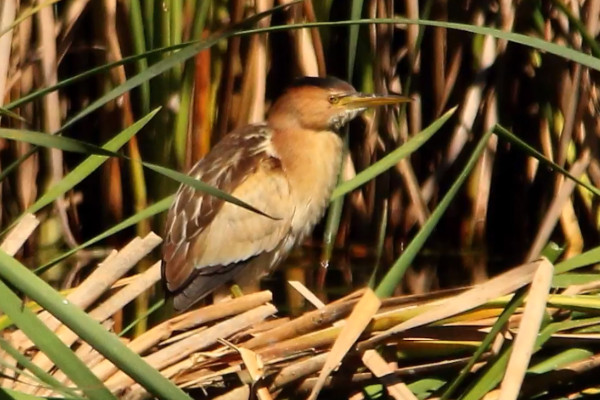
Little Bittern
This is a very small member of the heron family, about the size of a pigeon. Both sexes have a white wing panel, the male with black upperparts, the female brown. Little Bitterns migrate to Britain & Ireland in spring with most recorded from April. They return to Africa in the autumn.
The Little Bittern is a secretive and crepuscular species, which, together with the preferred reedbed habitat, makes this a very difficult species to observe.
Latin: Ixobrychus minutus
Conservation status:
Listen:
Specially protected in:
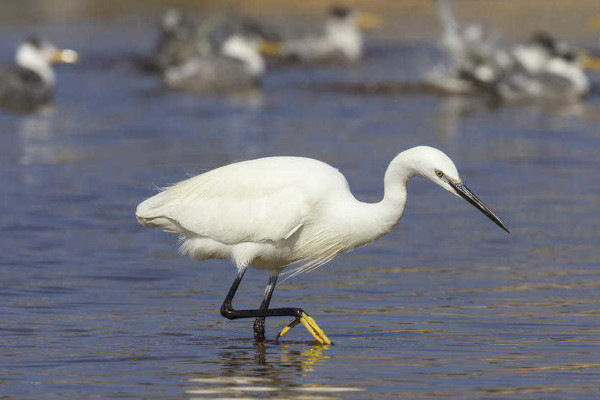
Little Egret
The little egret is a small white heron with a white crest, black legs and bill and yellow feet. It first appeared in the UK in significant numbers in 1989 and first bred in Dorset in 1996. Its colonization followed naturally from a range expansion into western and northern France in previous decades. It is now at home on numerous south coast sites, both as a breeding species and as a winter visitor.
Latin: Egretta garzetta
Conservation status:
Listen:
Specially protected in:
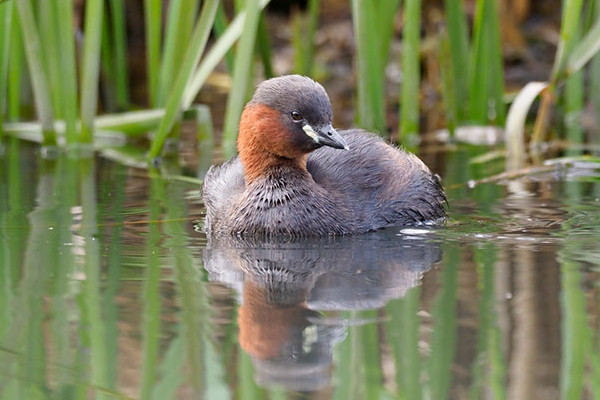
Little Grebe
TThe little grebe is a small, dumpy grebe which often appears to have a 'fluffy' rear end. It readily dives when disturbed, surfacing unseen some distance away. In summer it has a bright chestnut throat and cheeks and a pale gape patch at the base of the bill. It can be noisy, with a distinctive whinnying trill.
Latin: Tachybaptus ruficollis
Conservation status:
Listen:
Specially protected in:
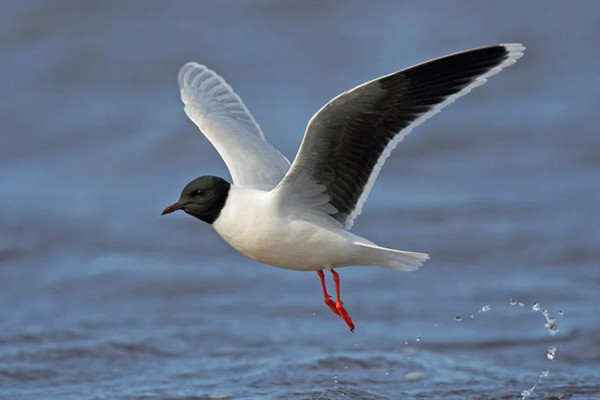
Little Gull
The little gull is a small, dainty gull. Adults in summer have black heads, while young birds have a black mark on each wing which forms a 'W' pattern. In flight adults show a pale grey upperwing, with no black wingtips, and a very dark grey underwing.
Little gulls are listed as a Schedule 1 species under The Wildlife and Countryside Act.
Latin: Hydrocoloeus minutus
Conservation status:
Listen:
Specially protected in:
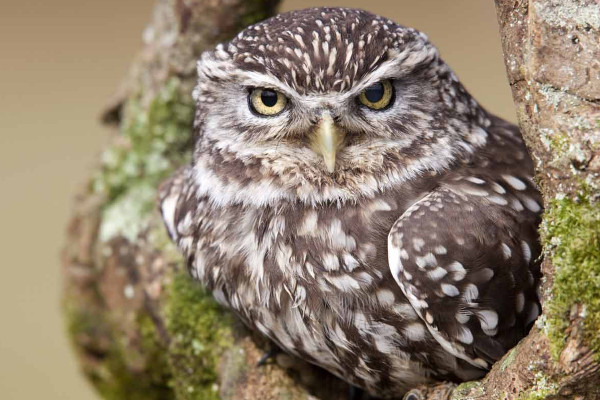
Little Owl
This small owl was introduced to the UK in the 19th century. It can be seen in the daylight, usually perching on a tree branch, telegraph pole or rock. In flight it has long, rounded wings, rapid wingbeats and flies with a slight undulation.
Breeding Bird Survey data suggest that little owl numbers are declining, with the UK population estimated to be down by 24 per cent between 1995 and 2008.
Latin: Athene noctua
Conservation status:
Listen:
Specially protected in:
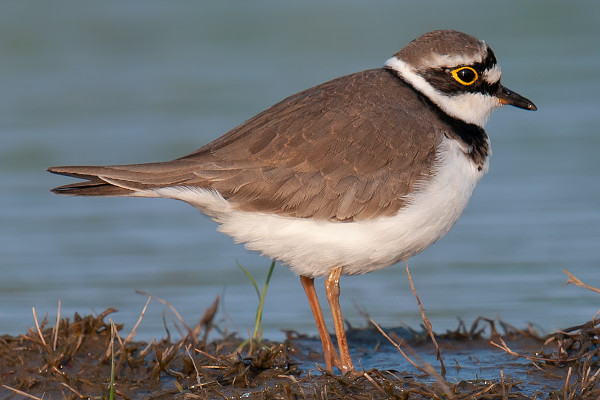
Little Ringed Plover
The little ringed plover is a small plover with a distinctive black and white head pattern, similar to the ringed plover. It has a black beak and pale (not orange) legs. Close views reveal a distinctive yellow eye-ring. In flight, it shows a plain brown wing without the white wingbar that ringed plover has.
It is listed as a Schedule 1 species under The Wildlife and Countryside Act.
Latin: Charadrius dubius
Conservation status:
Listen:
Specially protected in:
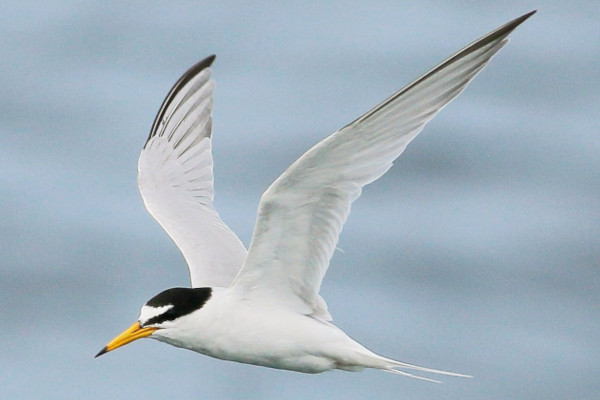
Little Tern
This delightful chattering seabird is the UK's smallest tern. It is short-tailed and has a fast flight. Its bill is a distinctive yellow with a black tip. It is noisy at its breeding colony where courtship starts with an aerial display from the male,
Its vulnerable nesting sites and its decline in Europe make it an Amber List species. It is also listed as a Schedule 1 species in The Wildlife and Countryside Act.
Latin: Sternula albifrons
Conservation status:
Listen:
Specially protected in:
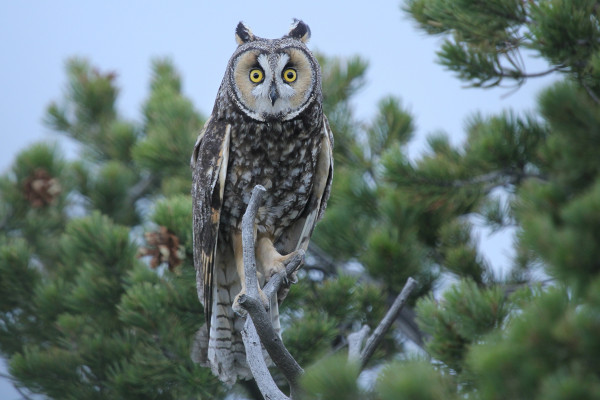
Long-eared Owl
The long-eared owl is a medium-sized owl, smaller in size than a woodpigeon. It often looks long and thin, with head feathers which it raises when alarmed. It is buff-brown with darker brown streaks and deep orange eyes.
It breeds thinly across the UK with fewer birds in the south-west and Wales. Northern birds migrate southwards, while southern birds are residents and only move short distances to find food.
Latin: Asio otus
Conservation status:
Listen:
Specially protected in:
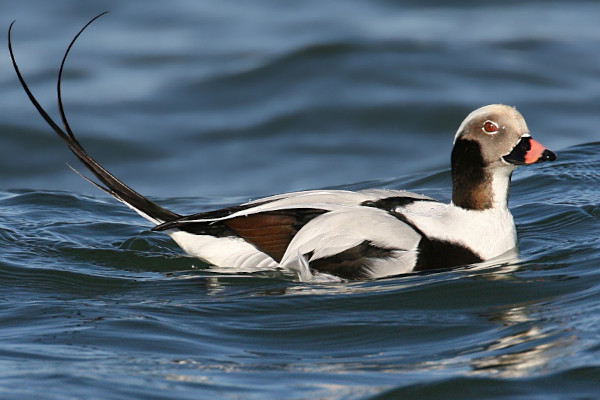
Long-tailed Duck
The long-tailed duck is a small, neat sea duck. They have small round heads and steep foreheads. In winter, the male is mainly white with some brownish-black markings. He also has greatly elongated tails feathers - hence the name. Females are browner.
They are a winter visitor and passage migrant to the UK. They are listed as a Schedule 1 species under The Wildlife and Countryside Act.
Latin: Clangula hyemalis
Conservation status:
Listen:
Specially protected in:
M
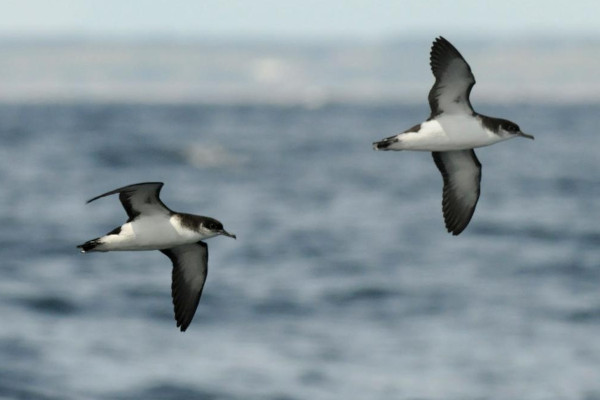
Manx Shearwater
The Manx shearwater is a small shearwater, with long straight slim wings, with black above and white below.
It breeds in colonies in the UK, on offshore islands where it is safe from rats and other ground predators. Birds leave their nest sites in July, to migrate to the coast of South America, where they spend the winter, returning in late February and March.
Latin: Puffinus puffinus
Conservation status:
Listen:
Specially protected in:

Marsh Harrier
The largest of the harriers, the marsh harrier can be recognised by its long tail and light flight with wings held in a shallow 'V'. It is distinguishable from other harriers by its larger size, heavier build, broader wings and absence of white on the rump. Females are larger than males and have obvious creamy heads.
Marsh harriers are a Schedule 1 listed bird on The Wildlife and Countryside Act.
Latin: Circus aeruginosus
Conservation status:
Listen:
Specially protected in:
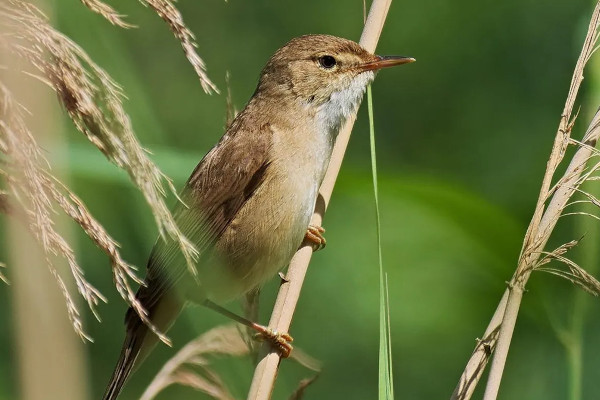
Marsh Warbler
Few people hear this master singer in the UK because of its rarity. Like other warblers it is highly active, searching its habitat of shrubs and dense vegetation for food.
Though it's thought to have a secure population within Europe, the UK population of marsh warblers has fallen and is now of serious conservation concern. It is a Schedule 1 listed bird of The Wildlife and Countryside Act.
Latin: Acrocephalus palustris
Conservation status:
Listen:
Specially protected in:
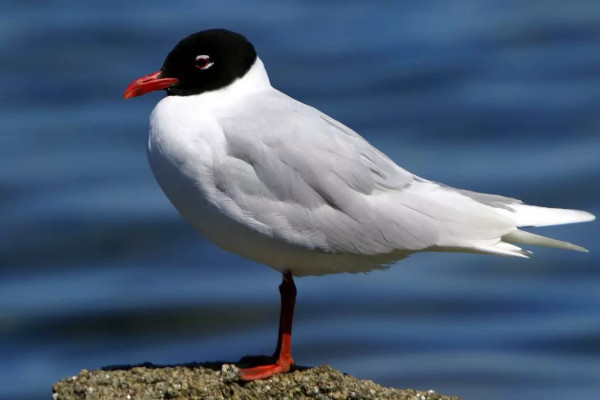
Mediterranean Gull
The Mediterranean gull is slightly larger than a black-headed gull, with an all-black head in the breeding season. Adults have white wing-tips and underwings, and the younger birds have more wing markings. It has a large bright red when adult.
Its present UK breeding population makes it an Amber List species. It is a Schedule 1 listed bird of The Wildlife and Countryside Act.
Latin: Larus melanocephalus
Conservation status:
Listen:
Specially protected in:
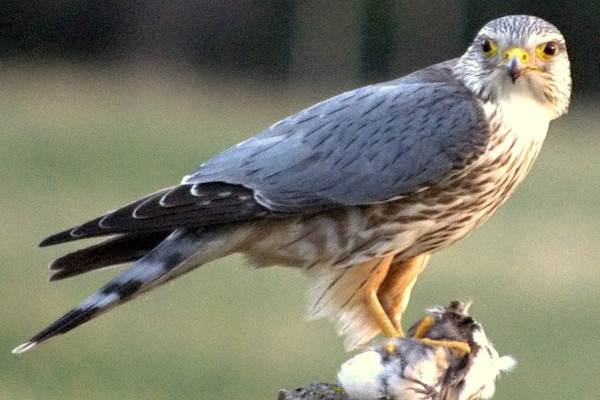
Merlin
The UK's smallest bird of prey, this compact, dashing falcon has a relatively long, square-cut tail and rather broad-based pointed wings, shorter than those of other falcons.
In winter, the Icelandic breeding birds migrate to our warmer climate. It is on the Red List. It is a Schedule 1 listed species on The Wildlife and Countryside Act.
Latin: Falco columbarius
Conservation status:
Listen:
Specially protected in:
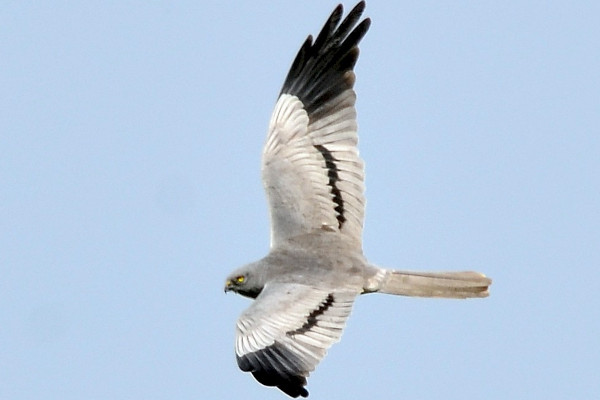
Montagu’s Harrier
The Montagu's harrier is a medium-sized bird of prey. It has a long tail and has more pointed wings than the similar hen harrier. The male is grey above. In flight, it shows black wingtips and a black stripe across the inner wing. The female is dark brown.
It is an extremely rare breeding bird in the UK. Montagu's harrier are a Schedule 1 listed species on The Wildlife and Countryside Act.
Latin: Circus pygargus
Conservation status:
Listen:
Specially protected in:
N
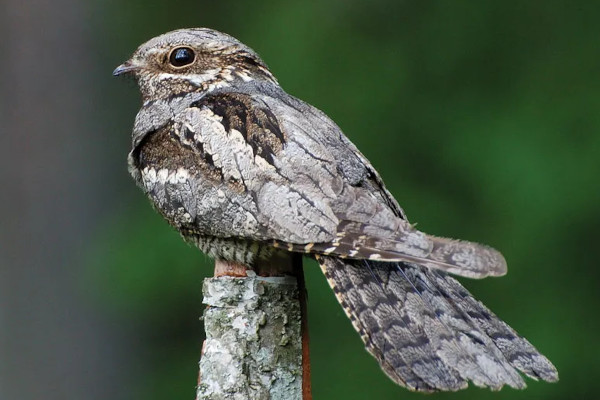
Nightjar
Nightjars are nocturnal birds and can be seen hawking for food at dusk and dawn. Their cryptic, grey-brown, mottled, streaked and barred plumage provides ideal camouflage in the daytime.
They have an almost supernatural reputation with their silent flight and their mythical ability to steal milk from goats. The first indication that a nightjar is near is usually the male's churring song.
Latin: Caprimulgus europaeus
Conservation status:
Listen:
Specially protected in:
O
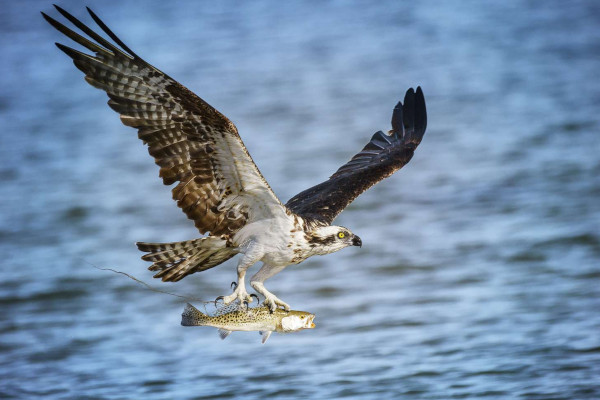
Osprey
Seen in flight from below the osprey has white or slightly mottled underparts. The long wings are angled, bending at the 'wrist' which has a black patch contrasting with the white wing linings.
This spectacular fish-eating bird of prey is an Amber List species because of its historical decline and low breeding numbers. They are listed as a Schedule 1 species on The Wildlife and Countryside Act.
Latin: Pandion haliaetus
Conservation status:
Listen:
Specially protected in:
P
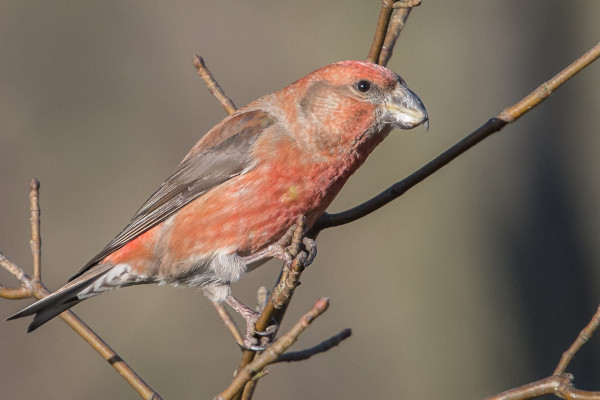
Parrot Crossbill
The parrot crossbill is a large, powerful finch. It has a deep parrot-like bill and a sharply forked tail. The male is orange to red with dusky wings and tail, the female is olive-green or grey. It is very similar to the crossbill and Scottish crossbill - its deeper call is the most reliable way to separate them.
They are listed on Schedule 1 of The Wildlife and Countryside Act.
Latin: Loxia pytyopsittacus
Conservation status:
Listen:
Specially protected in:
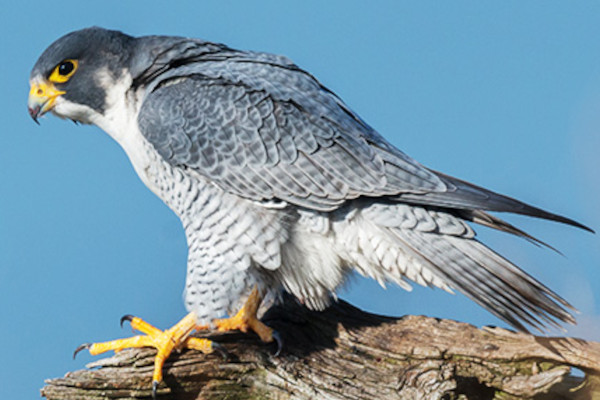
Peregrine
The peregrine is a large and powerful falcon. It has long, broad, pointed wings and a relatively short tail. It is blue-grey above, with a blackish top of the head and an obvious black 'moustache' that contrasts with its white face. Its breast is finely barred. It is swift and agile in flight, chasing prey.
Peregrines are a Schedule 1 listed species of The Wildlife and Countryside Act.
Latin: Falco peregrinus
Conservation status:
Listen:
Specially protected in:
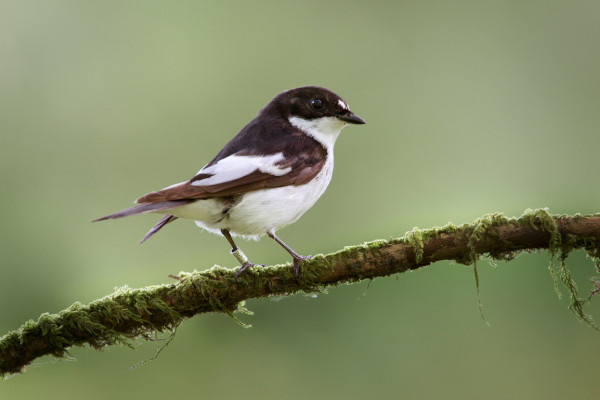
Pied Flycatcher
The pied flycatcher is a small, flycatching bird, slightly smaller than a house sparrow. The male is mostly black on the upperparts and white underneath, with a bold white patch on the folded wing. Females are browner.
It is a summer visitor and breeds mainly in western areas, spending the winter in West Africa.
Latin: Ficedula hypoleuca
Conservation status:
Listen:
Specially protected in:
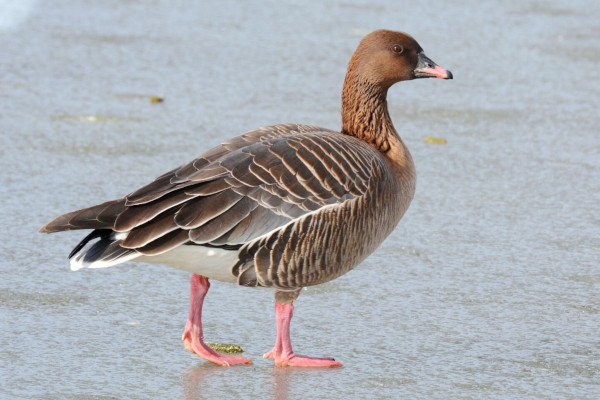
Pink-footed Goose
The pink-footed goose is a medium-sized goose. It is pinkish grey with a dark head and neck, a pink bill and pink feet and legs.
This species does not breed in the UK, but large numbers of birds spend the winter here, arriving from their breeding grounds in Iceland and Greenland. Numbers in England are on the increase, particularly in Norfolk, probably due to better protection at winter roosts.
Latin: Anser brachyrhynchus
Conservation status:
Listen:
Specially protected in:
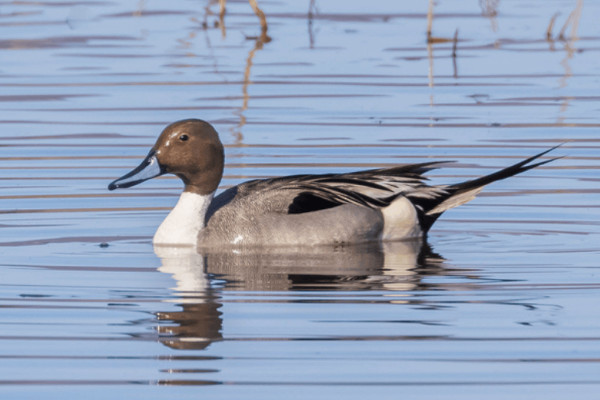
Pintail
These long-necked and small-headed ducks fly with a curved back pointed wings and a tapering tail, making this the best way to distinguish them from other ducks in the UK.
The pintail is a 'quarry' species, but it does not appear that shooting is affecting their population status in the UK. The small breeding population and significant winter population make them an Amber List species.
Latin: Anas acuta
Conservation status:
Listen:
Specially protected in:
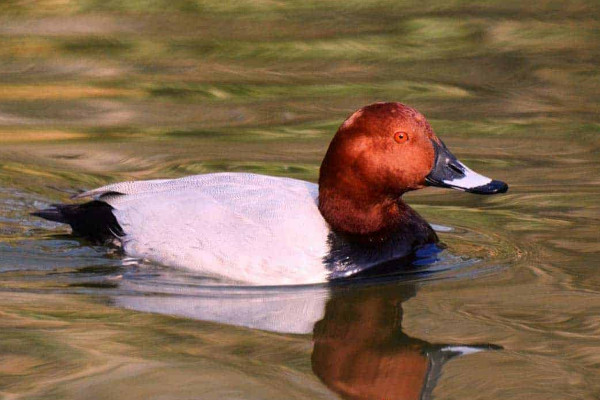
Pochard
In winter and spring, male pochards are very distinctive. They have a bright reddish-brown head, a black breast and tail and a pale grey body. Females are more easily confused with other species; they are brown with a greyish body and pale cheeks.
However, during the 'eclipse' - when ducks grow new feathers - they become more camouflaged so that they don't draw the attention of predators.
Latin: Aythya ferina
Conservation status:
Listen:
Specially protected in:
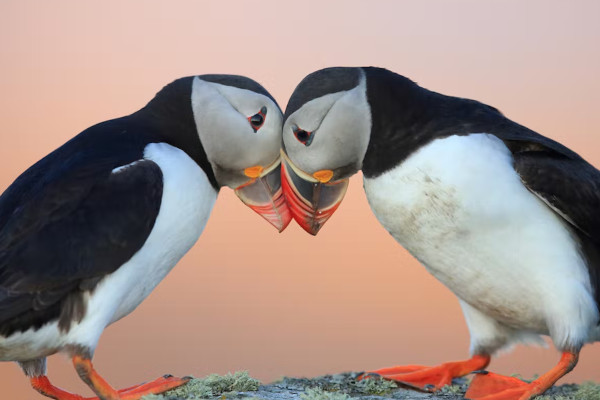
Puffin
Puffins are unmistakable birds with their black back and white underparts, distinctive black head with large pale cheeks and their tall, flattened, brightly-coloured bill. Its comical appearance is heightened by its red and black eye-markings and bright orange legs.
This clown among seabirds is one of the world's favourite birds. With half of the UK population at only a few sites it is an Red List species.
Latin: Fratercula arctica
Conservation status:
Listen:
Specially protected in:
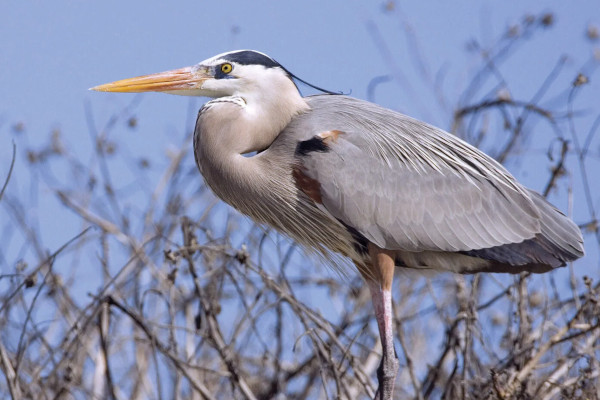
Purple Heron
With its warm buff head and neck, black cap, grey back and deep chestnut shoulder patch, the adult Purple Heron is a smart bird, but one that favours the dense vegetation, such as reedbeds, of shallow waterbodies.
Its European breeding population has been expanding, with colonisation of France and the Netherlands signposting this species as a potential colonist to the UK.
Latin: Ardea purpurea
Conservation status:
Listen:
Specially protected in:
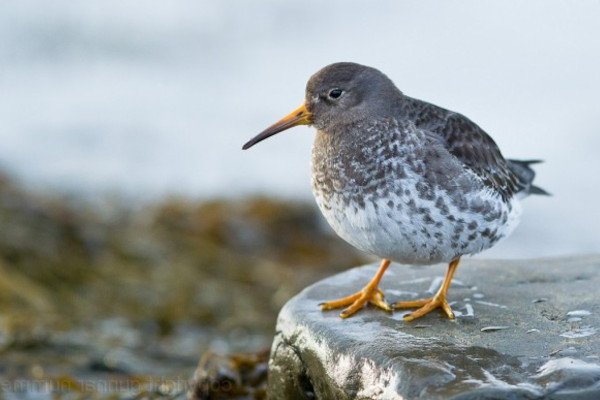
Purple Sandpiper
The purple sandpiper is a medium-sized wading bird. It is mainly dark grey above and whitish below. It has a downcurved beak and short bright orange legs.
This species is mainly a winter visitor to almost any rocky coast in the UK. The breeding areas in Scotland are kept secret to protect the birds from egg thieves and disturbance.
It is listed on Schedule 1 of The Wildlife and Countryside Act.
Latin: Calidris maritima
Conservation status:
Listen:
Specially protected in:
Q
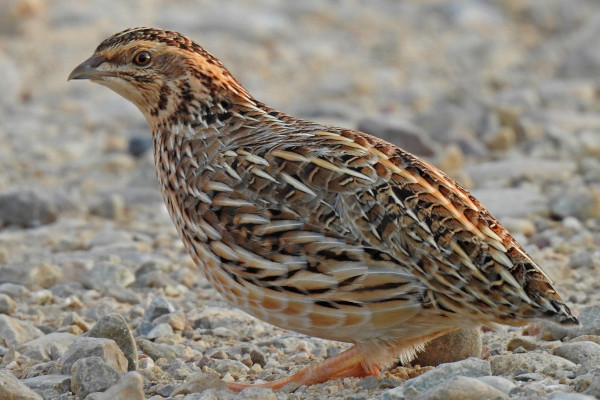
Quail
Quails are distinctive due to the combination of their stocky bodies and long, pointed wings. Their upperparts are brown, streaked and barred with buff, while their underparts are a warm orange.
Rarely seen, they are more often heard giving a distinctive call.
Quails are on the Amber List but are now in partial recovery. They are also listed on Schedule 1 of The Wildlife and Countryside Act 1981.
Latin: Coturnix coturnix
Conservation status:
Listen:
Specially protected in:
R
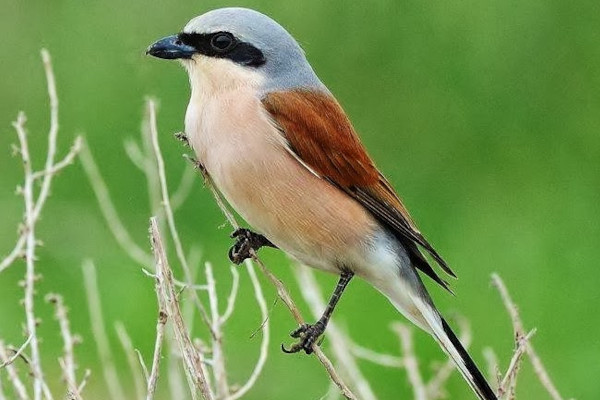
Red-backed Shrike
Red-backed shrikes are slightly larger than house sparrows. The male is unmistakable with a bluish-grey head, black mask, bright chestnut back and thick hooked black bill.
Its dramatic decline to near extinction as a UK breeding species make this a Red List bird. It is also listed as a Schedule 1 species under The Wildlife and Countryside Act.
Latin: Lanius collurio
Conservation status:
Listen:
Specially protected in:
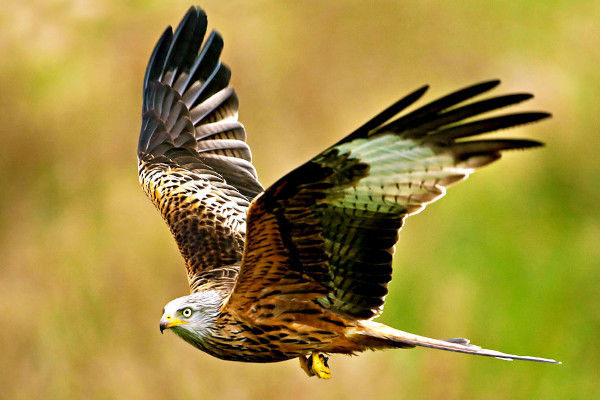
Red Kite
This magnificently graceful bird of prey is unmistakable with its reddish-brown body, angled wings and deeply forked tail. It was saved from national extinction by one of the world's longest-running protection programmes. It has now been successfully re-introduced to England and Scotland. Red kites are listed under Schedule 1 of The Wildlife and Countryside Act.
Latin: Milvus milvus
Conservation status:
Listen:
Specially protected in:
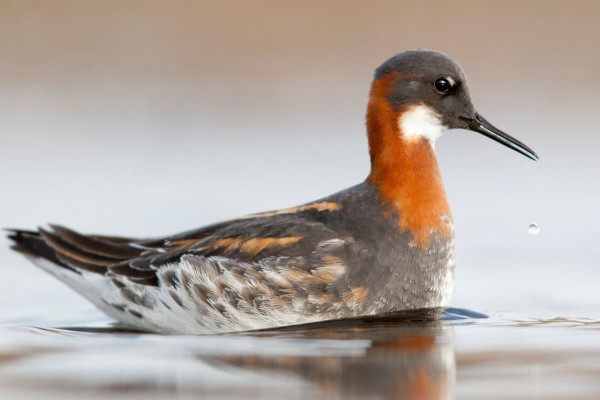
Red-necked Phalarope
These small waders are adapted well to spending a lot of time on water. Unlike other waders, phalaropes have lobed toes which enable them to swim strongly when on pools or out at sea. They spend most of their time in the water but can equally run about on land.
As a rare UK breeding species it is a Red List bird. They are listed under Schedule 1 of The Wildlife and Countryside Act.
Latin: Phalaropus lobatus
Conservation status:
Listen:
Specially protected in:
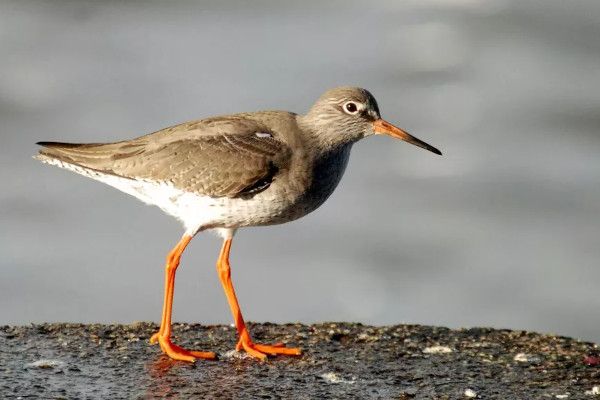
Redshank
As its name suggests, redshanks' most distinctive features are their bright orange-red legs. They have a medium-length bill with an orange base to match, brown speckled back and wings and paler belly.
Latin: Tringa totanus
Conservation status:
Listen:
Specially protected in:
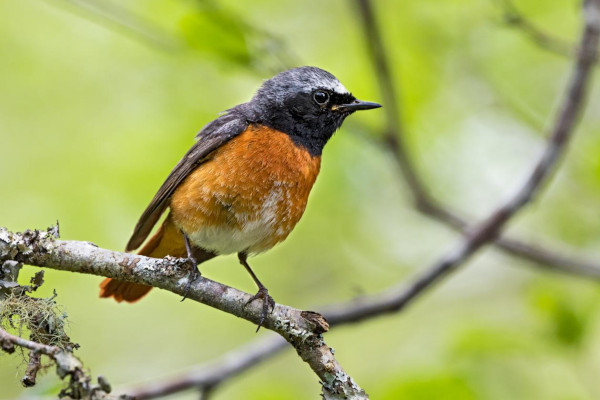
Redstart
Redstarts are immediately identifiable by their bright orange-red tails, which they often quiver. Breeding males look smart, with slate grey upper parts, black faces and wings and an orange rump and chest. Females and young are duller. Redstarts 'bob' in a very robin-like manner, but spend little time at ground level. It is included on the Amber List of species with unfavourable conservation status in Europe where it is declining.
Latin: Phoenicurus phoenicurus
Conservation status:
Listen:
Specially protected in:
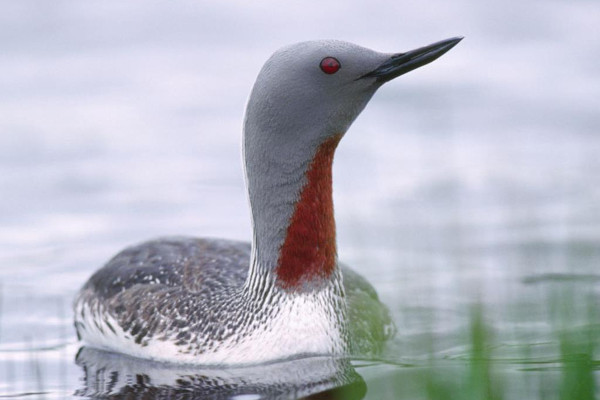
Red-throated Diver
The smallest of the UK's divers, its grey-brown plumage and up-tilted bill readily distinguish it from the other species. In summer it has a distinctive red throat. They usually jump up to dive and can stay underwater for a minute and a half. They are very ungainly on land, only coming ashore to breed. They are listed as a Schedule 1 species under The Wildlife and Countryside Act.
Latin: Gavia stellata
Conservation status:
Listen:
Specially protected in:
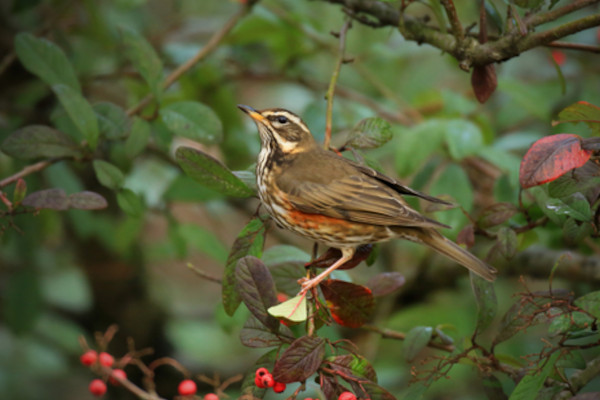
Redwing
The redwing is most commonly encountered as a winter bird and is the UK's smallest true thrush. Its creamy strip above the eye and orange-red flank patches make it distinctive.
They roam across the UK's countryside, feeding in fields and hedgerows, rarely visiting gardens, except in the coldest weather when snow covers the fields. It is listed as a Schedule 1 species of The Wildlife and Countryside Act.
Latin: Turdus iliacus
Conservation status:
Listen:
Specially protected in:
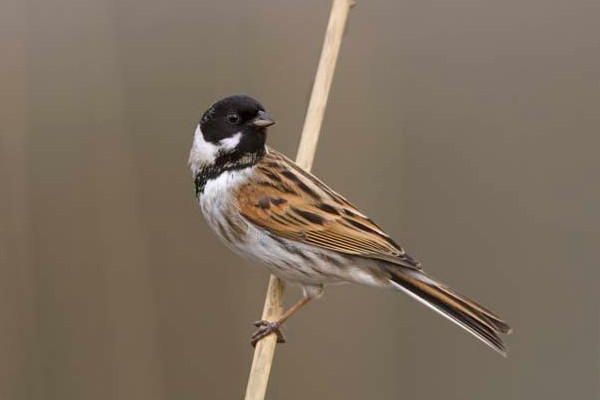
Reed Bunting
Sparrow-sized but slim and with a long, deeply notched tail, the male has a black head, white collar and a drooping moustache. Females and winter males have a streaked head. In flight the tail looks black with broad, white edges.
Latin: Emberiza schoeniclus
Conservation status:
Listen:
Specially protected in:
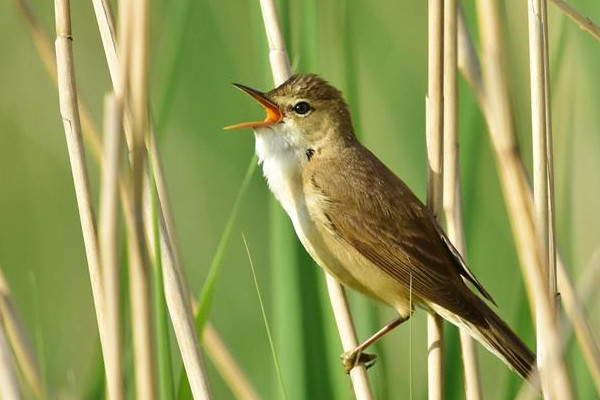
Reed Warbler
The reed warbler is a plain unstreaked warbler. It is warm brown above and buff coloured underneath. It is a summer visitor to breed in the UK, with the largest concentrations in East Anglia and along the south coast - there are relatively few breeding in Scotland and Ireland. It winters in Africa.
Latin: Acrocephalus scirpaceus
Conservation status:
Listen:
Specially protected in:
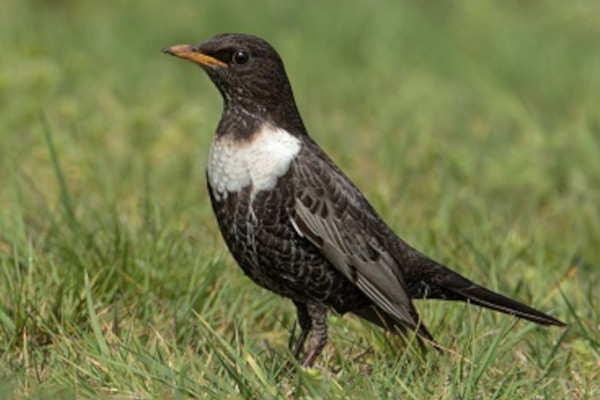
Ring Ouzel
Slightly smaller and slimmer than a blackbird - male ring ouzels are particularly distinctive with their black plumage with a pale wing panel and striking white breast band. The ring ouzel is primarily a bird of the uplands, where it breeds mainly in steep sided-valleys, crags and gullies, from near sea level in the far north of Scotland up to 1,200m in the Cairngorms.
Latin: Turdus torquatus
Conservation status:
Listen:
Specially protected in:
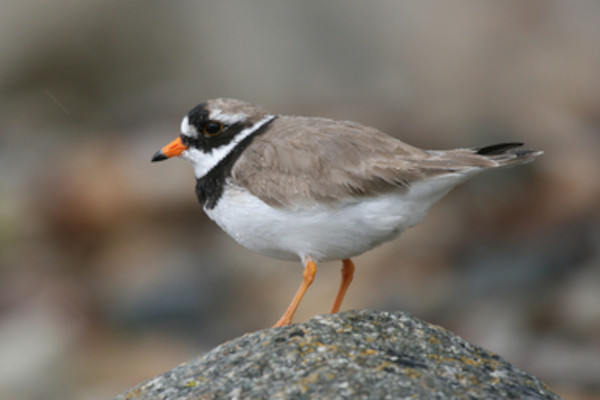
Ringed Plover
The ringed plover is a small, short-legged wading bird. It is brownish grey above and whitish below. It has a orange bill, tipped with black, orange legs and a black-and-white pattern on its head and breast.
They breed on beaches around the coast. Many UK birds live here all year round, but birds from Greenland and Canada pass through on migration.
Latin: Charadrius hiaticula
Conservation status:
Listen:
Specially protected in:
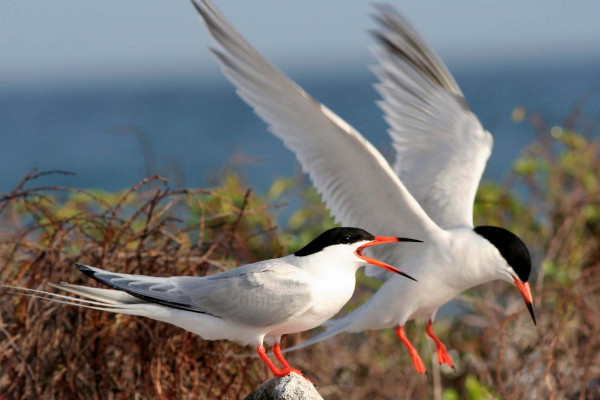
Roseate Tern
Similar in size to a common tern but very white-looking, with long tail-streamers, a black cap and a black beak with a reddish base. In summer adults have a pinkish tinge to their underparts which gives them their name. It is one of our rarest seabirds and whose severe, long-lasting and well documented decline make it a Red List species. It is also listed under Schedule 1 of The Wildlife and Countryside Act.
Latin: Sterna dougallii
Conservation status:
Listen:
Specially protected in:
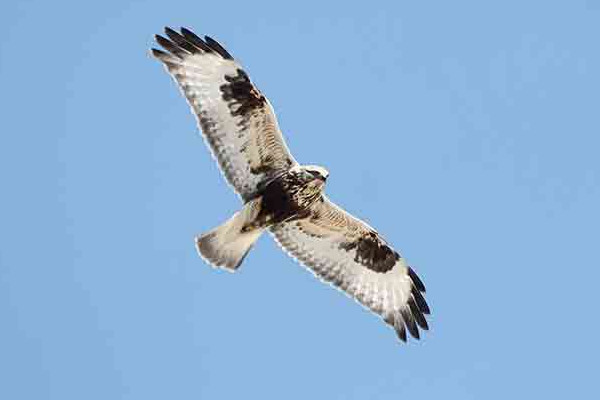
Rough-legged Buzzard
A bird of prey very similar to the much more common buzzard. It has the habit of 'hanging' in the air while looking for prey, hovering much more regularly than common buzzards. Key features include the black-tipped white tail, paler appearance than most common buzzard, longer wings and paler head. A close view will reveal the heavily feathered legs that give this bird its name.
Latin: Buteo lagopus
Conservation status: N/A
Listen:
Specially protected in:
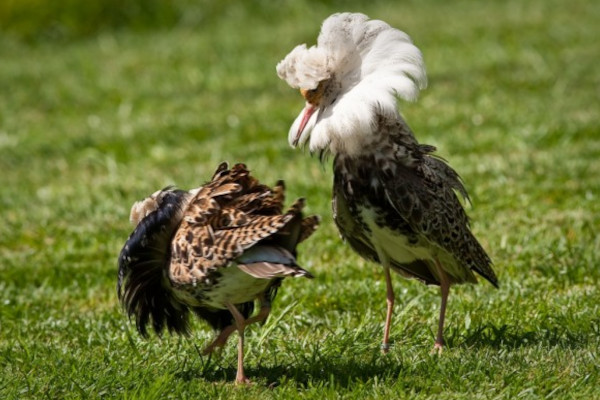
Ruff
The ruff is a medium-sized wading bird. It has a long neck, a small head, a rather short slightly droopy bill and medium-long orange or reddish leg.
It breeds in a very few lowland sites in eastern England and it appears numbers are dropping. Many young birds from Scandinavia visit the UK in late summer, then migrating on to Africa. It is listed under Schedule 1 of The Wildlife and Countryside Act.
Latin: Philomachus pugnax
Conservation status:
Listen:
Specially protected in:
S
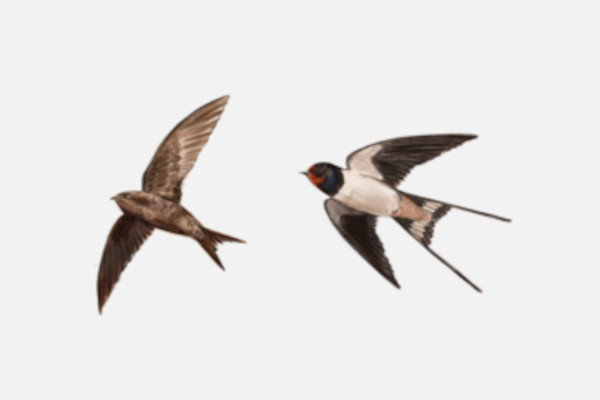
Sand Martin
Sand martins are the smallest European hirundines, with dark brown upper parts and dark under wings. Agile fliers, feeding mainly over water, they will perch on overhead wires or branches. They are gregarious in the breeding season and winter. During the past 50 years the European population has crashed on two occasions as a result of drought in the birds' African wintering grounds.
Latin: Riparia riparia
Conservation status:
Listen:
Specially protected in:
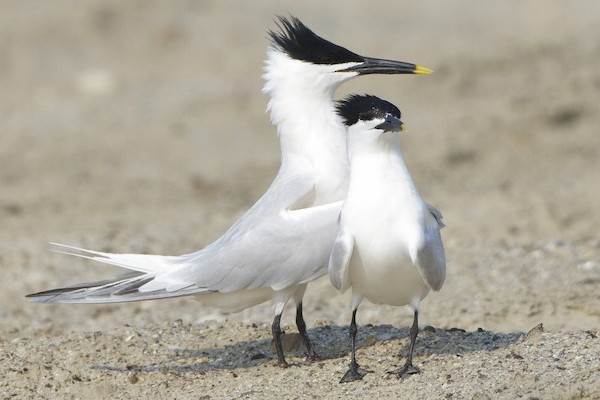
Sandwich Tern
The Sandwich tern is a very white tern, with a black cap on its head, a long black bill with a yellow tip and short black legs. In flight it shows grey wedges on its wings tips and it has a short forked tail. In the UK, many of the important colonies survive because they are on nature reserves.
Latin: Sterna sandvicensis
Conservation status:
Listen:
Specially protected in:
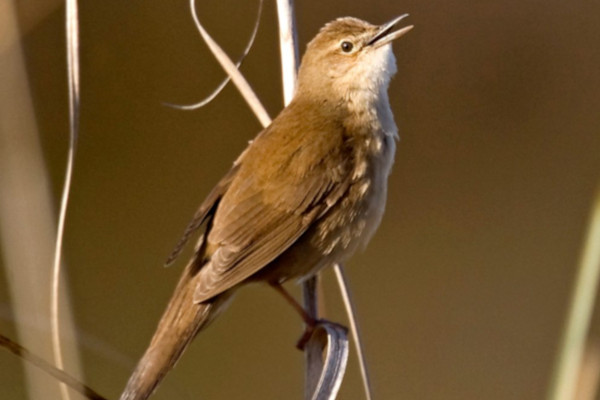
Savi’s Warbler
Savi's warbler is right on the edge of its range here, and its numbers have always been very low and difficult to see in the UK. Like most of this family it is heard before it is seen, with a similar song to the grasshopper warbler but less persistent. Patiently watching where the sound is coming from will eventually result in the sight of a warm brown warbler, clinging to a reed.
Latin: Locustella luscinioides
Conservation status:
Listen:
Specially protected in:
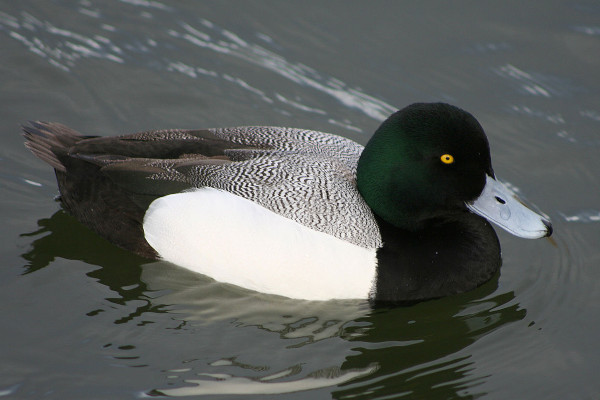
Scaup
Scaup are diving ducks with a resemblance to tufted ducks. Males have black heads, shoulder and breast, white flanks, grey back and a black tail. Females are brown, with characteristic white patches around the base of the bill. In flight they show white patches along the length of the trailing edge of the wing. Only a handful breed in the UK every year, making them our rarest breeding duck.
Latin: Aythya marila
Conservation status:
Listen:
Specially protected in:
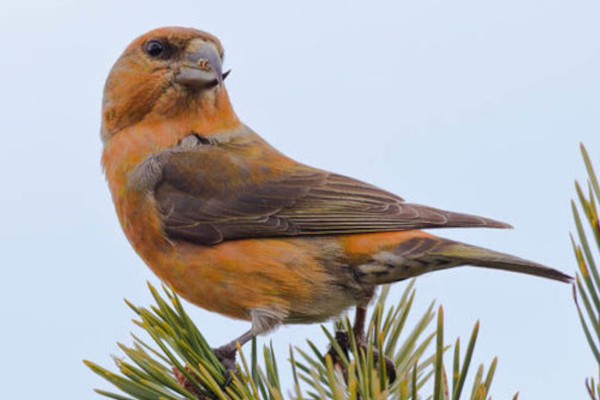
Scottish Crossbill
TThe Scottish crossbill is a chunky, thick-set finch with a large head and substantial bill. It is very difficult to distinguish from the other members of the crossbill family. It is the UK's only endemic bird species (ie one found nowhere else in the world).
Latin: Loxia scotica
Conservation status:
Listen:
Specially protected in:
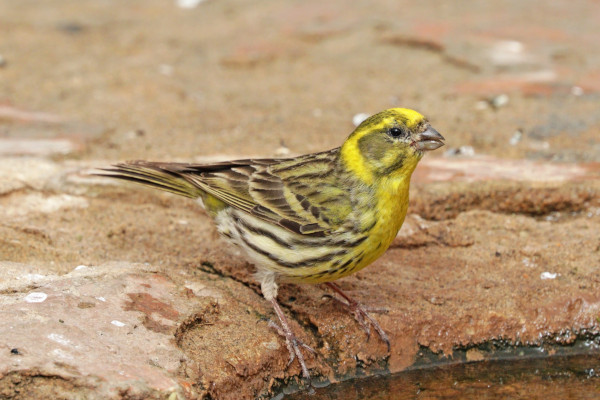
Serin
Serins are small finches with short stubby bills and forked tails. Males have bright yellow heads with darker patches on the crown and below the eye, females and juveniles are much duller. They have been recorded annually in the UK in small numbers since the 1960s and have bred sporadically since the 1970s (Devon, Dorset, Sussex, East Anglia and the Jersey) but no more than one or two pairs a year.
Latin: Serinus serinus
Conservation status:
Listen:
Specially protected in:
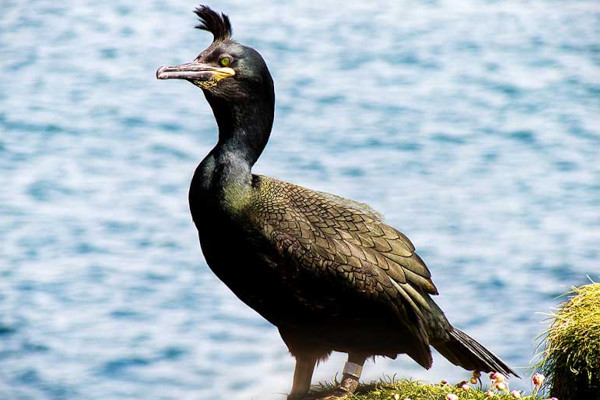
Shag
Shags are goose-sized dark long-necked birds similar to cormorants but smaller and generally slimmer with a characteristic steep forehead.
In the UK they breed on coastal sites, mainly in the north and west, and more than half of their population is found at fewer than 10 sites, making them an Red List species. Shags usually stay within 100-200km of their breeding grounds.
Latin: Gulosus aristotelis
Conservation status:
Listen:
Specially protected in:
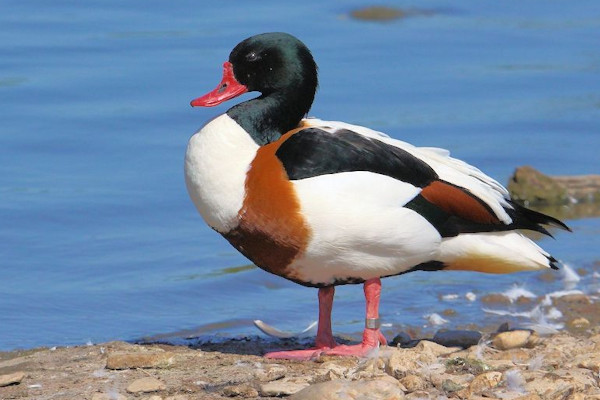
Shelduck
This is a big, colourful duck, bigger than a mallard but smaller than a goose. Both sexes have a dark green head and neck, a chestnut belly stripe and a red bill.
Latin: Tadorna tadorna
Conservation status:
Listen:
Specially protected in:
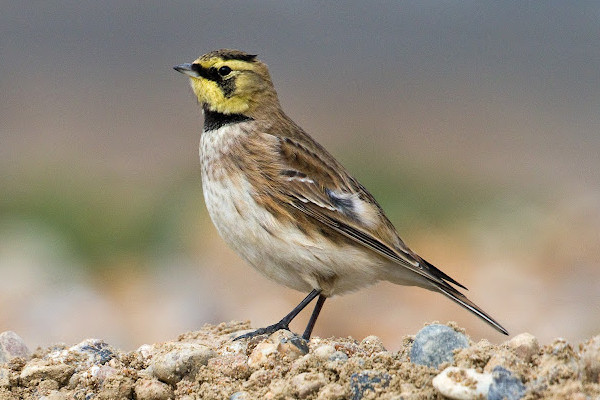
Shore Lark
A distinctive lark with yellow and black face markings and black 'horns' (feather tufts) in breeding plumage. They are almost exclusively coastal birds. Numbers vary greatly from one winter to the next. In a good year, a few hundred may be present, but in others they can be very scarce. Watch for them shuffling their way across shingle and sandy beaches.
Latin: Eremophila alpestris
Conservation status:
Listen:
Specially protected in:
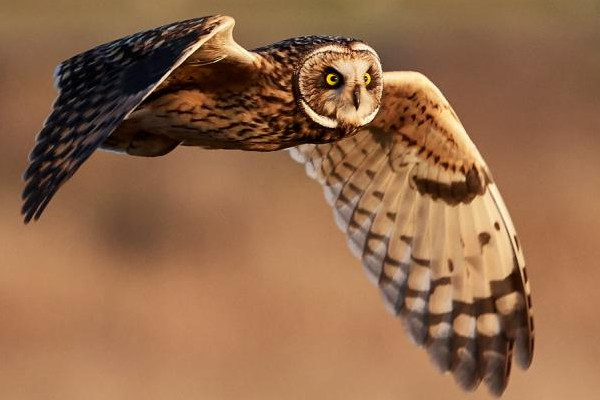
Short-eared Owl
Short-eared owls are medium sized owls with mottled brown bodies, pale under-wings and yellow eyes. They are commonly seen hunting during the day. In winter, there is an influx of continental birds (from Scandinavia, Russia, Iceland) to northern, eastern, and parts of central southern England, especially around the coast. They are of European conservation concern and so are an Amber List species.
Latin: Asio flammeus
Conservation status:
Listen:
Specially protected in:
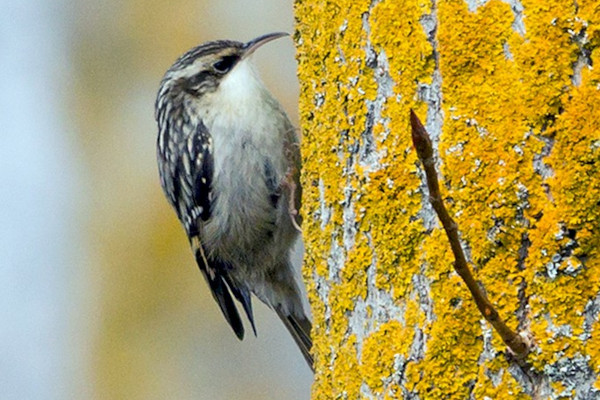
Short-toed Treecreeper
TThe short-toed treecreeper is a small tree-dwelling bird with a long, slender, downcurved bill. It is speckly brown above and mainly white below and looks very similar to a treecreeper, although its song is different. It breeds in the Channel Islands and France but is a vagrant to the UK.
Latin: Certhia brachydactyla
Conservation status:
Listen:
Specially protected in:
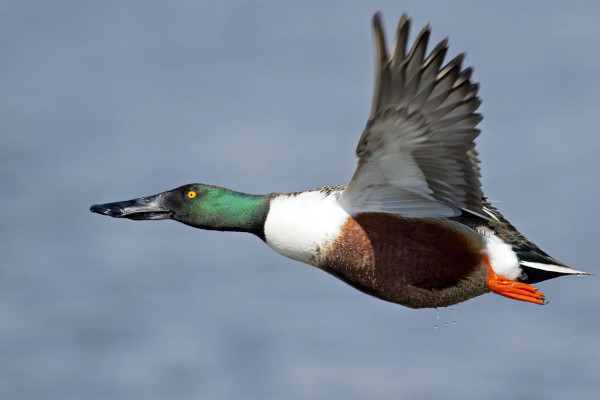
Shoveler
Shovelers are surface feeing ducks with huge spatulate bills. Males have dark green heads, with white breasts and chestnut flanks. Females are mottled brown. In the UK they breed in southern and eastern England, especially around the Ouse Washes.
The UK is home to more than 20 per cent of the NW European population, making it an Amber List species.
Latin: Anas clypeata
Conservation status:
Listen:
Specially protected in:
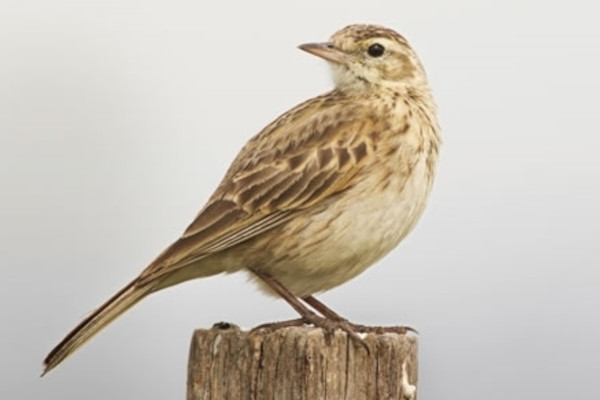
Skylark
The skylark is a small brown bird, somewhat larger than a sparrow but smaller than a starling. It is streaky brown with a small crest, which can be raised when the bird is excited or alarmed, and a white-sided tail. The wings also have a white rear edge, visible in flight. It is renowned for its display flight, vertically up in the air. Its recent and dramatic population declines make it a Red List species.
Latin: Alauda arvensis
Conservation status:
Listen:
Specially protected in:

Slavonian Grebe
Arguably the most attractive of the UK's breeding grebes, with its golden ear tufts and trilling calls. It looks similar to the black-necked grebe in winter but has whiter cheeks which almost meet at the back of the neck. Due to its small breeding population it is a Red List species.
Latin: Podiceps auritus
Conservation status:
Listen:
Specially protected in:
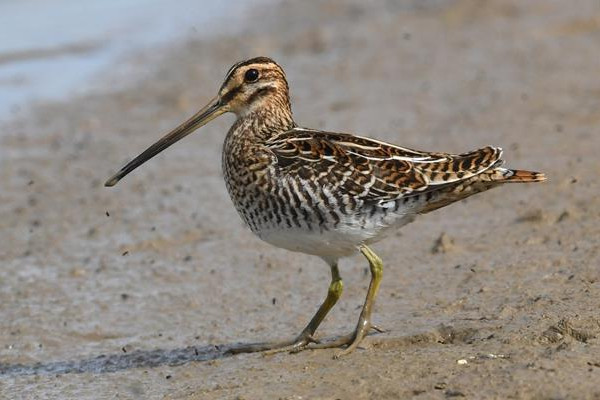
Snipe
Snipe are medium sized, skulking wading birds with short legs and long straight bills. They are widespread as a breeding species in the UK, with particularly high densities on northern uplands but lower numbers in southern lowlands.
The UK population of snipe has undergone moderate declines overall in the past twenty-five years, making it an Amber List species.
Latin: Gallinago gallinago
Conservation status:
Listen:
Specially protected in:
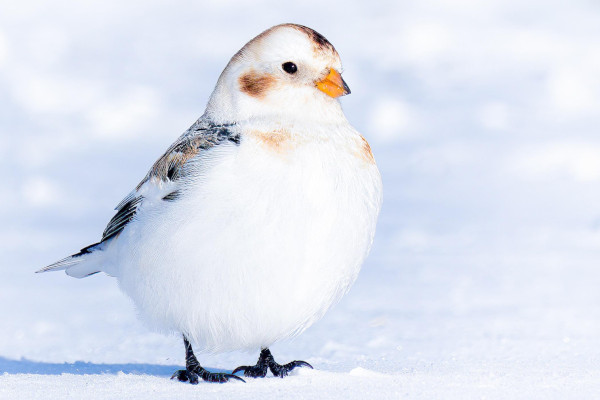
Snow Bunting
Snow buntings are large buntings. Globally, they breed around the arctic and migrate south in winter. They are a scarce breeding species in the UK, making them an Amber List species. They are more widespread in winter in the north and east when residents are joined by continental birds.
They are listed under Schedule 1 of the Wildlife and Countryside Act.
Latin: Plectrophenax nivalis
Conservation status:
Listen:
Specially protected in:
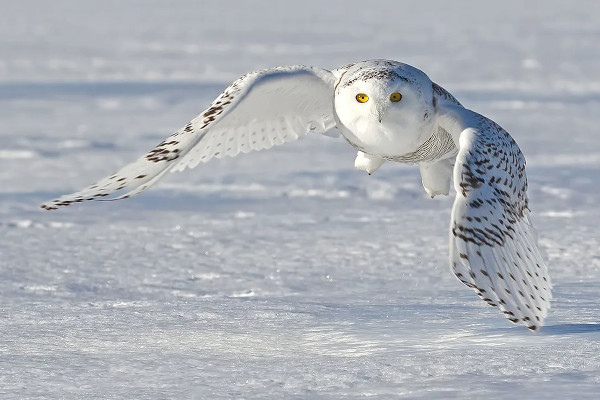
Snowy Owl
A rare (less than annual) visitor from its Arctic breeding grounds, the Snowy Owl is probably best known to many as 'Hedwig' from the Harry Potter films.
A celebrated pair bred for eight years on the Shetland island of Fetlar until 1976, when the male failed to return; one or two females, though, summered every year until 1993.
Latin: Bubo scandiacus
Conservation status:
Listen:
Specially protected in:

Song Thrush
A familiar and popular garden songbird whose numbers have declined markedly on farmland and in towns and cities. It's smaller and browner than a mistle thrush with smaller spotting. Its habit of repeating song phrases distinguish it from singing blackbirds. It likes to eat snails which it breaks into by smashing them against a stone with a flick of the head.
Latin: Turdus philomelos
Conservation status:
Listen:
Specially protected in:
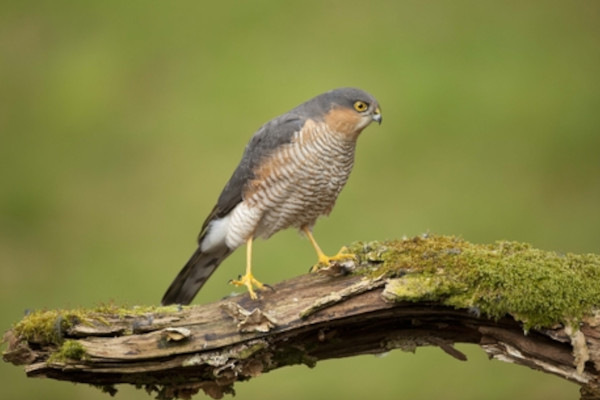
Sparrowhawk
TSparrowhawks are small birds of prey. They're adapted for hunting birds in confined spaces like dense woodland, so gardens are ideal hunting grounds for them. Adult male sparrowhawks have bluish-grey back and wings and orangey-brown bars on their chest and belly. Females and young birds have brown back and wings, and brown bars underneath. Sparrowhawks have bright yellow or orangey eyes.
Latin: Accipiter nisus
Conservation status:
Listen:
Specially protected in:
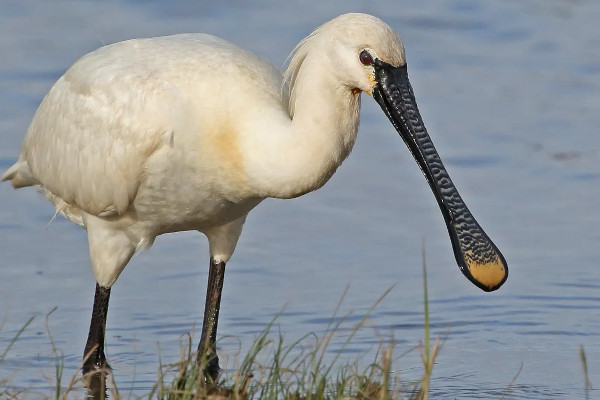
Spoonbill
Spoonbills are tall white waterbirds with long spatulate black bills and long black legs. In the breeding season adults show some yellow on their breast and bill tip. The species is of European conservation concern and a very rare breeding bird in the UK. They are listed are listed on Schedule 1 of The Wildlife and Countryside Act. Most birds migrate south in the winter.
Latin: Platalea leucorodia
Conservation status:
Listen:
Specially protected in:
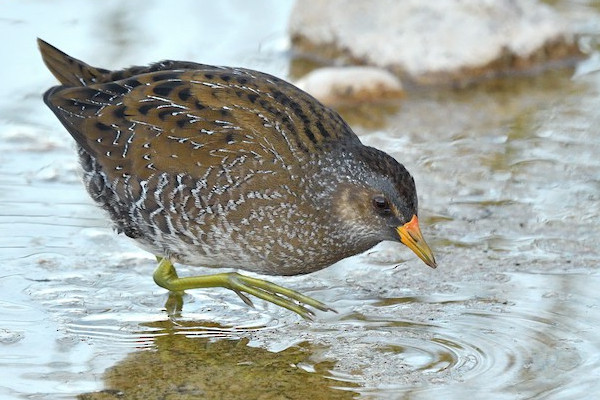
Spotted Crake
TThe spotted crake is similar in size to a starling. Breeding adults have a brown back with dark streaks, a blue-grey face and an olive-brown breast - all covered with white flecks and spots. The under tail is a warm buff colour.
Spotted crakes tend to skulk in thick cover and walk with their body close to the ground and tail flicking. If surprised in the open, they run for cover or jump up and flutter away with legs dangling.
Latin: Porzana porzana
Conservation status:
Listen:
Specially protected in:

Spotted Flycatcher
At first glance, spotted flycatchers might seem dull brownish-grey and, well, a bit boring. It's better to think of them as beautiful in an understated way. Watch them for a short period and you'll be charmed by their fly-catching antics. Spotted flycatchers fly from a high perch, dash out to grab a flying insect and return to the same spot.
Latin: Muscicapa striata
Conservation status:
Listen:
Specially protected in:
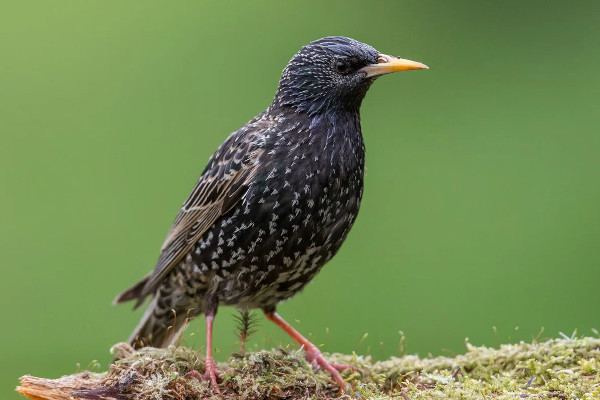
Starling
Smaller than blackbirds, with a short tail, pointed head, triangular wings, starlings look black at a distance but when seen closer they are very glossy with a sheen of purples and greens.
Their flight is fast and direct and they walk and run confidently on the ground. Starlings spend a lot of the year in flocks.
Still one of the commonest of garden birds, its decline elsewhere makes it a Red List species.
Latin: Sturnus vulgaris
Conservation status:
Listen:
Specially protected in:
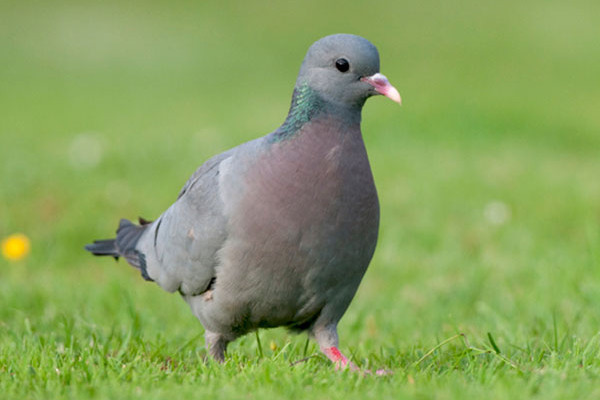
Stock Dove
Stock doves are similar in plumage and size to rock doves/feral pigeons. They are largely blue-grey with an attractive iridescent bottle green band on the back of the neck and a pink chest. In flight, they show black edges to the wing and two partial black bands near their back.
They are widely distributed in the UK. Over half their European population is found in the UK.
Latin: Columba oenas
Conservation status:
Listen:
Specially protected in:
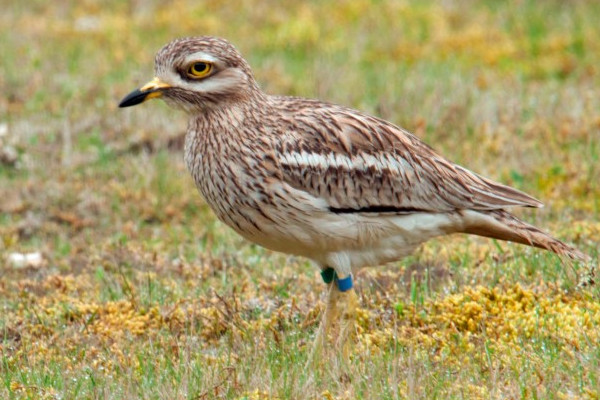
Stone-curlew
A strange, rare summer visitor to southern England and East Anglia, the stone-curlew is a crow-sized bird with a large head, long yellow legs and relatively long wings and tail. Active at night, its large yellow eyes enable it to locate food when it is dark.
It is not related to curlews and gets its name from its curlew-like call. It is listed under Schedule 1 of the Wildlife and Countryside Act.
Latin: Burhinus oedicnemus
Conservation status:
Listen:
Specially protected in:
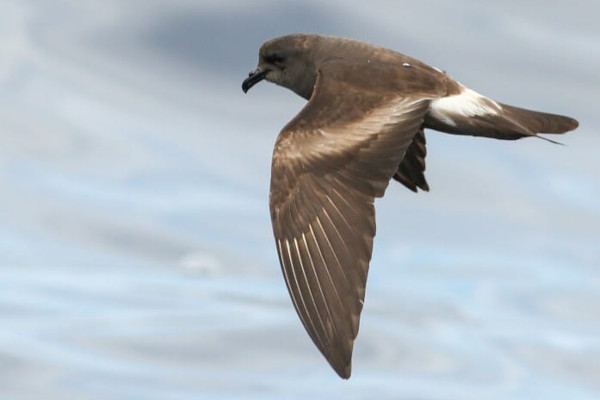
Storm Petrel
A little bigger than a sparrow it appears all black with a white rump. Its tail is not forked, unlike Leach's petrel. In flight it flutters over the water, feeding with its wings held up in a 'V' with feet pattering across the waves. At sea it often feeds in flocks and will follow in the wake of ships, especially trawlers.
Latin: Hydrobates pelagicus
Conservation status:
Listen:
Specially protected in:
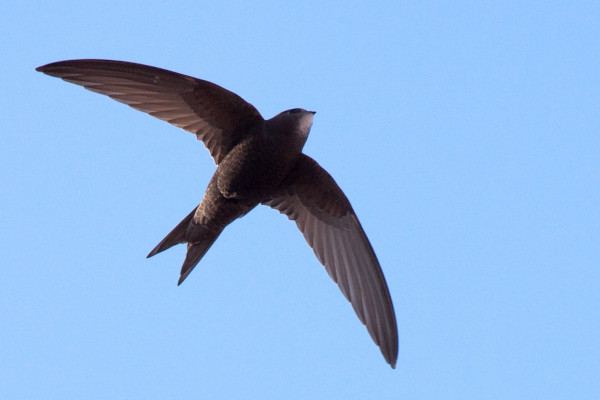
Swift
Swifts are plain sooty brown, with a white throat, but in flight against the sky they appear black. They have long, scythe-like wings and a short, forked tail. Swifts are summer visitors, breeding across the UK, but are most numerous in the south and east. Spending their winters in Africa, swifts migrate 3,400 miles twice a year, stopping off to refuel in places like Portugal and France along the way.
Latin: Apus apus
Conservation status:
Listen:
Specially protected in:
T
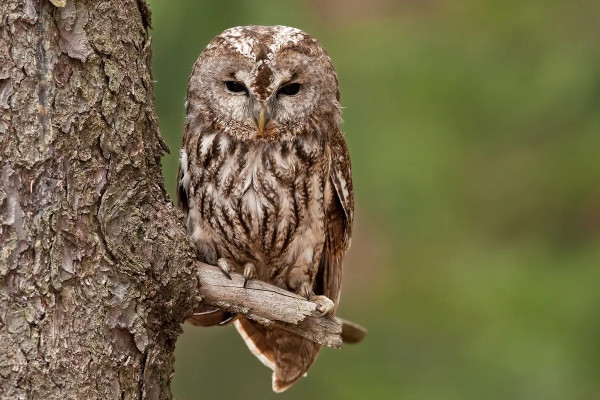
Tawny Owl
The tawny owl is an owl the size of a woodpigeon. It has a rounded body and head, with a ring of dark feathers around its face surrounding the dark eyes. Tawny owls in the UK are mainly reddish brown above and paler underneath. It is a widespread breeding species in the UK, but not found in Ireland. Birds are mainly residents with established pairs probably never leaving their territories.
Latin: Strix aluco
Conservation status:
Listen:
Specially protected in:
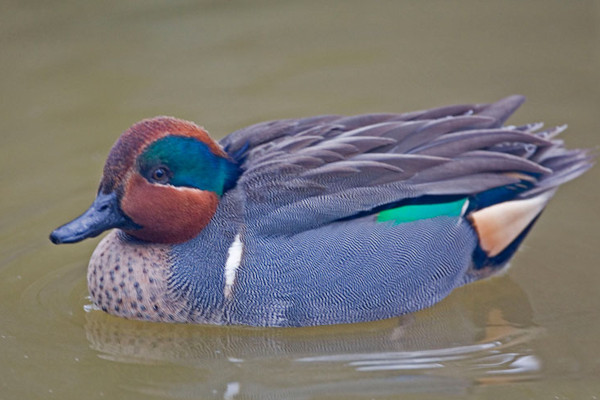
Teal
Teals are small dabbling ducks. Males have chestnut coloured heads with broad green eye-patches, a spotted chest, grey flanks and a black edged yellow tail. Females are mottled brown. Both show bright green wing patches (speculum) in flight. They are thinly distributed as a breeding species with a preference for northern moors and mires.
Latin: Anas crecca
Conservation status:
Listen:
Specially protected in:
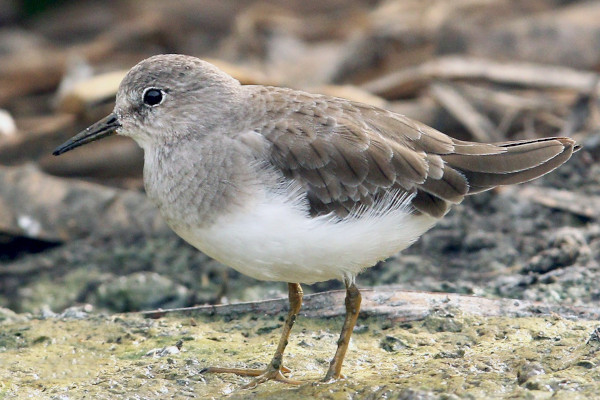
Temminck’s Stint
This is a tiny, greyish-brown wading bird with a white belly. The bill is short and used for probing into muddy shorelines. They are listed under Schedule 1 of The Wildlife and Countryside Act.
Latin: Calidris temminckii
Conservation status:
Listen:
Specially protected in:
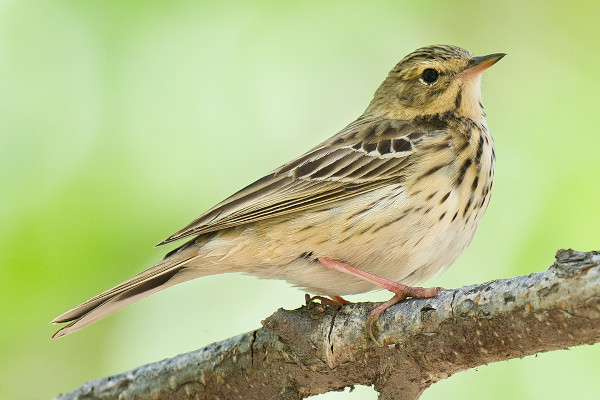
Tree Pipit
Tree pipits have brown streaked upper parts and pale under parts with further streaking on buff tinged chest and flanks. They are widespread summer visitors to the UK, they occur in particularly high densities in Western uplands. Their population has undergone declines over the past 25 years, especially in central and southern England.
Latin: Anthus trivialis
Conservation status:
Listen:
Specially protected in:
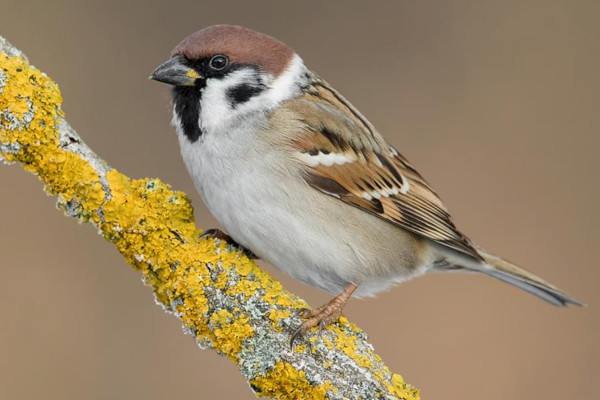
Tree Sparrow
Smaller than a house sparrow and more active, with its tail often cocked. It has a chestnut brown head and nape, white cheeks and collar with a contrasting black cheek spot.
The UK tree sparrow population has suffered a severe decline. However, recent Breeding Bird Survey data is encouraging, suggesting that numbers may have started to increase, albeit from a very low point.
Latin: Passer montanus
Conservation status:
Listen:
Specially protected in:
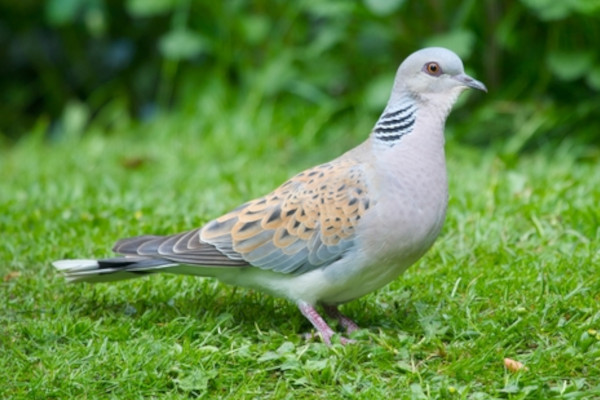
Turtle Dove
The turtle dove has been on the Red list in the UK since 1996, and it remains there today. There have been huge efforts across the UK to save turtle doves, including Operation Turtle Dove, an RSPB-led project to work with farmers, landowners and communities to create nesting and feeding habitats for turtle doves across Southern and Eastern England.
Latin: Streptopelia turtur
Conservation status:
Listen:
Specially protected in:
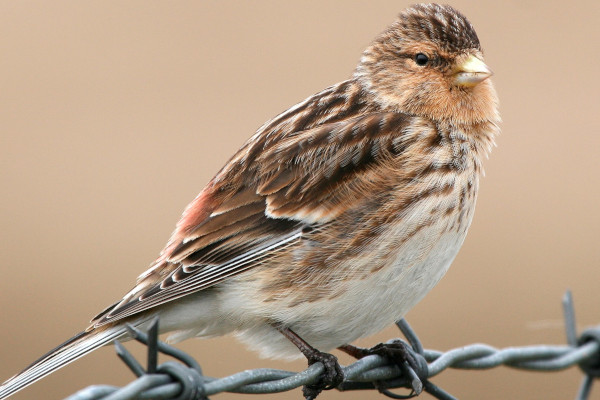
Twite
The twite is a small, brown finch closely related to the linnet, but with a longer tail and stubbier bill. Its back is tawny, heavily streaked with dark brown and is white below with dark-brown streaks on its flanks. The rump is pink on males but brown on females. Like the linnet, it feeds on seeds year-round.
Latin: Linaria flavirostris
Conservation status:
Listen:
Specially protected in:
V
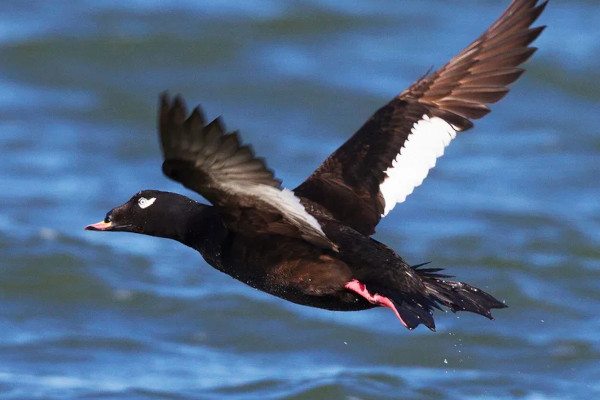
Velvet Scoter
The velvet scoter is a black seaduck. It has a long bill, a thick neck and a pointed tail. In flight, it shows a white patch on the rear of the wing - this can also be seen when birds sitting on the sea flap their wings. This Schedule 1 species does not breed in the UK, but is a winter visitor to the north-east of the UK. The large flocks in winter are vulnerable to oil pollution and depleted fish stocks.
Latin: Melanitta fusca
Conservation status:
Listen:
Specially protected in:
W
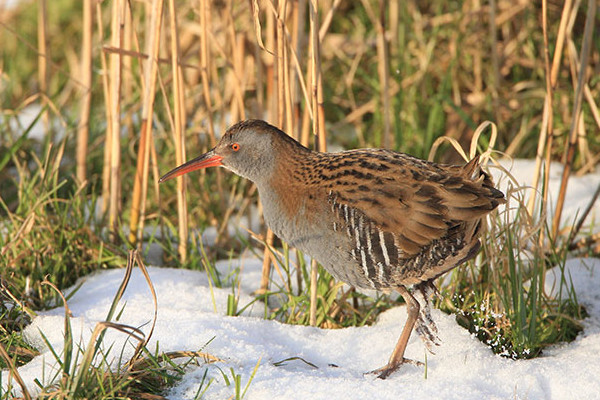
Water Rail
The water rail is a fairly common but highly secretive inhabitant of freshwater wetlands. It has chestnut-brown and black upperparts, grey face and underparts and black-and-white barred flanks, and a long red bill. Difficult to see in the breeding season, it is relatively easier to find in winter, when it is also more numerous and widespread.
Latin: Rallus aquaticus
Conservation status:
Listen:
Specially protected in:
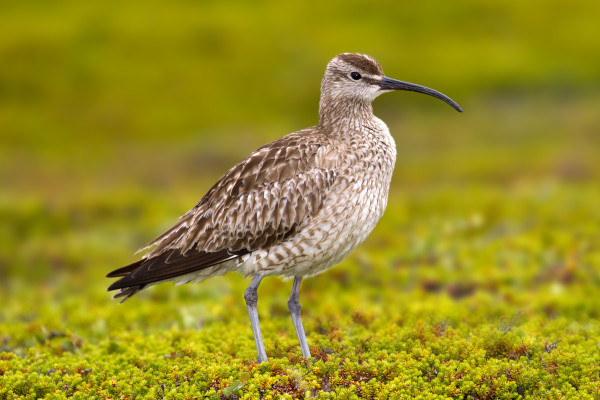
Whimbrel
The whimbrel is a large wading bird. It has longish legs and a long bill which curves near the tip. It is brownish above and whitish below.
In the UK, this species only breeds in north Scotland. It is a passage migrant to other areas in spring and autumn on its way from and to its wintering areas in Africa.
It is a Schedule 1 species of the Wildlife and Countryside Act.
Latin: Numenius phaeopus
Conservation status:
Listen:
Specially protected in:
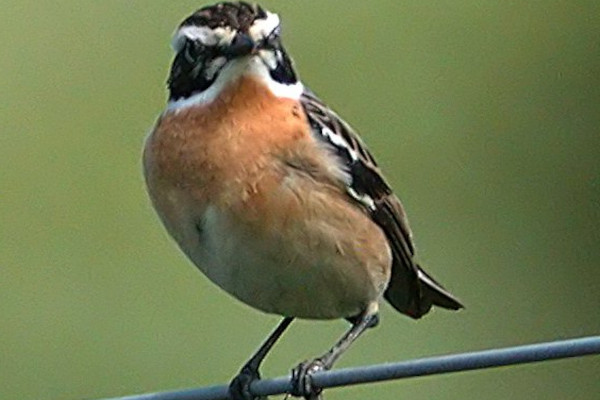
Whinchat
The whinchat is a small perching bird. It hops or runs on the ground and often perches on top of low bushes. It has a prominent white stripe above the eye. It is streaky brown above and warm orange-buff on the breast.
The whinchat is a summer visitor and passage migrant. Birds breed in upland areas of northern and western Britain with a few in Ireland. It winters in central and southern Africa.
Latin: Saxicola rubetra
Conservation status:
Listen:
Specially protected in:
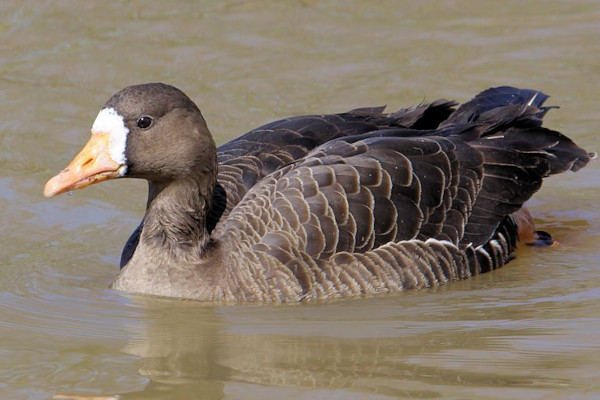
White-fronted Goose
The white-fronted goose is a grey goose, bigger than a mallard and smaller than a mute swan. Adults have a large white patch at the front of the head around the beak and bold black bars on the belly. The legs are orange and Siberian birds have pink bills, while Greenland birds have orange bills. This species does not breed in the UK. The current wintering areas in southern England need protection.
Latin: Anser albifrons
Conservation status:
Listen:
Specially protected in:
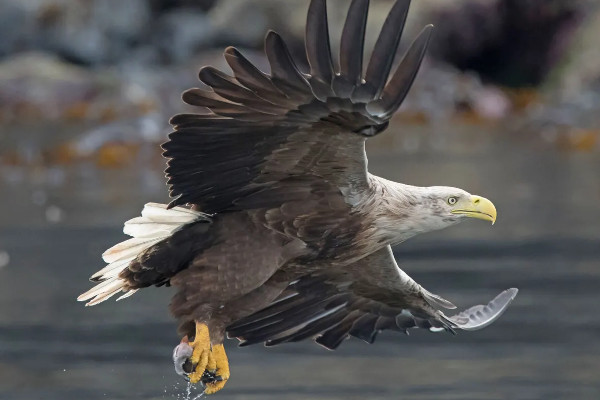
White-tailed Eagle
The white-tailed eagle is the largest UK bird of prey. It has brown body plumage with a conspicuously pale head and neck which can be almost white in older birds, and the tail feathers of adults are white. In flight it has massive long, broad wings with 'fingered' ends.
This Schedule 1 species went extinct in the UK during the early 20th century and the present population is descended from reintroduced birds.
Latin: Haliaeetus albicilla
Conservation status:
Listen:
Specially protected in:
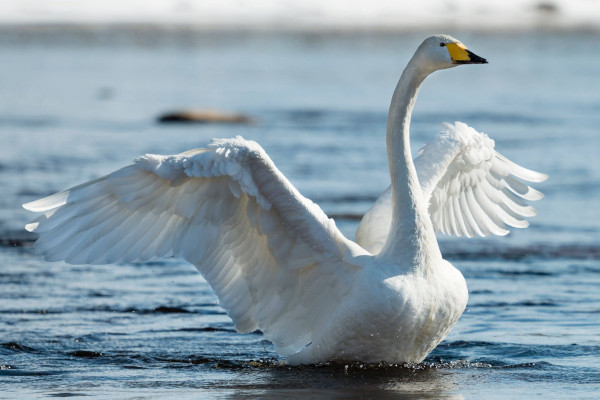
Whooper Swan
The whooper swan is a large white swan, bigger than a Bewick's swan. It has a long thin neck, which it usually holds erect, and black legs. Its black bill has a large triangular patch of yellow on it.
It is mainly a winter visitor to the UK from Iceland. The estuaries and wetlands it visits on migration need protection. Its winter population and small breeding numbers make it an Amber List species. It is a Schedule 1 listed bird.
Latin: Cygnus cygnus
Conservation status:
Listen:
Specially protected in:
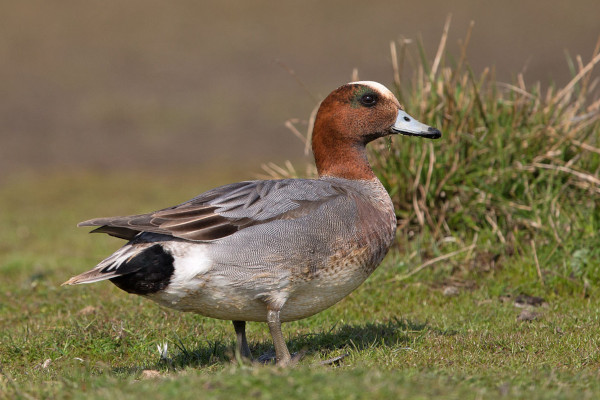
Wigeon
The wigeon is a medium-sized duck with a round head and small bill. The head and neck of the male are chestnut, with a yellow forehead, pink breast and grey body.
Wigeons breed in central and northern Scotland and also in northern England. Many birds visit the UK in winter from Iceland, Scandinavia and Russia. With large numbers of wintering birds at a few UK sites, it is an Amber List species.
Latin: Anas penelope
Conservation status:
Listen:
Specially protected in:
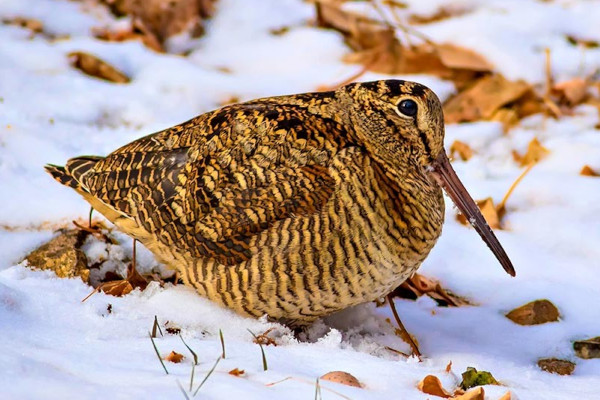
Woodcock
The woodcock is a large, bulky wading bird with short legs and a very long straight tapering bill. It is largely nocturnal, spending most of the day in dense cover.
Most of the birds in the UK are residents. The breeding population has been falling in recent years, perhaps because of less habitat as conifer plantations become too mature for woodcocks to find open enough breeding areas.
Latin: Scolopax rusticola
Conservation status:
Listen:
Specially protected in:
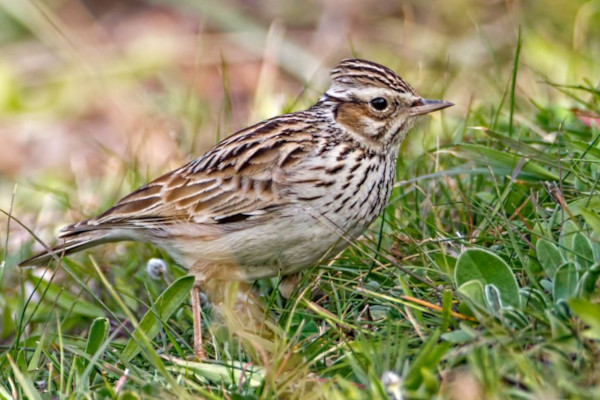
Woodlark
The woodlark is a streaky brown bird, with a buffy-white eye-stripe which meets across the nape. It has a well-developed crest on its crown which is not always conspicuous. In flight the peculiarly short tail and broad, rounded wings are noticeable and the deeply undulating flight with closed wing glides is characteristic.
Woodlarks are listed under Schedule 1 of The Wildlife and Countryside Act.
Latin: Lullula arborea
Conservation status:
Listen:
Specially protected in:
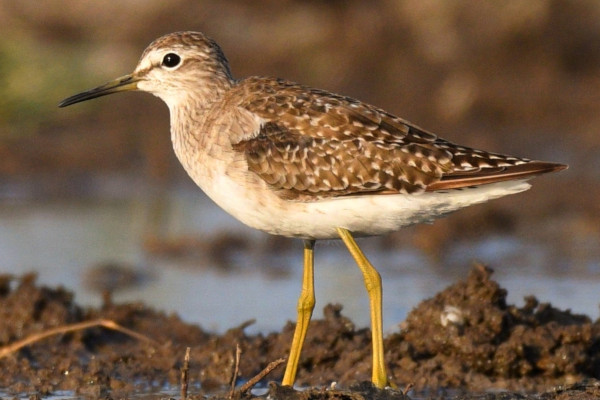
Wood Sandpiper
The wood sandpiper is a medium-sized wading bird, with a fine straight bill, yellowish legs and a conspicuous long white stripe from the bill over the eye to the back of the neck.
Is is a passage migrant in spring and autumn, breeding in Northern Europe and wintering in Africa. A few pairs breed in the Scottish Highlands. Wood sandpipers are listed as a Schedule 1 species.
Latin: Tringa glareola
Conservation status:
Listen:
Specially protected in:
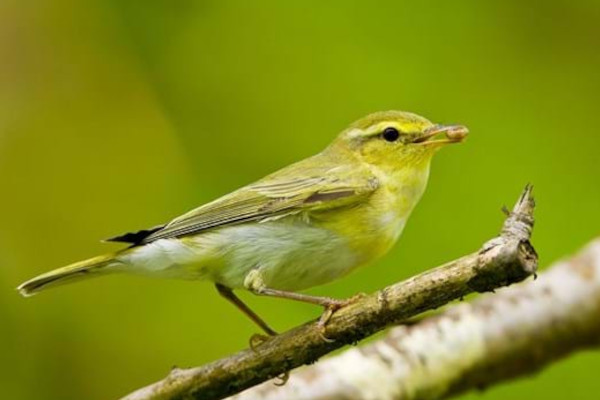
Wood Warbler
The attractive but unobtrusive wood warbler is one of the largest Phylloscopus warblers in Europe. It has bright yellow upper parts, throat and upper chest and white under parts.
The species is widespread and numerous in deciduous forest in Europe and reaches its highest densities in the UK in the western oak woods of Wales.
Latin: Phylloscopus sibilatrix
Conservation status:
Listen:
Specially protected in:
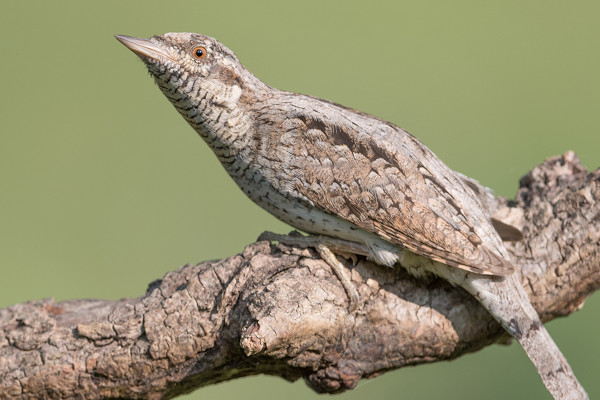
Wryneck
Wrynecks are small sparrow-sized birds, appearing greyish overall, with brown and buff mottling. They have a contrasting dark band running down from the back of the head onto the back.
They feed almost exclusively on ants and unlike other woodpeckers, are seen mainly on the ground, and do not often climb up vertical trunks or branches. They are listed under Schedule 1 of The Wildlife and Countryside Act.
Latin: Jynx torquilla
Conservation status:
Listen:
Specially protected in:
Y
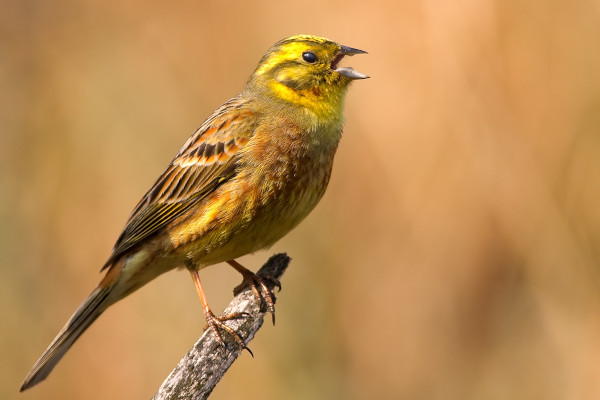
Yellowhammer
Male yellowhammers are unmistakeable with a bright yellow head and underparts, brown back streaked with black, and chestnut rump. In flight it shows white outer tail feathers. They are often seen perched on top of a hedge or bush, singing.
Its recent population decline make it a Red List species.
Latin: Emberiza citrinella
Conservation status:
Listen:
Specially protected in:
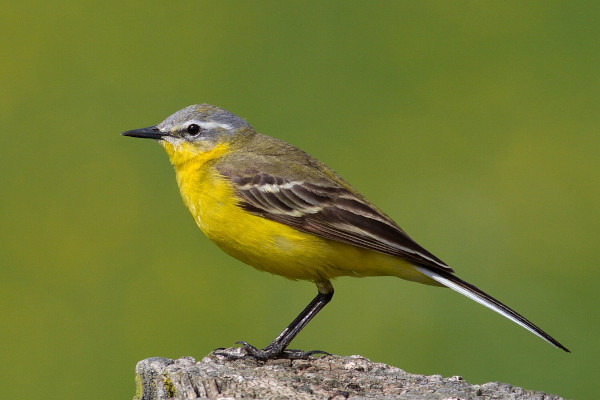
Yellow Wagtail
The yellow wagtail is a small, graceful, yellow and green bird, with a medium-length tail and slender black legs. It spends much time walking or running on the ground. As its name implies, it wags its tail from time to time.
It breeds in a variety of habitats in the UK. Serious declines in breeding numbers across all of these habitats place the yellow wagtail on the red list of birds of conservation concern.
Latin: Motacilla flava
Conservation status:
Listen:
Specially protected in:
A
Arctic Tern
Latin: Sterna paradisaea
Conservation status:
Specially protected in:
Avocet
Latin: Recurvirostra avosetta
Conservation status:
Specially protected in:
B
Barn Owl
Latin: Tyto alba
Conservation status:
Specially protected in:
Barnacle Goose
Latin: Branta leucopsis
Conservation status:
Specially protected in:
Bean Goose
Latin: Anser fabalis
Conservation status:
Specially protected in:
Bearded Tit
They are sociable and noisy, their 'ping' calls often being the first clue to their presence.
Latin: Panurus biarmicus
Conservation status:
Specially protected in:
Bee-eater
Latin: Merops apiaster
Conservation status:
Specially protected in:
Bewick’s Swan
Latin: Cygnus columbianus
Conservation status:
Specially protected in:
Bittern
Latin: Botaurus stellaris
Conservation status:
Specially protected in:
Black-headed Gull
Latin: Chroicocephalus ridibundus
Conservation status:
Specially protected in:
Black Kite
Black kites are opportunistic hunters and are more likely to scavenge. They spend much time soaring and gliding in thermals in search of food. Their angled wing and distinctive forked tail make them easy to identify. They are also vociferous with a shrill whinnying call.
Latin: Milvus migrans
Conservation status:
Specially protected in:
Black-necked Grebe
It is listed as a Schedule 1 species on The Wildlife and Countryside Act.
Latin: Podiceps nigricollis
Conservation status:
Specially protected in:
Black Redstart
With fewer than 100 breeding pairs in the UK, the black redstart is on the Red List of Birds of Conservation Concern and is a Schedule 1 species.
Latin: Phoenicurus ochruros
Conservation status:
Specially protected in:
Black-tailed Godwit
Their most distinctive features are their long beaks and legs, and the black and white stripes on their wings. Female black-tailed godwits are bigger and heavier than the males, with a noticeably longer beak.
Latin: Limosa limosa
Conservation status:
Specially protected in:
Black Tern
This Schedule 1 species has occasionally bred in the UK.
Latin: Chlidonias niger
Conservation status:
Specially protected in:
Black-throated Diver
They are easily disturbed when breeding and their vulnerability to marine pollution make them a vulnerable as well as rare breeding and a Schedule 1 species on The Wildlife and Countryside Act.
Latin: Gavia arctica
Conservation status:
Specially protected in:
Black-winged Stilt
With its striking black and white plumage, long bill, and red legs this species evokes the feeling of its Mediterranean home when it is found delicately wading through a lagoon, picking small insects off the water’s surface.
Latin: Himantopus himantopus
Conservation status:
Specially protected in:
Bluethroat
Latin: Luscinia svecica
Conservation status:
Specially protected in:
Brambling
Numbers can vary between winters depending on food supplies. It is a Schedule 1 species.
Latin: Fringilla montifringilla
Conservation status:
Specially protected in:
Brent Goose
Latin: Branta bernicla
Conservation status:
Specially protected in:
Bullfinch
They feed voraciously on the buds of various trees in spring and were once a 'pest' of fruit crops.
Latin: Pyrrhula pyrrhula
Conservation status:
Specially protected in:
Buzzard
Latin: Buteo buteo
Conservation status:
Specially protected in:
C
Canada Goose
It forms noisy flocks and is often regarded as a nuisance in areas where large numbers occur on amenity grassland and parks.
Latin: Branta canadensis
Conservation status:
Specially protected in:
Capercaillie
Latin: Tetrao urogallus
Conservation status:
Specially protected in:
Cetti’s Warbler
This Schedule 1 species is one of the UK's most recent colonists.
Latin: Cettia cetti
Conservation status:
Specially protected in:
Chough
It readily displays its mastery of flight with wonderful aerial displays of diving and swooping. This Schedule 1 species can be found in flocks in autumn and winter.
Latin: Pyrrhocorax pyrrhocorax
Conservation status:
Specially protected in:
Cirl Bunting
Female and juveniles look similar to yellowhammers, but have bolder head markings and streaked grey/brown rumps. It is a Schedule 1 species.
Latin: Plecotus auritus
Conservation status:
Specially protected in:
Common Crane
Numbers in Europe have declined over the last 300 years because of disturbance, shooting and drainage.
Latin: Grus grus
Conservation status:
Specially protected in:
Common Gull
Latin: Larus canus
Conservation status:
Specially protected in:
Common (Scarlet) Rosefinch
In the UK they have bred sporadically.
Latin: Carpodacus erythrinus
Conservation status: Not assessed
Specially protected in:
Common Sandpiper
Latin: Actitis hypoleucos
Conservation status:
Specially protected in:
Common Scoter
The UK breeding population of this small diving seaduck has substantially declined and it is now a Red List and a Schedule 1 species. Its winter populations are vulnerable to oil spills.
Latin: Melanitta nigra
Conservation status:
Specially protected in:
Common Tern
Latin: Sterna hirundo
Conservation status:
Specially protected in:
Cormorant
Latin: Phalacrocorax carbo
Conservation status:
Specially protected in:
Corn Bunting
Latin: Emberiza calandra
Conservation status:
Specially protected in:
Corncrake
They are summer visitors and migrate to Africa for the winter.
Latin: Crex crex
Conservation status:
Specially protected in:
Crested Tit
Crested tits feed actively, searching for a wide range of invertebrates and pine seeds. They store food extensively during early winter, using it in late winter. It is listed as a Schedule 1 species.
Latin: Lophophanes cristatus
Conservation status:
Specially protected in:
Crossbill
Adult males are a distinctive brick-red and females greenish-brown. It is a Schedule 1 species.
Latin: Loxia curvirostra
Conservation status:
Specially protected in:
Cuckoo
Cuckoos are summer visitors and are well-known brood parasites. Instead of building their own nest, the females lay their eggs in other birds’ nests.
Latin: Cuculus canorus
Conservation status:
Specially protected in:
Curlew
In the winter, you’ll see curlews feeding in groups on tidal mudflats, saltmarshes and nearby farmland. Whilst some of our birds spend the winter in Ireland.
Latin: Numenius arquata
Conservation status:
Specially protected in:
D
Dartford Warbler
Latin: Curruca undata
Conservation status:
Specially protected in:
Dipper
Latin: Cinclus cinclus
Conservation status:
Specially protected in:
Dotterel
Latin: Charadrius morinellus
Conservation status:
Specially protected in:
Dunlin
Latin: Calidris alpina
Conservation status:
Specially protected in:
E
Eider
Latin: Somateria mollissima
Conservation status:
Specially protected in:
F
Fieldfare
Latin: Turdus pilaris
Conservation status:
Specially protected in:
Firecrest
Latin: Regulus ignicapillus
Conservation status:
Specially protected in:
G
Gadwall
Latin: Anas strepera
Conservation status:
Specially protected in:
Garden Warbler
Latin: Pipistrellus pipistrellus
Conservation status:
Specially protected in:
Garganey
Latin: Anas querquedula
Conservation status:
Specially protected in:
Golden Eagle
Latin: Aquila chrysaetos
Conservation status:
Specially protected in:
Goldeneye
Latin: Bucephala clangula
Conservation status:
Specially protected in:
Golden Oriole
Latin: Oriolus oriolus
Conservation status:
Specially protected in:
Golden Plover
Latin: Pluvialis apricaria
Conservation status:
Specially protected in:
Goosander
Latin: Mergus merganser
Conservation status:
Specially protected in:
Goshawk
Latin: Accipiter gentilis
Conservation status:
Specially protected in:
Grasshopper Warbler
Latin: Locustella naevia
Conservation status:
Specially protected in:
Great Northern Diver
Latin: Gavia immer
Conservation status:
Specially protected in:
Great Skua
Latin: Stercorarius skua
Conservation status:
Specially protected in:
Green Sandpiper
Latin: Tringa ochropus
Conservation status:
Specially protected in:
Greenshank
Latin: Tringa nebularia
Conservation status:
Specially protected in:
Grey Heron
Latin: Ardea cinerea
Conservation status:
Specially protected in:
Greylag Goose
Latin: Anser anser
Conservation status:
Specially protected in:
Grey Partridge
Latin: Perdix perdix
Conservation status:
Specially protected in:
Gyr Falcon
They are polymorphic and range in colour from white to dark brown – the morphs are called ‘white’, ‘silver’, ‘brown’, and ‘black’ with the white morph being the only white falcon, and the black morph found mostly in females. Gryfalcons have heavy bars on the back, wings, and tail.
Latin: Falco rusticolus
Conservation status:
Specially protected in:
H
Hen Harrier
They are listed as a Schedule 1 species under The Wildlife and Countryside Act.
Latin: Circus cyaneus
Conservation status:
Specially protected in:
Hobby
Hobbies are listed as a Schedule 1 bird on The Wildlife and Countryside Act.
Latin: Falco subbuteo
Conservation status:
Specially protected in:
Honey Buzzard
The nest sites of British breeding birds are usually kept secret to protect them from egg collectors. They are also listed as a Schedule 1 species on The Wildlife and Countryside Act offering them additional protection.
Latin: Pernis apivorus
Conservation status:
Specially protected in:
Hoopoe
It does not breed in the UK, but as many as 100 birds can turn up in spring as birds migrating north to Europe from Africa overshoot and land on the south coast of England.
Latin: Upupa epops
Conservation status: N/A
Specially protected in:
House Sparrow
Latin: Passer domesticus
Conservation status:
Specially protected in:
J
Jack Snipe
Latin: Lymnocryptes minimus
Conservation status:
Specially protected in:
K
Kentish Plover
Latin: Charadrius alexandrinus
Conservation status:
Specially protected in:
Kestrel
They have adapted readily to man-made environments and can survive right in the centre of cities.
Latin: Falco tinnunculus
Conservation status:
Specially protected in:
Kingfisher
Latin: Alcedo atthis
Conservation status:
Specially protected in:
L
Lapland Bunting
Latin: Calcarius lapponicus
Conservation status:
Specially protected in:
Lapwing
Latin: Vanellus vanellus
Conservation status:
Specially protected in:
Leach’s Petrel
Latin: Hydrobates leucorhous
Conservation status:
Specially protected in:
Lesser Whitethroat
Latin: Curruca curruca
Conservation status:
Specially protected in:
Little Bittern
The Little Bittern is a secretive and crepuscular species, which, together with the preferred reedbed habitat, makes this a very difficult species to observe.
Latin: Ixobrychus minutus
Conservation status:
Specially protected in:
Little Egret
Latin: Egretta garzetta
Conservation status:
Specially protected in:
Little Grebe
Latin: Tachybaptus ruficollis
Conservation status:
Specially protected in:
Little Gull
Little gulls are listed as a Schedule 1 species under The Wildlife and Countryside Act.
Latin: Hydrocoloeus minutus
Conservation status:
Specially protected in:
Little Owl
Breeding Bird Survey data suggest that little owl numbers are declining, with the UK population estimated to be down by 24 per cent between 1995 and 2008.
Latin: Athene noctua
Conservation status:
Specially protected in:
Little Ringed Plover
It is listed as a Schedule 1 species under The Wildlife and Countryside Act.
Latin: Charadrius dubius
Conservation status:
Specially protected in:
Little Tern
Its vulnerable nesting sites and its decline in Europe make it an Amber List species. It is also listed as a Schedule 1 species in The Wildlife and Countryside Act.
Latin: Sternula albifrons
Conservation status:
Specially protected in:
Long-eared Owl
It breeds thinly across the UK with fewer birds in the south-west and Wales. Northern birds migrate southwards, while southern birds are residents and only move short distances to find food.
Latin: Asio otus
Conservation status:
Specially protected in:
Long-tailed Duck
They are a winter visitor and passage migrant to the UK. They are listed as a Schedule 1 species under The Wildlife and Countryside Act.
Latin: Clangula hyemalis
Conservation status:
Specially protected in:
M
Manx Shearwater
It breeds in colonies in the UK, on offshore islands where it is safe from rats and other ground predators. Birds leave their nest sites in July, to migrate to the coast of South America, where they spend the winter, returning in late February and March.
Latin: Puffinus puffinus
Conservation status:
Specially protected in:
Marsh Harrier
Marsh harriers are a Schedule 1 listed bird on The Wildlife and Countryside Act.
Latin: Circus aeruginosus
Conservation status:
Specially protected in:
Marsh Warbler
Though it's thought to have a secure population within Europe, the UK population of marsh warblers has fallen and is now of serious conservation concern. It is a Schedule 1 listed bird of The Wildlife and Countryside Act.
Latin: Acrocephalus palustris
Conservation status:
Specially protected in:
Mediterranean Gull
Its present UK breeding population makes it an Amber List species. It is a Schedule 1 listed bird of The Wildlife and Countryside Act.
Latin: Larus melanocephalus
Conservation status:
Specially protected in:
Merlin
In winter, the Icelandic breeding birds migrate to our warmer climate. It is on the Red List. It is a Schedule 1 listed species on The Wildlife and Countryside Act.
Latin: Falco columbarius
Conservation status:
Specially protected in:
Montagu’s Harrier
It is an extremely rare breeding bird in the UK. Montagu's harrier are a Schedule 1 listed species on The Wildlife and Countryside Act.
Latin: Circus pygargus
Conservation status:
Specially protected in:
N
Nightjar
They have an almost supernatural reputation with their silent flight and their mythical ability to steal milk from goats. The first indication that a nightjar is near is usually the male's churring song.
Latin: Caprimulgus europaeus
Conservation status:
Specially protected in:
O
Osprey
This spectacular fish-eating bird of prey is an Amber List species because of its historical decline and low breeding numbers. They are listed as a Schedule 1 species on The Wildlife and Countryside Act.
Latin: Pandion haliaetus
Conservation status:
Specially protected in:
P
Parrot Crossbill
They are listed on Schedule 1 of The Wildlife and Countryside Act.
Latin: Loxia pytyopsittacus
Conservation status:
Specially protected in:
Peregrine
Peregrines are a Schedule 1 listed species of The Wildlife and Countryside Act.
Latin: Falco peregrinus
Conservation status:
Specially protected in:
Pied Flycatcher
It is a summer visitor and breeds mainly in western areas, spending the winter in West Africa.
Latin: Ficedula hypoleuca
Conservation status:
Specially protected in:
Pink-footed Goose
This species does not breed in the UK, but large numbers of birds spend the winter here, arriving from their breeding grounds in Iceland and Greenland. Numbers in England are on the increase, particularly in Norfolk, probably due to better protection at winter roosts.
Latin: Anser brachyrhynchus
Conservation status:
Specially protected in:
Pintail
The pintail is a 'quarry' species, but it does not appear that shooting is affecting their population status in the UK. The small breeding population and significant winter population make them an Amber List species.
Latin: Anas acuta
Conservation status:
Specially protected in:
Pochard
However, during the 'eclipse' - when ducks grow new feathers - they become more camouflaged so that they don't draw the attention of predators.
Latin: Aythya ferina
Conservation status:
Specially protected in:
Puffin
This clown among seabirds is one of the world's favourite birds. With half of the UK population at only a few sites it is an Red List species.
Latin: Fratercula arctica
Conservation status:
Specially protected in:
Purple Heron
Its European breeding population has been expanding, with colonisation of France and the Netherlands signposting this species as a potential colonist to the UK.
Latin: Ardea purpurea
Conservation status:
Specially protected in:
Purple Sandpiper
This species is mainly a winter visitor to almost any rocky coast in the UK. The breeding areas in Scotland are kept secret to protect the birds from egg thieves and disturbance.
It is listed on Schedule 1 of The Wildlife and Countryside Act.
Latin: Calidris maritima
Conservation status:
Specially protected in:
Q
Quail
Rarely seen, they are more often heard giving a distinctive call.
Quails are on the Amber List but are now in partial recovery. They are also listed on Schedule 1 of The Wildlife and Countryside Act 1981.
Latin: Coturnix coturnix
Conservation status:
Specially protected in:
R
Red-backed Shrike
Its dramatic decline to near extinction as a UK breeding species make this a Red List bird. It is also listed as a Schedule 1 species under The Wildlife and Countryside Act.
Latin: Lanius collurio
Conservation status:
Specially protected in:
Red Kite
Latin: Milvus milvus
Conservation status:
Specially protected in:
Red-necked Phalarope
As a rare UK breeding species it is a Red List bird. They are listed under Schedule 1 of The Wildlife and Countryside Act.
Latin: Phalaropus lobatus
Conservation status:
Specially protected in:
Redshank
Latin: Tringa totanus
Conservation status:
Specially protected in:
Redstart
Latin: Phoenicurus phoenicurus
Conservation status:
Specially protected in:
Red-throated Diver
Latin: Gavia stellata
Conservation status:
Specially protected in:
Redwing
They roam across the UK's countryside, feeding in fields and hedgerows, rarely visiting gardens, except in the coldest weather when snow covers the fields. It is listed as a Schedule 1 species of The Wildlife and Countryside Act.
Latin: Turdus iliacus
Conservation status:
Specially protected in:
Reed Bunting
Latin: Emberiza schoeniclus
Conservation status:
Specially protected in:
Reed Warbler
Latin: Acrocephalus scirpaceus
Conservation status:
Specially protected in:
Ring Ouzel
Latin: Turdus torquatus
Conservation status:
Specially protected in:
Ringed Plover
They breed on beaches around the coast. Many UK birds live here all year round, but birds from Greenland and Canada pass through on migration.
Latin: Charadrius hiaticula
Conservation status:
Specially protected in:
Roseate Tern
Latin: Sterna dougallii
Conservation status:
Specially protected in:
Rough-legged Buzzard
Latin: Buteo lagopus
Conservation status: N/A
Specially protected in:
Ruff
It breeds in a very few lowland sites in eastern England and it appears numbers are dropping. Many young birds from Scandinavia visit the UK in late summer, then migrating on to Africa. It is listed under Schedule 1 of The Wildlife and Countryside Act.
Latin: Philomachus pugnax
Conservation status:
Specially protected in:
S
Sand Martin
Latin: Riparia riparia
Conservation status:
Specially protected in:
Sandwich Tern
Latin: Sterna sandvicensis
Conservation status:
Specially protected in:
Savi’s Warbler
Latin: Locustella luscinioides
Conservation status:
Specially protected in:
Scaup
Latin: Aythya marila
Conservation status:
Specially protected in:
Scottish Crossbill
Latin: Loxia scotica
Conservation status:
Specially protected in:
Serin
Latin: Serinus serinus
Conservation status:
Specially protected in:
Shag
In the UK they breed on coastal sites, mainly in the north and west, and more than half of their population is found at fewer than 10 sites, making them an Red List species. Shags usually stay within 100-200km of their breeding grounds.
Latin: Gulosus aristotelis
Conservation status:
Specially protected in:
Shelduck
Latin: Tadorna tadorna
Conservation status:
Specially protected in:
Shore Lark
Latin: Eremophila alpestris
Conservation status:
Specially protected in:
Short-eared Owl
Latin: Asio flammeus
Conservation status:
Specially protected in:
Short-toed Treecreeper
Latin: Certhia brachydactyla
Conservation status:
Specially protected in:
Shoveler
The UK is home to more than 20 per cent of the NW European population, making it an Amber List species.
Latin: Anas clypeata
Conservation status:
Specially protected in:
Skylark
Latin: Alauda arvensis
Conservation status:
Specially protected in:
Slavonian Grebe
Latin: Podiceps auritus
Conservation status:
Specially protected in:
Snipe
The UK population of snipe has undergone moderate declines overall in the past twenty-five years, making it an Amber List species.
Latin: Gallinago gallinago
Conservation status:
Specially protected in:
Snow Bunting
They are listed under Schedule 1 of the Wildlife and Countryside Act.
Latin: Plectrophenax nivalis
Conservation status:
Specially protected in:
Snowy Owl
A celebrated pair bred for eight years on the Shetland island of Fetlar until 1976, when the male failed to return; one or two females, though, summered every year until 1993.
Latin: Bubo scandiacus
Conservation status:
Specially protected in:
Song Thrush
Latin: Turdus philomelos
Conservation status:
Specially protected in:
Sparrowhawk
Latin: Accipiter nisus
Conservation status:
Specially protected in:
Spoonbill
Latin: Platalea leucorodia
Conservation status:
Specially protected in:
Spotted Crake
Spotted crakes tend to skulk in thick cover and walk with their body close to the ground and tail flicking. If surprised in the open, they run for cover or jump up and flutter away with legs dangling.
Latin: Porzana porzana
Conservation status:
Specially protected in:
Spotted Flycatcher
Latin: Muscicapa striata
Conservation status:
Specially protected in:
Starling
Their flight is fast and direct and they walk and run confidently on the ground. Starlings spend a lot of the year in flocks.
Still one of the commonest of garden birds, its decline elsewhere makes it a Red List species.
Latin: Sturnus vulgaris
Conservation status:
Specially protected in:
Stock Dove
They are widely distributed in the UK. Over half their European population is found in the UK.
Latin: Columba oenas
Conservation status:
Specially protected in:
Stone-curlew
It is not related to curlews and gets its name from its curlew-like call. It is listed under Schedule 1 of the Wildlife and Countryside Act.
Latin: Burhinus oedicnemus
Conservation status:
Specially protected in:
Storm Petrel
Latin: Hydrobates pelagicus
Conservation status:
Specially protected in:
Swift
Latin: Apus apus
Conservation status:
Specially protected in:
T
Tawny Owl
Latin: Strix aluco
Conservation status:
Specially protected in:
Teal
Latin: Anas crecca
Conservation status:
Specially protected in:
Temminck’s Stint
Latin: Calidris temminckii
Conservation status:
Specially protected in:
Tree Pipit
Latin: Anthus trivialis
Conservation status:
Specially protected in:
Tree Sparrow
The UK tree sparrow population has suffered a severe decline. However, recent Breeding Bird Survey data is encouraging, suggesting that numbers may have started to increase, albeit from a very low point.
Latin: Passer montanus
Conservation status:
Specially protected in:
Turtle Dove
Latin: Streptopelia turtur
Conservation status:
Specially protected in:
Twite
Latin: Linaria flavirostris
Conservation status:
Specially protected in:
V
Velvet Scoter
Latin: Melanitta fusca
Conservation status:
Specially protected in:
W
Water Rail
Latin: Rallus aquaticus
Conservation status:
Specially protected in:
Whimbrel
In the UK, this species only breeds in north Scotland. It is a passage migrant to other areas in spring and autumn on its way from and to its wintering areas in Africa.
It is a Schedule 1 species of the Wildlife and Countryside Act.
Latin: Numenius phaeopus
Conservation status:
Specially protected in:
Whinchat
The whinchat is a summer visitor and passage migrant. Birds breed in upland areas of northern and western Britain with a few in Ireland. It winters in central and southern Africa.
Latin: Saxicola rubetra
Conservation status:
Specially protected in:
White-fronted Goose
Latin: Anser albifrons
Conservation status:
Specially protected in:
White-tailed Eagle
This Schedule 1 species went extinct in the UK during the early 20th century and the present population is descended from reintroduced birds.
Latin: Haliaeetus albicilla
Conservation status:
Specially protected in:
Whooper Swan
It is mainly a winter visitor to the UK from Iceland. The estuaries and wetlands it visits on migration need protection. Its winter population and small breeding numbers make it an Amber List species. It is a Schedule 1 listed bird.
Latin: Cygnus cygnus
Conservation status:
Specially protected in:
Wigeon
Wigeons breed in central and northern Scotland and also in northern England. Many birds visit the UK in winter from Iceland, Scandinavia and Russia. With large numbers of wintering birds at a few UK sites, it is an Amber List species.
Latin: Anas penelope
Conservation status:
Specially protected in:
Woodcock
Most of the birds in the UK are residents. The breeding population has been falling in recent years, perhaps because of less habitat as conifer plantations become too mature for woodcocks to find open enough breeding areas.
Latin: Scolopax rusticola
Conservation status:
Specially protected in:
Woodlark
Woodlarks are listed under Schedule 1 of The Wildlife and Countryside Act.
Latin: Lullula arborea
Conservation status:
Specially protected in:
Wood Sandpiper
Is is a passage migrant in spring and autumn, breeding in Northern Europe and wintering in Africa. A few pairs breed in the Scottish Highlands. Wood sandpipers are listed as a Schedule 1 species.
Latin: Tringa glareola
Conservation status:
Specially protected in:
Wood Warbler
The species is widespread and numerous in deciduous forest in Europe and reaches its highest densities in the UK in the western oak woods of Wales.
Latin: Phylloscopus sibilatrix
Conservation status:
Specially protected in:
Wryneck
They feed almost exclusively on ants and unlike other woodpeckers, are seen mainly on the ground, and do not often climb up vertical trunks or branches. They are listed under Schedule 1 of The Wildlife and Countryside Act.
Latin: Jynx torquilla
Conservation status:
Specially protected in:
Y
Yellowhammer
Its recent population decline make it a Red List species.
Latin: Emberiza citrinella
Conservation status:
Specially protected in:
Yellow Wagtail
It breeds in a variety of habitats in the UK. Serious declines in breeding numbers across all of these habitats place the yellow wagtail on the red list of birds of conservation concern.
Latin: Motacilla flava
Conservation status:
Specially protected in:
The first UK Birds of Conservation Concern (BoCC) report was published in 1996. Roughly every six years, experts from different nature and conservation organisations, including the RSPB get together to update the report. Each type of bird is assessed and put on the Green List, Amber List or Red List depending on the level of concern.
The Red List
Birds can be put on the Red List for several different reasons. Puffins for example are on because of a decline worldwide, while swifts, house martins and Montagu’s Harrier were added because of severe declines in breeding populations here in the UK.Here is the list of reasons why a bird can be added:
- They are threatened with global extinction
- They have undergone a severe historical population decline in UK since 1800
- Breeding numbers in the UK have fallen by at least half in the last 25 years, or longer
- Their breeding range in the UK has had a severe contraction of at least 50% in the last 25 years or longer
The Amber List
The Amber list is used to highlight birds whose conservation status is of moderate concern. In the latest report, the Amber list increased from 96 to 103 species. This is because they either showed an improvement in status and moved off the Red list, or showed a deterioration in numbers, moving from Green to Amber.Here’s the full list of reasons why birds could be on the Amber List:
- They are classed as threatened with extinction from Europe.
- There has been a moderate (25-50%) decline in breeding in the UK during the last 25 years or longer.
- Their UK breeding range has contracted between 25% and 50% over last 25 years or longer.
- There has been a moderate (25-50%) decline in the non-breeding population in the UK during the last 25 years or longer.
- There was a severe decline in their numbers during 1800–1995, but they are now recovering - their population size has more than doubled over last 25 years.
- They are a rare breeder – only 1 to 300 breeding pairs in UK.
- They are rare non-breeders - less than 900 individuals.
- They only live in a few localised places – the definition is that more than half of the UK breeding or non-breeding population lives in 10 or fewer sites.
- Their UK population is internationally important - at least 20% of the European breeding or non-breeding population is in UK.
The Green List
The Green list contains the birds which are not showing moderate or severe declines and do not fit into any of the categories above. This sounds relatively positive, but big changes can happen quickly. In the latest report, birds such as the greenfinch and ptarmigan moved straight from the Green to the Red List because of large declines in their numbers.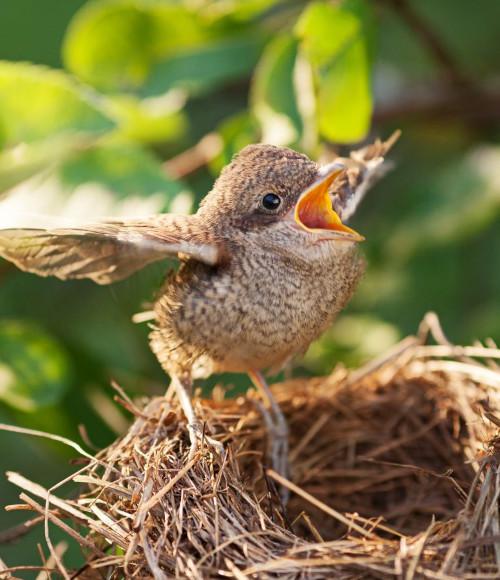
Related services
Our skilled team has expertise covering all animal and plant biodiversity interests.
- Conservation status assessment and advice
- Breeding bird survey and wintering bird surveys
- Habitats Regulations Assessment (HRA)/Appropriate Assessment
- European-Protected Species (EPS) surveys
- UKHab surveys