
The UK's Native reptiles
Reptiles are found in a wide range of places, from sandy heaths and woodland ridges to garden compost heaps. Some of Britain’s six species of reptiles are now very rare, meaning that The Wildlife Trust’s work to restore and protect vital habitats has never been so important. Reptiles are fascinating animals that are often sadly forgotten about when talking about interesting UK wildlife. Most lay eggs, but some give birth to live young, they live in an array of habitats and, contrary to general expectations, are often quite shy.
Adder
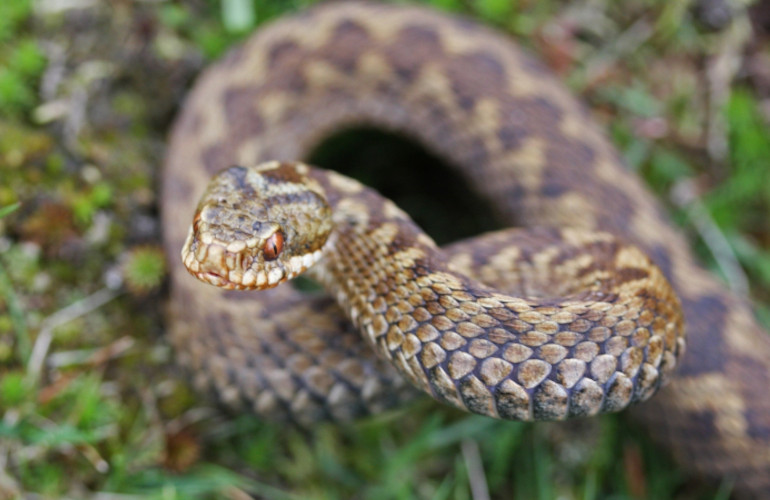
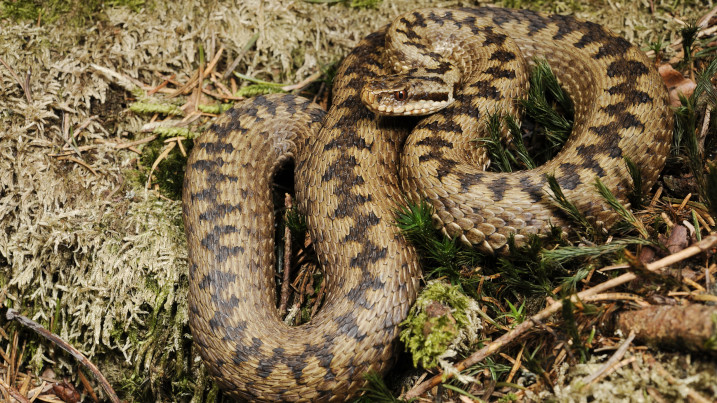
The adder is a relatively small, stocky snake that prefers woodland, heathland and moorland habitats. It hunts lizards and small mammals, as well as ground-nesting birds, such as skylark and meadow pipit. In spring, male adders perform a 'dance' during which they duel to fend off competition to mate. Females incubate the eggs internally, 'giving birth' to three to twenty live young. Adders hibernate from October, emerging in the first warm days of March, which is the easiest time of year to find them basking on a log or under a warm rock.
Latin: Vipera berus
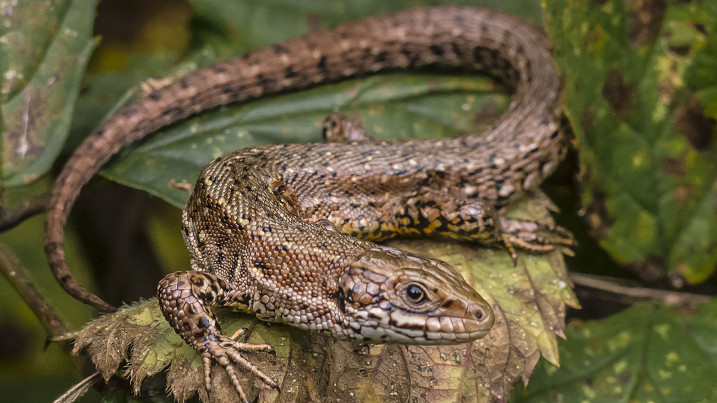
Common lizard
Living up to its name, the common lizard is the UK's most common and widespread reptile; it is the only reptile native to Ireland. It is found across many habitats, including heathland, moorland, woodland and grassland, where it can be seen basking in sunny spots.
Also known as the 'viviparous lizard', the common lizard is unusual among reptiles as it incubates its eggs inside its body and 'gives birth' to live young rather than laying eggs. Adults emerge from hibernation in spring, mating in April and May, and producing three to eleven young in July.
Latin: Zootoca vivipara
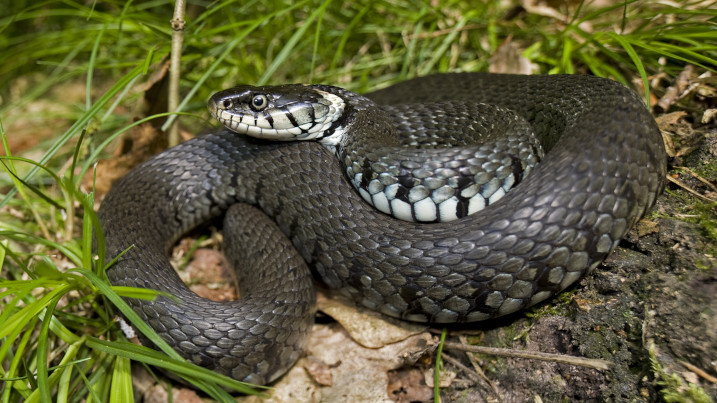
Grass snake
Our largest snake, the grass snake, is particularly fond of wetland habitats, but can also be found in dry grasslands and in gardens, especially those with a pond nearby. During the summer, grass snake can be spotted basking in the sun near their favourite ponds or swimming in the water.
They hunt amphibians, fish, small mammals and birds. Females lay 10 to 40 eggs in rotting vegetation, such as compost heaps, incubating them until they hatch in early Autumn. Like all reptiles, grass snake hibernate, usually from October to April.
Note: The British population of grass snake belongs to the distinct subspecies Natrix natrix helvetica, but new research published in August 2017 proposed that it should be elevated to full species status, with the name barred grass snake.
Latin: Natrix helvetica
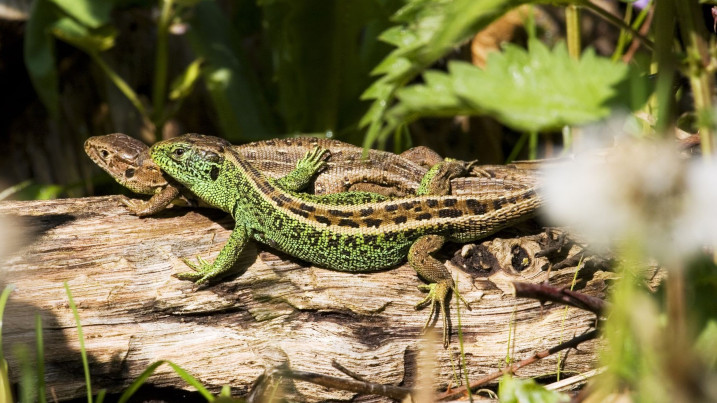
Sand lizard
The sand lizard is one of the UK's rarest reptiles. It favours sandy heathland habitats and sand dunes, and can be spotted basking on bare patches of sand. Sand lizards are confined to a few sites as destruction of their habitat has reduced their range.
Males emerge from hibernation in spring, turning a bright green colour as they get ready to mate. Females lay their eggs in the sand in June and July, and the young hatch one to two months later.
Latin: Lacerta agilis
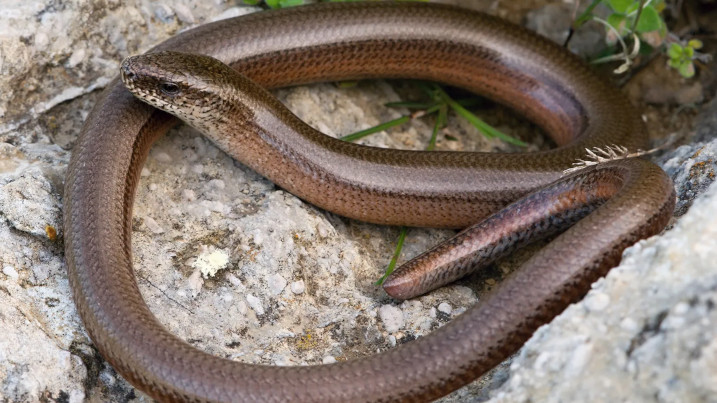
Slow worm
The slow worm is neither a worm nor a snake, but is, in fact, a legless lizard - its identity is given away by its abilities to shed its tail and blink with its eyelids.
Slow worms can be found in heathland, tussocky grassland, woodland edges and rides where they can find invertebrates to eat and a sunny patch in which to sunbathe. They are often found in mature gardens and allotments, where they like hunting around the compost heap. However, if you have a cat, you are unlikely to find them in your garden as cats predate them. Like other reptiles, slow worms hibernate, usually from October to March.
Latin: Anguis fragilis
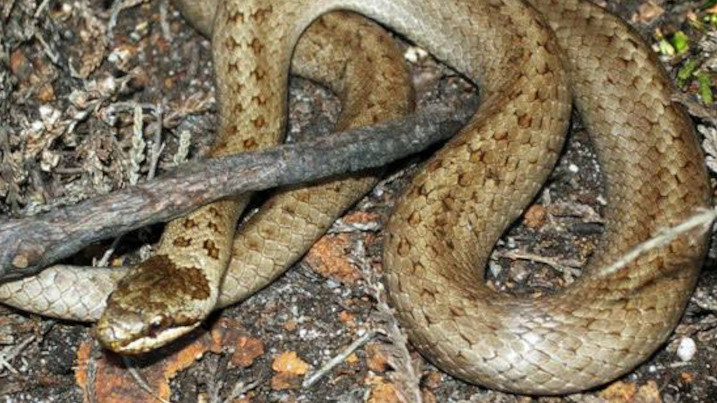
Smooth-snake
The rare smooth snake can only be found in a few places, often alongside the rare sand lizard because they both favour the same kind of sandy heathland habitat. As with other reptiles, smooth snakes are ectotherms (their body temperature depends on the temperature of their environment), so bask in the sun during the day and hibernate from October to April when they would struggle to warm up enough to be active and hunt. In spring, males compete to win females who incubate their eggs internally and 'give birth' to 4 to 15 young in September.
Latin: Coronella austriaca
Non-native reptiles in the UK
Along with the native species, there are several non-native species that have escaped from captivity or introduced into the wild. On the UK Mainland one particular species of European lizard has gained a firm foothold. While we know some populations have been introduced, the origin of others is uncertain. It may, indeed, be native in some areas. This is the wall lizard.
One further lizard species, the green lizard, is most unlikely to be native although there have been repeated introduction attempts in the past (now, of course, illegal), many of which have survived for a great many years. There is certainly one current breeding colony known in the south of England.
Both of these species are native to Jersey in the Channel Islands.
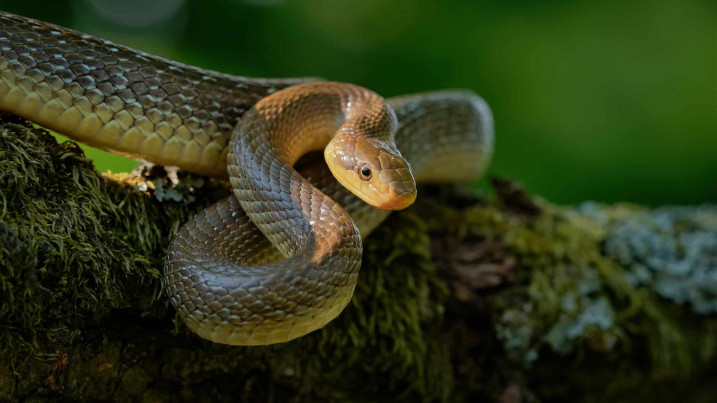
Aesculapian snake
Latin: Zamenis longissimus
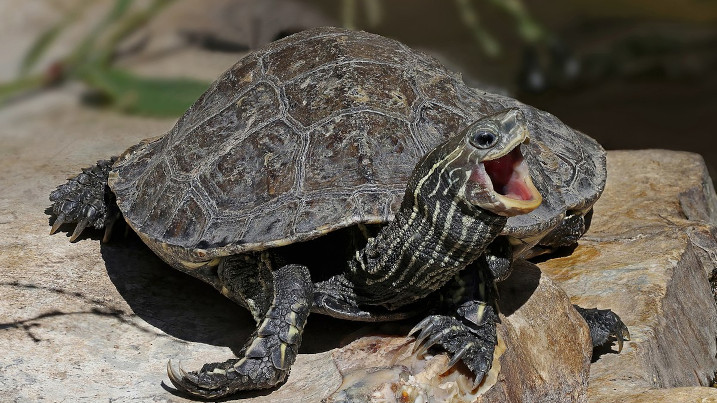
European pond terrapin
Latin: Emys orbicularis
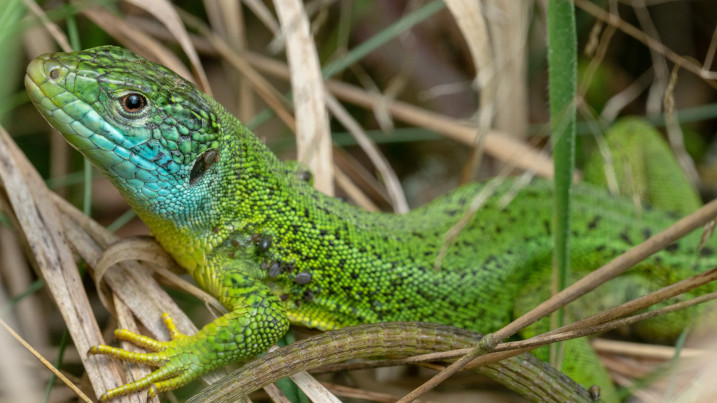
Green lizard
Latin: Lacerta bilineata
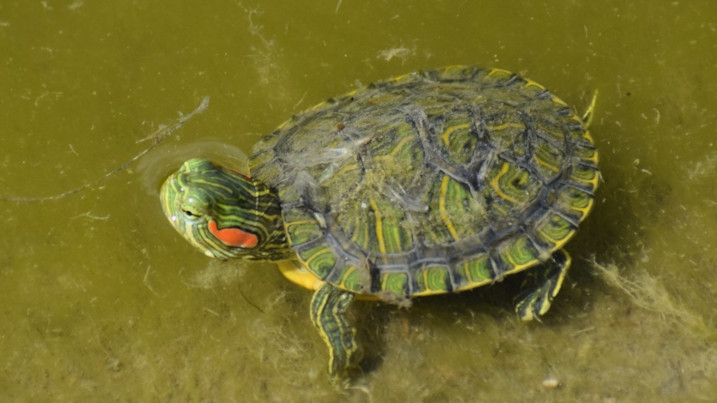
Red-eared slider
Latin: Trachemys scripta elegans
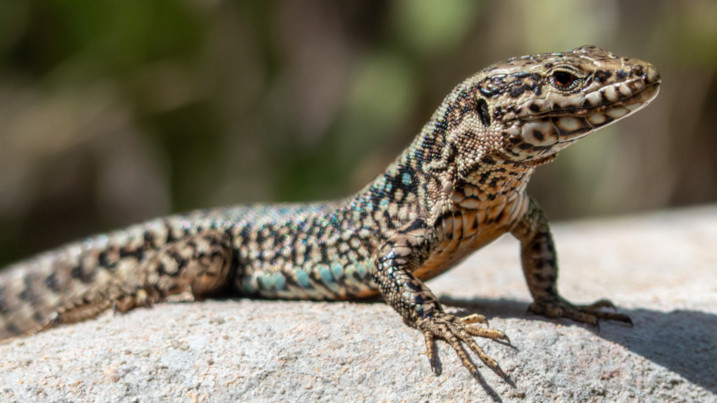
Wall lizard
Latin: Podarcis muralis
Follow the links below to see summaries which identify the protection afforded to reptile and amphibian species in England and Wales, Scotland, Northern Ireland and the Isle of Man through nature conservation legislation; we have not addressed site/habitat protection mechanisms. Some additional protection can be afforded through animal welfare legislation and through other measures, such as land use planning regimes.
The loss and degradation of various habitats has hit reptiles hard, with 31% of species declining worldwide according to a 2019 UN report, and the UK is no exception.
33% of the UK's reptiles are “Endangered” or “Vulnerable”, primarily due to:- Habitat loss and degradation through pollution
- Invasive species
- The effects of climate change e.g. increased forest and grassland fires
- Human involvement i.e. road deaths and the pet trade
| Legislation | Countries |
|---|---|
| Wildlife & Countryside Act 1981 |


|
| Conservation (Natural Habitats & c.) Regulations 1994 |
|
| The Conservation (Nature Habitats, etc.) Regulations (Northern Ireland) 1995 More info... |
|
| Countryside & Rights of Way Act 2000 |
|
| Nature Conservation (Scotland) Act 2004 More info... |
|
| The Conservation (Natural Habitats etc) (Amendment) Regulations (Northern Ireland) 2004 More Info... |
|
| Natural Environment and Rural Communities Act 2006 |
|
| Conservation (Natural Habitats & c.) Amendment (Scotland) Regulations 2007 More info... |
|
| The Conservation (Natural Habitats, etc.) (Amendment) Regulations (Northern Ireland) 2007 More info... |
|
| The Environmental Damage (Prevention and Remediation) Regulations 2009 |
|
| Conservation of Habitats and Species Regulations 2010 |
|
Penalties on conviction – people committing reptile related crimes can face six months imprisonment and/or unlimited fines. Additionally any profits made as a consequence of not following lawful process can be confiscated and items used to commit the offences such as vehicles, plant or machinery can be forfeited.
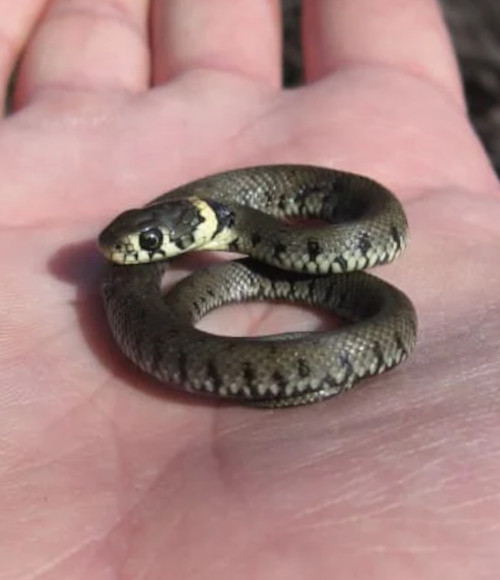
Related services
We specialise in bat conservation consulting and offer a variety of services that focus on the conservation of the UK reptilian population.
- Habitats Regulations Assessment (HRA)/Appropriate Assessment
- Sand lizard and smooth snake survey
- Reptile surveys (artificial refugia and visual search)
- Invasive non-native species (INNS) surveys including red-eared terrapin, wall lizard, green lizard, and many other species.